



TL;DR
- What it is: a GEO audit answers three questions. Do AI engines name you? Which pages do they cite instead? What blocks you?
- How: six steps. Prompts, runs, scores, cited pages, crawler access, what the answers say.
- Real example: we audited our own site. 0 of 7 prompts named us. ChatGPT cites one of our posts, and still doesn't name us.
- The deliverable: a one-page report with numbers per engine, the pages to pitch and a re-check date.
- What to fix first: access, then pages, then lists. And run the same prompts again.
Does AI name your brand? Check your site.
Most GEO audits are a checklist and a sales pitch.
"Add schema. Add an llms.txt. Book a call."
That's not an audit. An audit measures something.
So here's the method I use. Six steps. Real numbers from our own site, including the bad ones.
GEO means generative engine optimization: getting named and cited in AI answers. More on the term.
What a GEO audit is
A GEO audit checks how AI engines answer your buyers' questions.
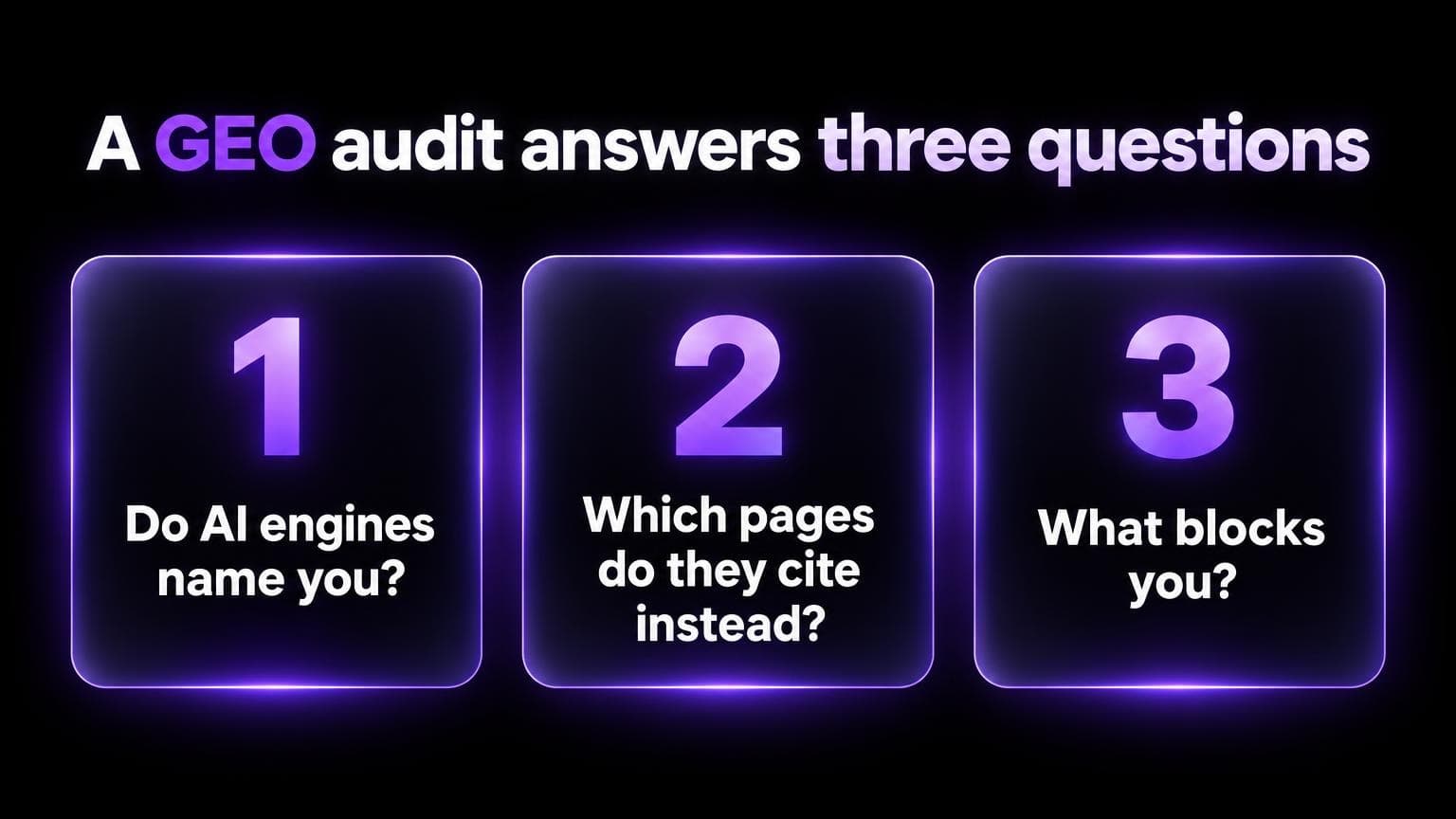
Three questions:
- Do AI engines name you? On which prompts, on which engines.
- Which pages do they cite instead? The lists, reviews and threads that win.
- What blocks you? Crawlers, indexing, missing pages, wrong facts.
The engines: ChatGPT, Perplexity, Gemini, Copilot and Google AI Overviews.
GEO audit vs SEO audit
An SEO audit looks at Google.
A GEO audit looks at the answers.
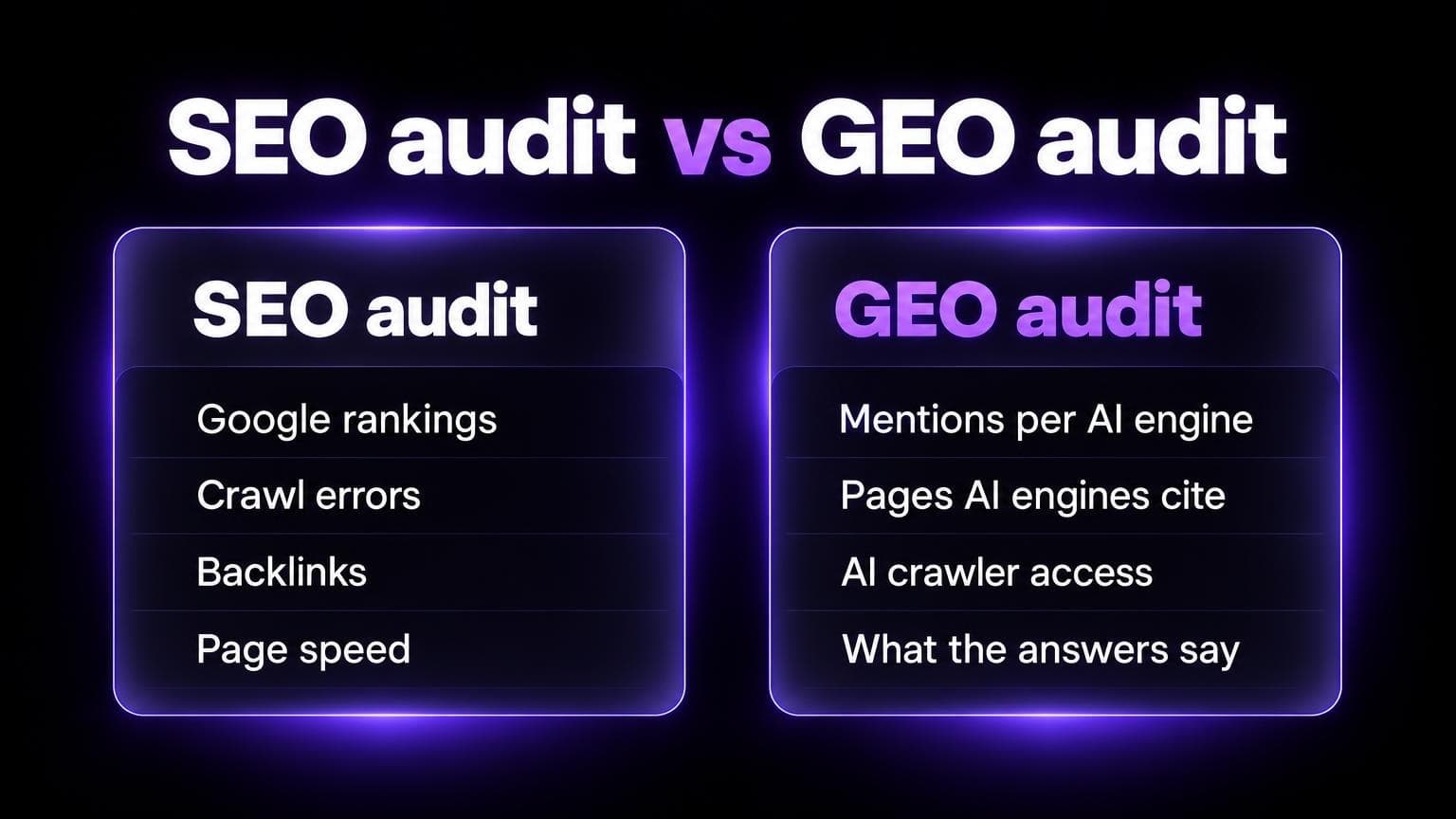
You need both. But one doesn't predict the other.
In an Ahrefs study of 15,000 prompts, only 12% of the links the AI assistants cited were in Google's top 10, on average. For ChatGPT, Gemini and Copilot it was 6% to 9%.
So a clean SEO audit can still mean zero AI mentions.
That's exactly what we found on our own site. More below.
The GEO audit in six steps
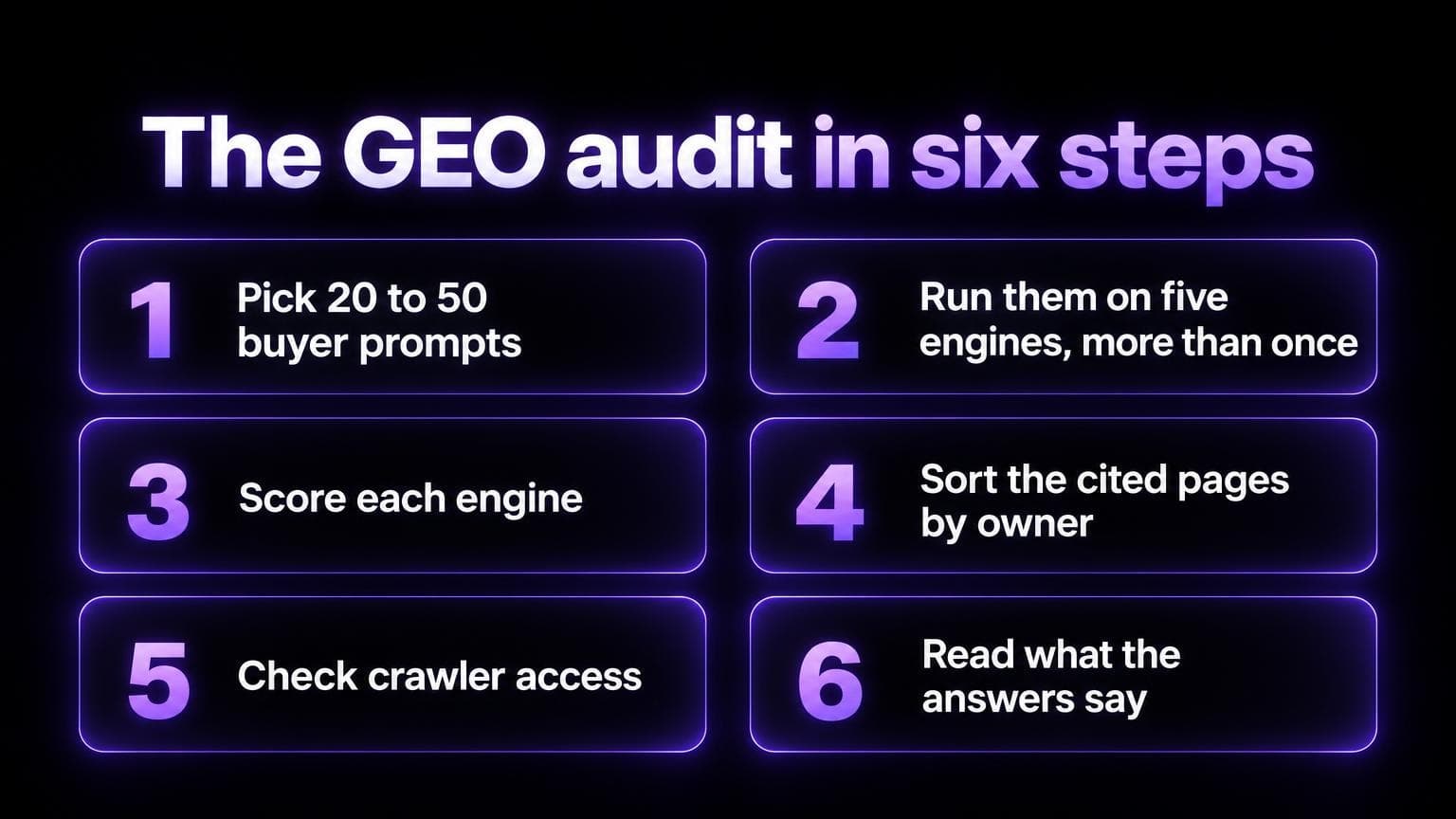
Step 1. Pick 20 to 50 buyer prompts
Prompts, not keywords.
- A keyword: "AI visibility tracker".
- A prompt: "what's the best tool to track if ChatGPT recommends my brand?"
Mix four kinds:
- Category: "best X for Y"
- Comparison: "X vs Y"
- Problem: "how do I fix Z"
- Brand: "is [your brand] good?"
Keep brand prompts apart in the report. They name you by definition.
Then freeze the wording. Change a prompt next month and you can't tell what moved.
Where to find them: sales calls, support tickets, and the free keyword research tool. How to measure brand visibility in AI has the full method.
Step 2. Run them on five engines, more than once
One run is a sample.
In a SparkToro and Gumshoe study, volunteers ran 12 prompts 2,961 times. For ChatGPT and Google's AI, the chance of getting the same list of brands twice was under 1 in 100.
And the engines disagree with each other too.
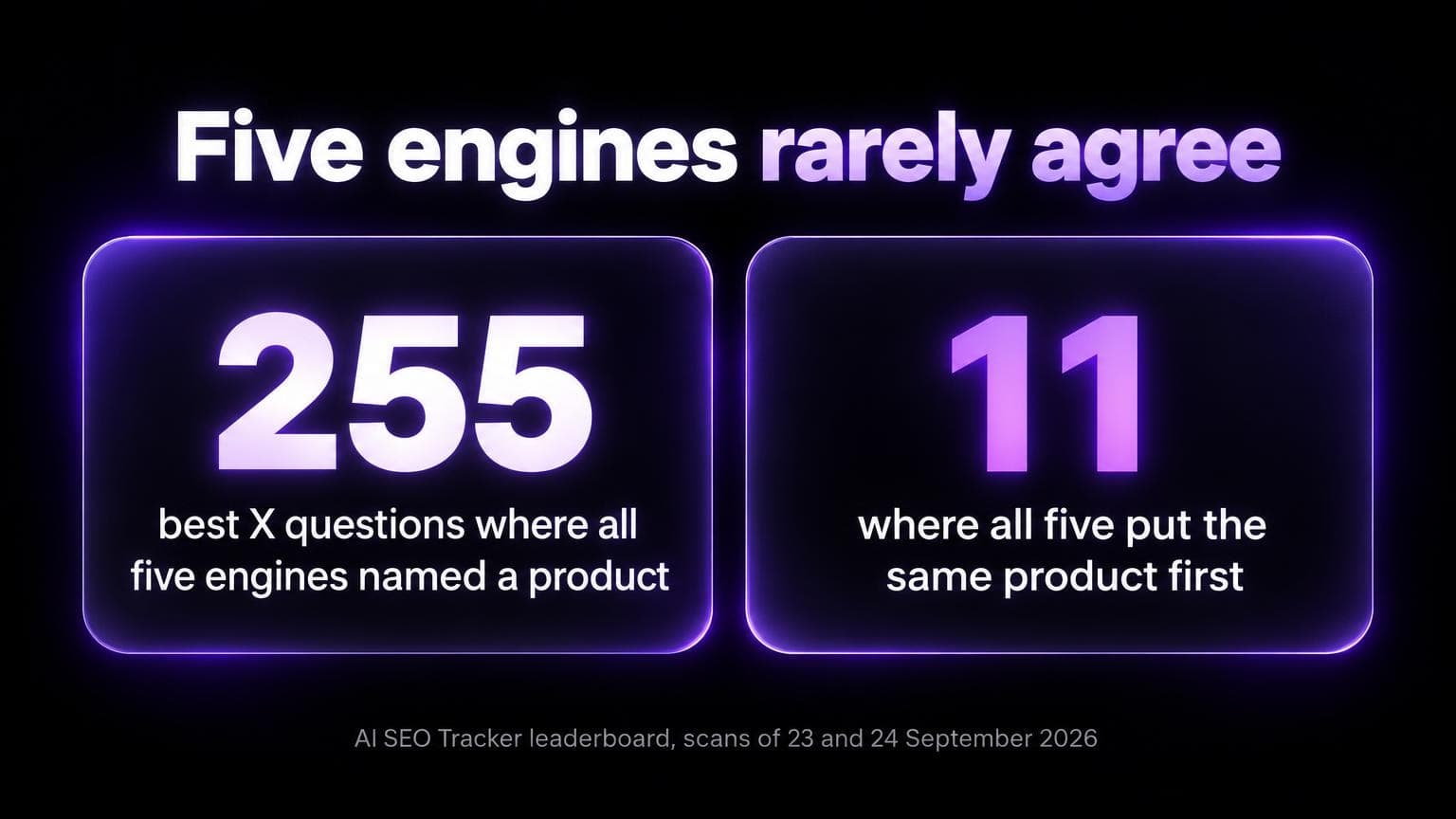
On our leaderboard, all five engines named a product on 255 questions. They agreed on first place on 11.
So: run each prompt on each engine. On more than one day. Log every answer.
Step 3. Score each engine
Three numbers. Per engine. Never blended.
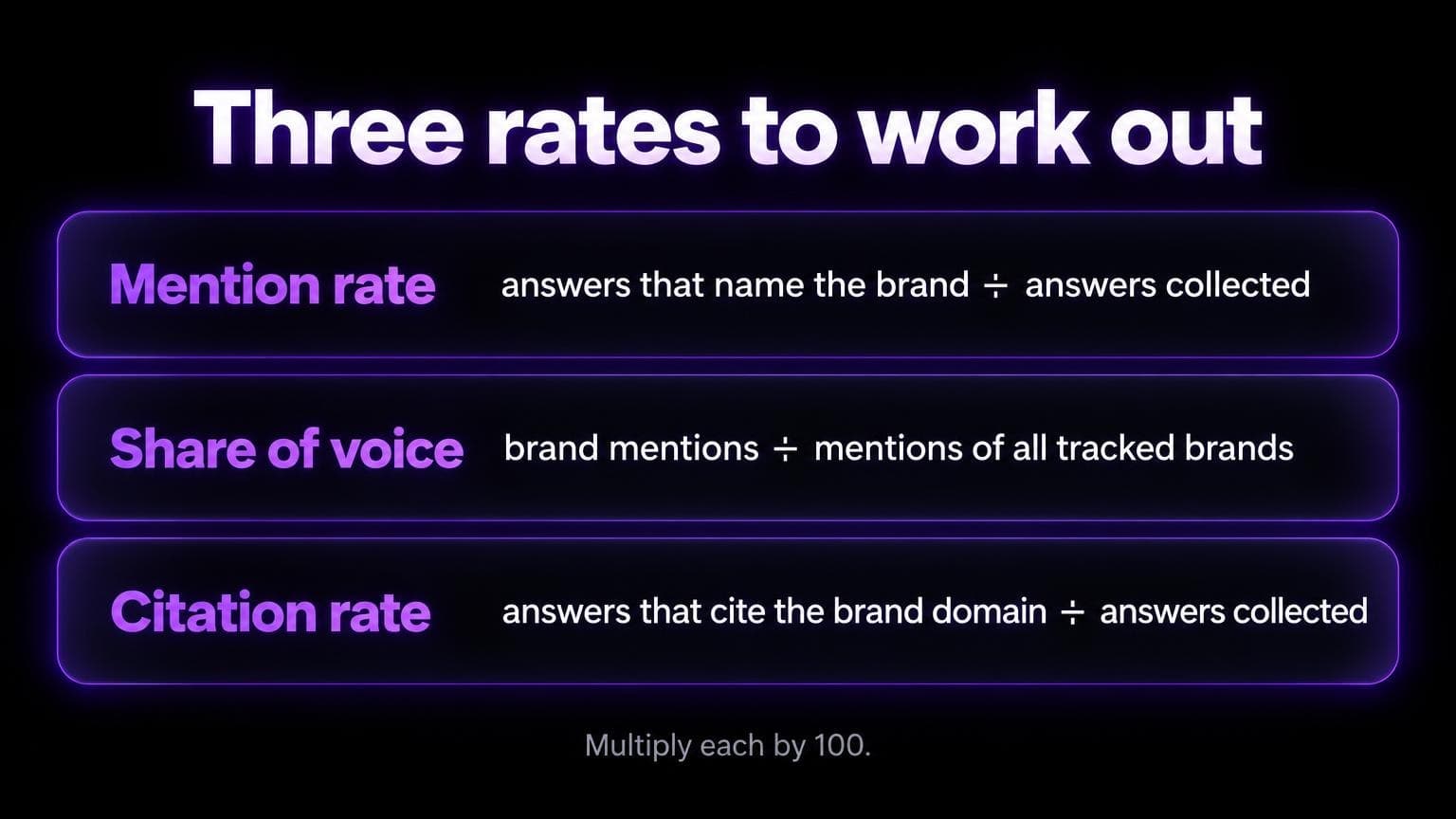
- Mention rate: answers that name you, divided by answers collected.
- Share of voice: your mentions, divided by all tracked brands' mentions.
- Citation rate: answers that link a page on your domain, divided by answers collected.
A mention and a citation are different. You can get one without the other. We do, as you'll see.
Step 4. Sort the cited pages by owner
List every page the engines cited. Then sort by who owns it.
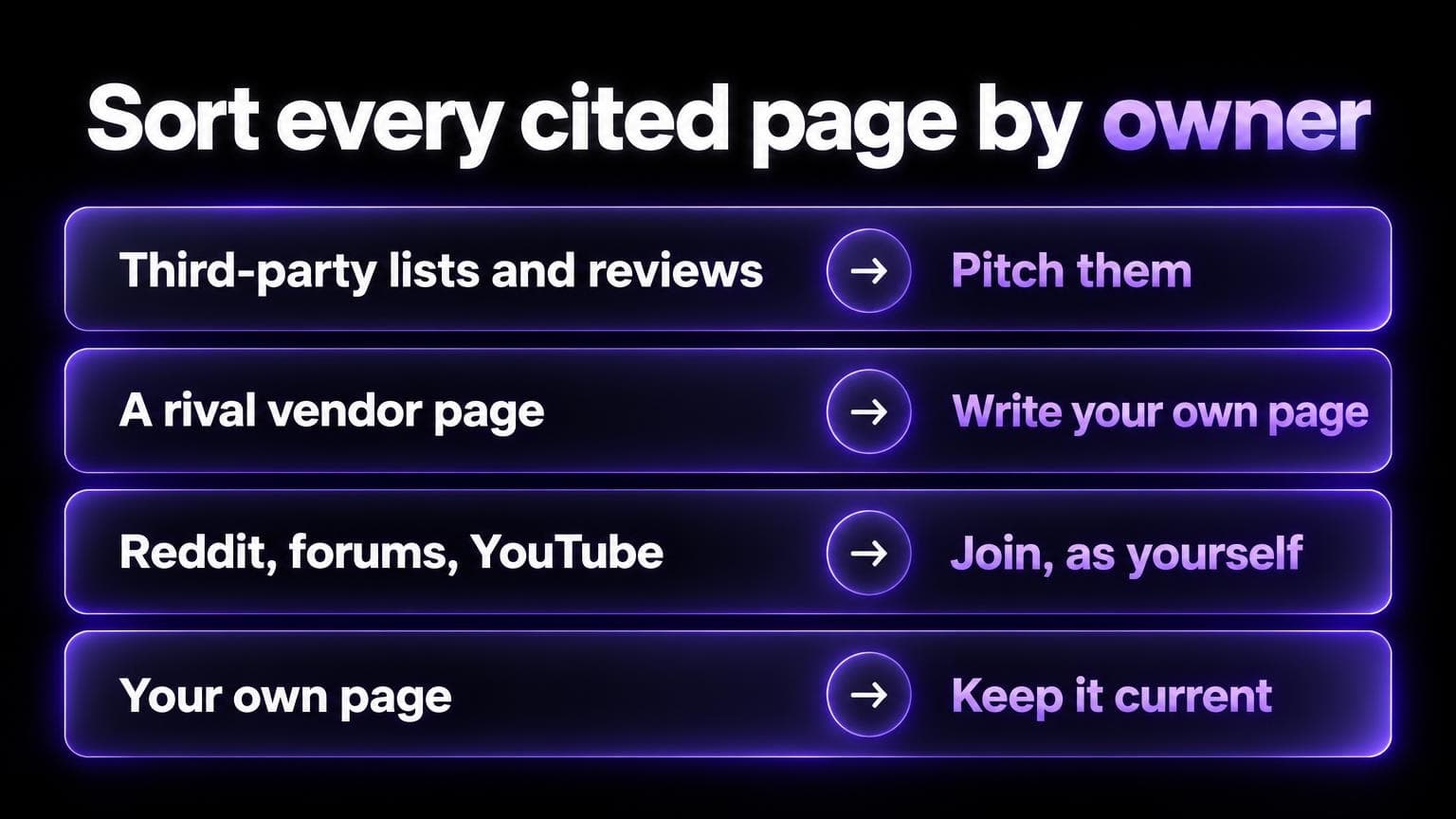
On buying questions, lists win. On our leaderboard, listicles are 77% of cited pages across 343 "best X" questions.
Count how many prompts and engines cite each page. The pages at the top are your outreach list.
Step 5. Check crawler access
The cheapest problem to fix. Check it once.
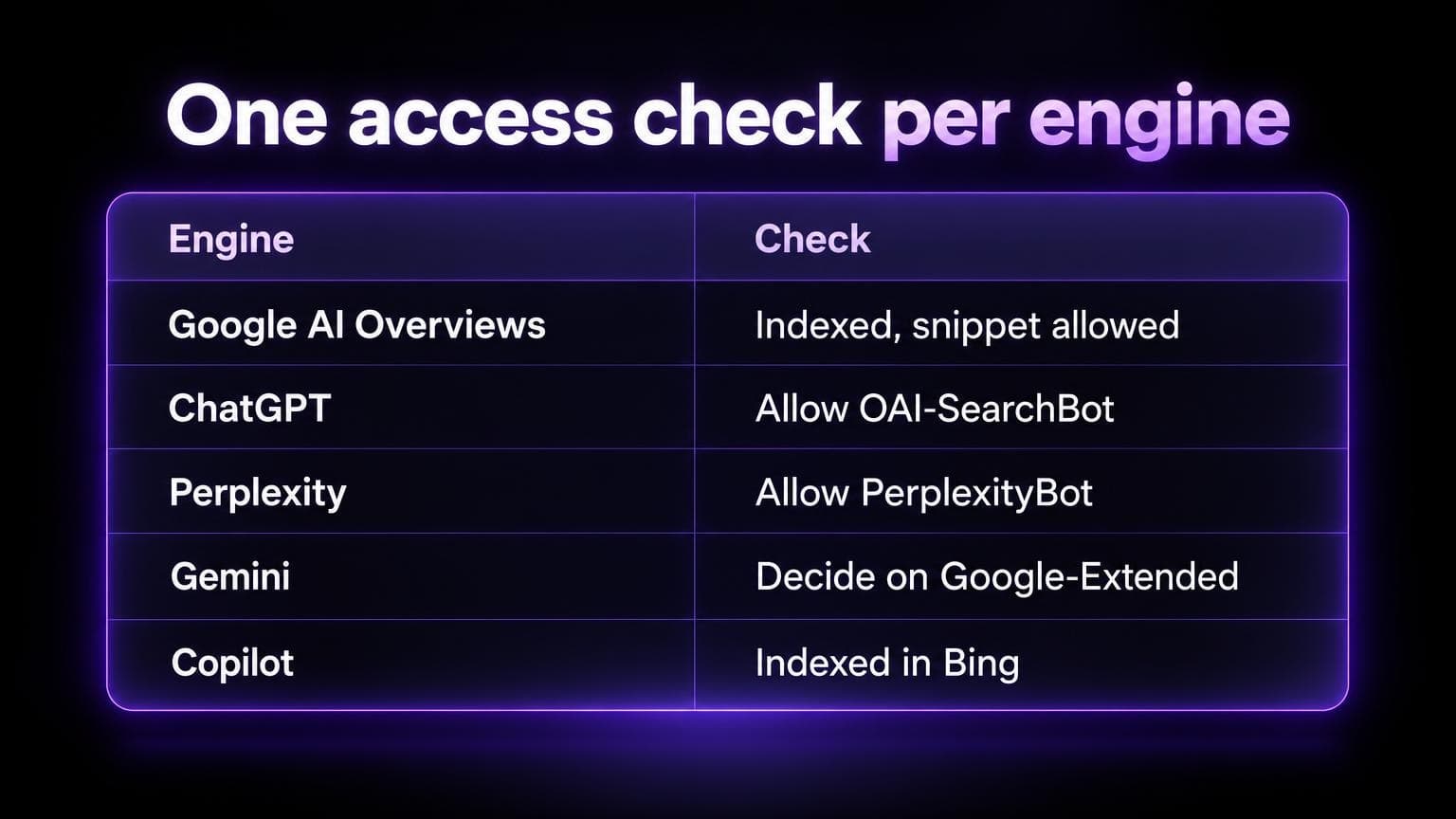
- ChatGPT: robots.txt must allow
OAI-SearchBot. OpenAI says a site that opts out is not shown in ChatGPT search answers. - Perplexity: allow
PerplexityBot. Perplexity's docs ask for it. - Google AI Overviews: the page must be indexed and allowed to show a snippet. Google lists no other technical requirement.
- Gemini:
Google-Extendedis your choice. Google says it controls Gemini training and grounding in Gemini Apps. It does not affect Google Search. - Copilot: it answers from Bing. Check Bing Webmaster Tools.
- The text itself: view the page source and search for your price or product name. In a Vercel study from December 2024, the crawlers of OpenAI, Anthropic and Perplexity did not run JavaScript.
Our free Page Inspector shows the title, headings and text it can extract from a page.
One limit: it renders the page in a browser first. So it can't tell you what a crawler that skips JavaScript gets. The page source can.
Step 6. Read what the answers say
Numbers tell you where. Answers tell you why.
Read the sentences that name you, and the ones that name your rivals:
- Is the category right?
- Is the price right?
- Are you compared with the right brands?
- What words do they use for the winner?
A wrong price in an answer often comes from a page somewhere. Look at the sources of that answer. Fix your page, or ask the other site for a correction.

A real GEO audit: our own site
Fair is fair. Here's our own audit, from 2 and 3 October 2026.
7 buyer prompts. Five engines. Scanned about daily.
Result 1. Named on 0 of 7 prompts
In the latest answers, not one names us.
Not for "best AI search engine visibility tools". Not for "how to rank in ChatGPT for my keywords".
And here's the part that stings.
We have a blog post for every one of those 7 prompts. Some of them rewritten this week.
Pages alone didn't do it.
Result 2. 215 cited pages, and one list on top
The engines cited 215 pages across our 7 prompts.
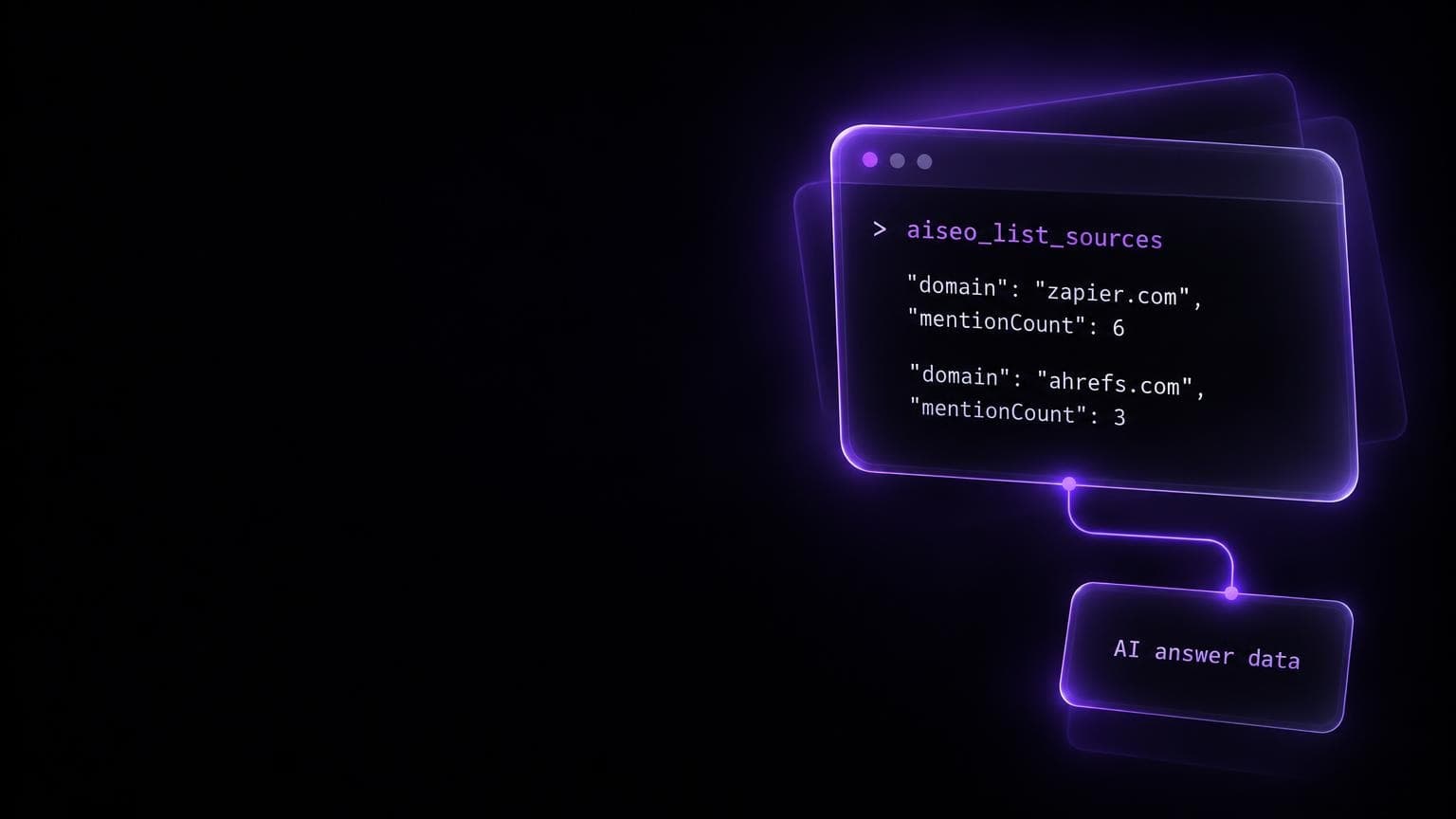
On top: Zapier's list of AI visibility tools. Cited 6 times, on 3 of our prompts.
So that's the first page to pitch. But for which engine?
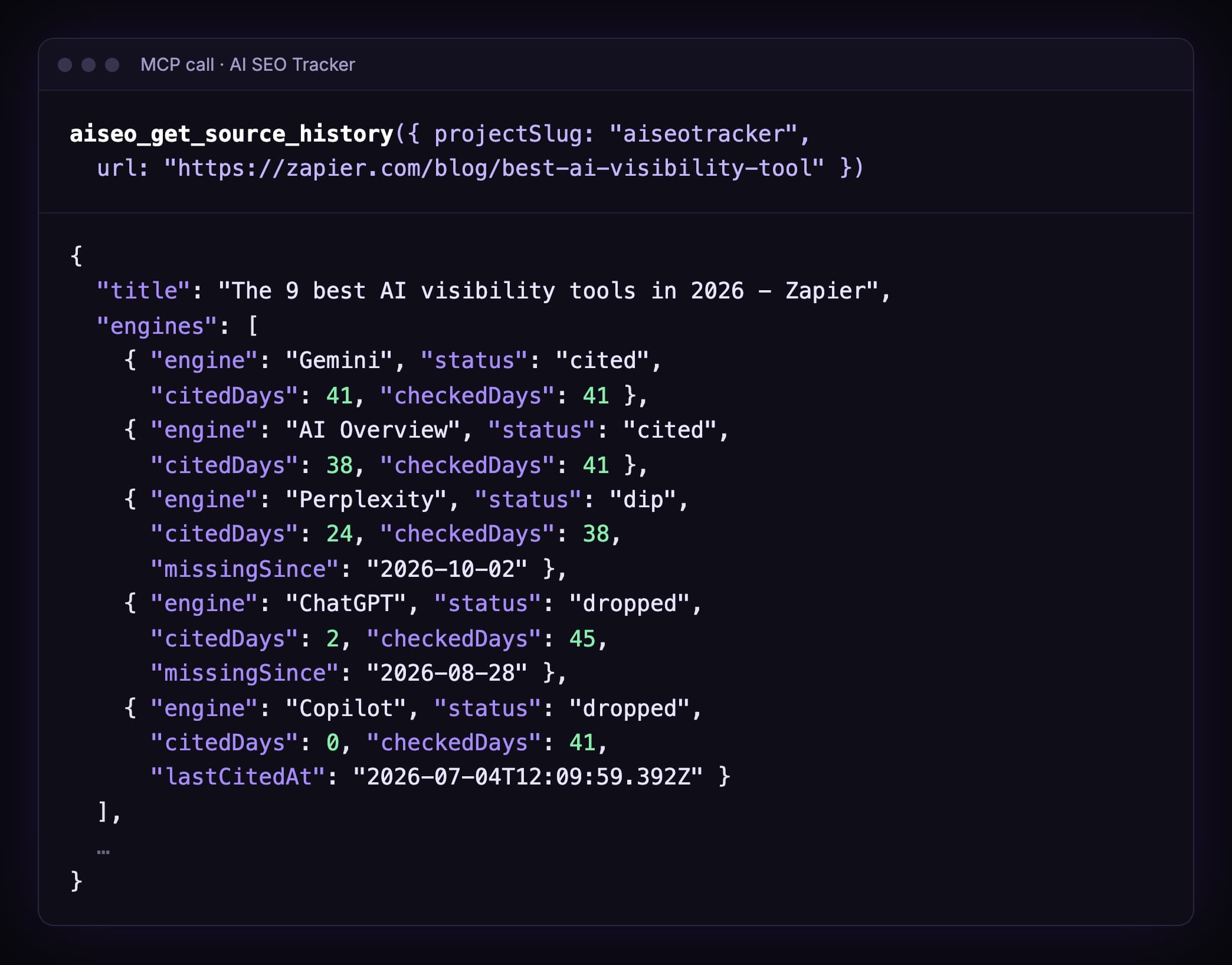
- Gemini: 41 of 41 checked days.
- AI Overviews: 38 of 41.
- Perplexity: 24 of 38, with a dip since 2 October.
- ChatGPT: 2 of 45. Dropped since 28 August.
- Copilot: 0 of 41. Last cited on 4 July.
A spot on Zapier's list would help on Gemini and Google. Probably not on ChatGPT, right now.
Result 3. Cited, but not named
This one is odd.
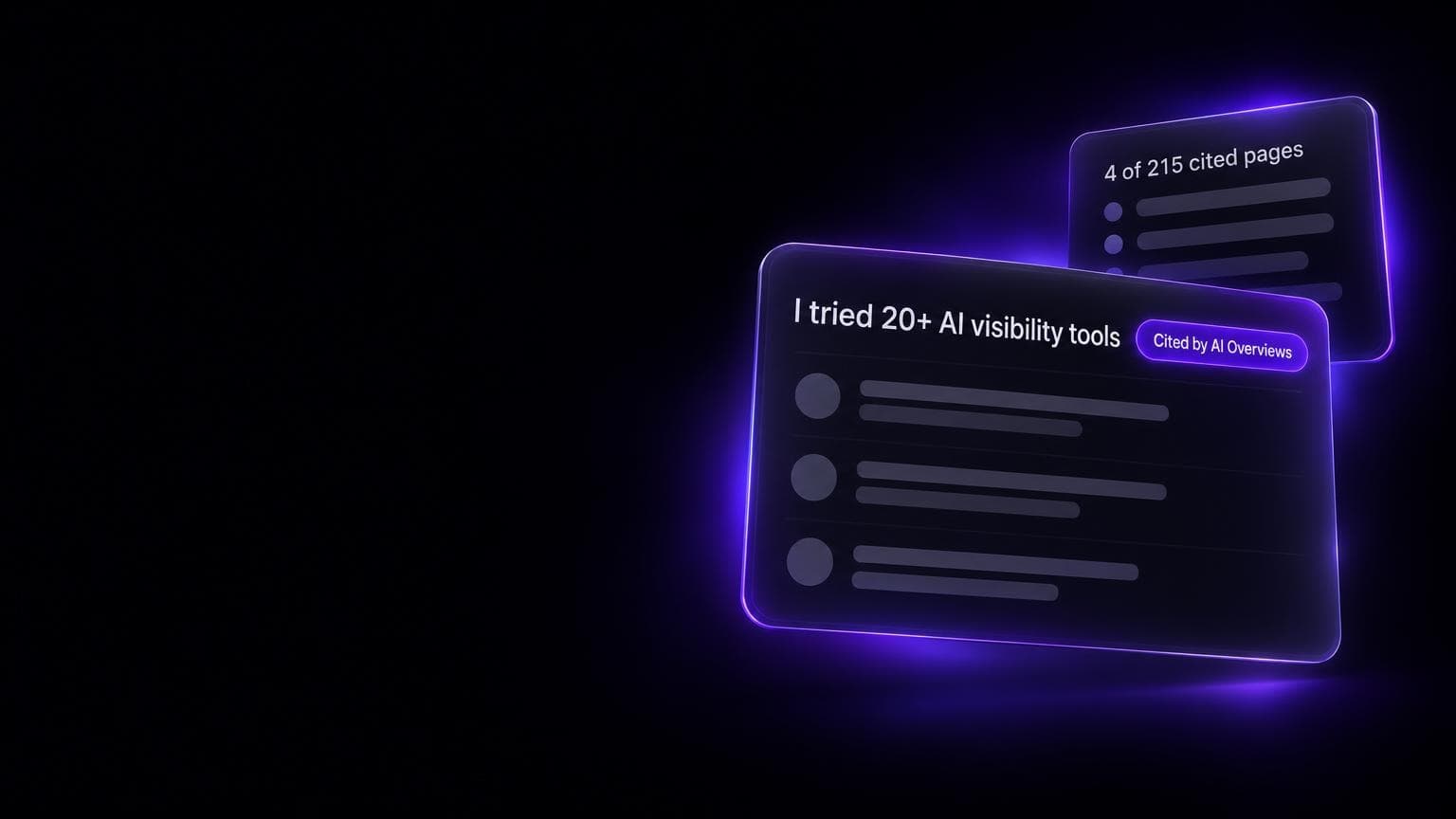
ChatGPT cites one of our own posts: best AI visibility tools.
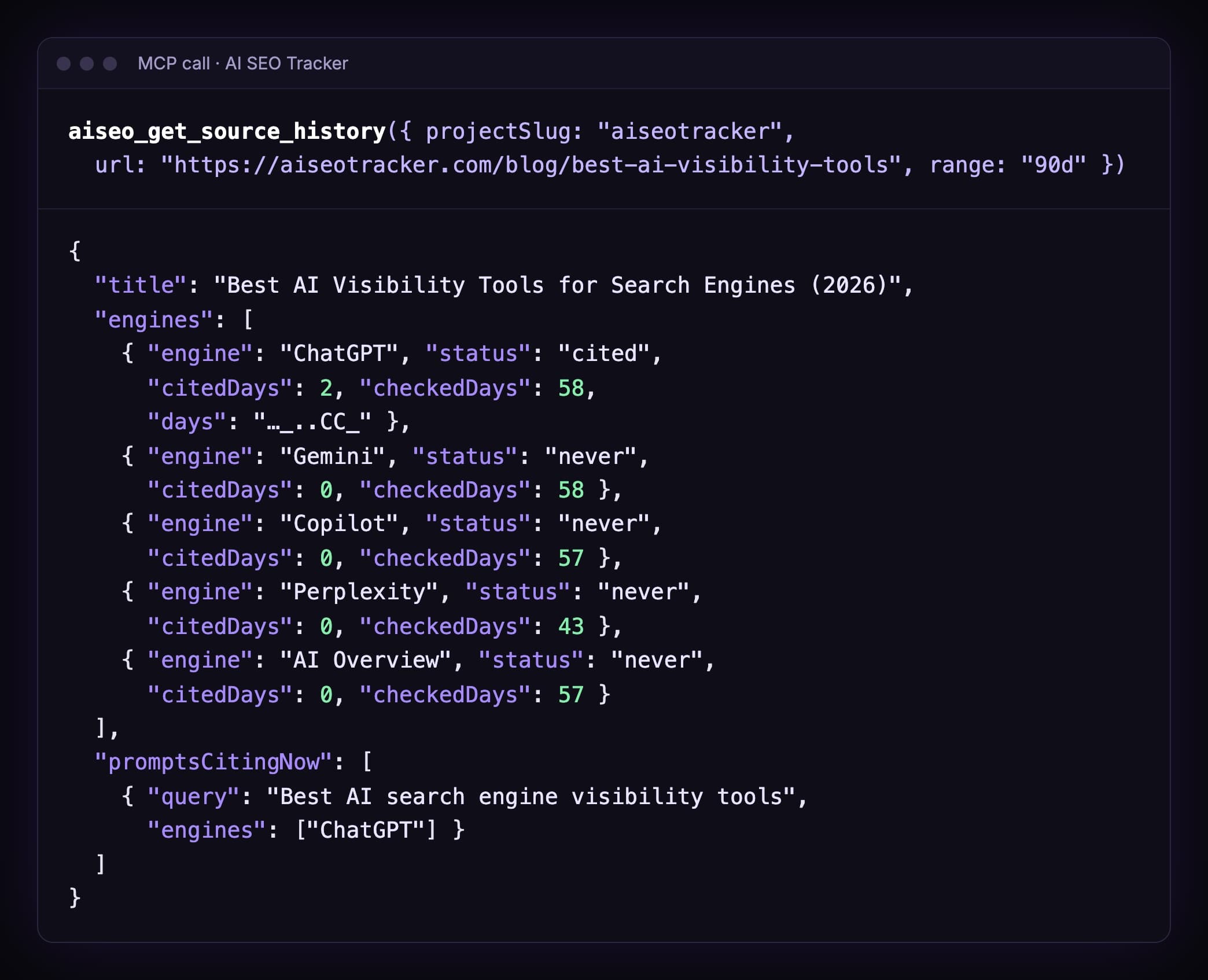
On the last two checked days. For "best AI search engine visibility tools".
But the answer still doesn't name AI SEO Tracker.
So ChatGPT uses our page as a source for other brands. That's the "cited, not named" outcome.
The fix: make our own name and what we do impossible to miss on that page.
Result 4. Reddit matters only on Google
4 of the 215 cited pages were Reddit threads.
In the last 90 days, only Google's AI Overviews cited them. ChatGPT, Gemini, Copilot and Perplexity never did.
So "go post on Reddit" isn't our first move. More: Reddit for GEO.
Result 5. Access is fine, with one choice to make
Our robots.txt:
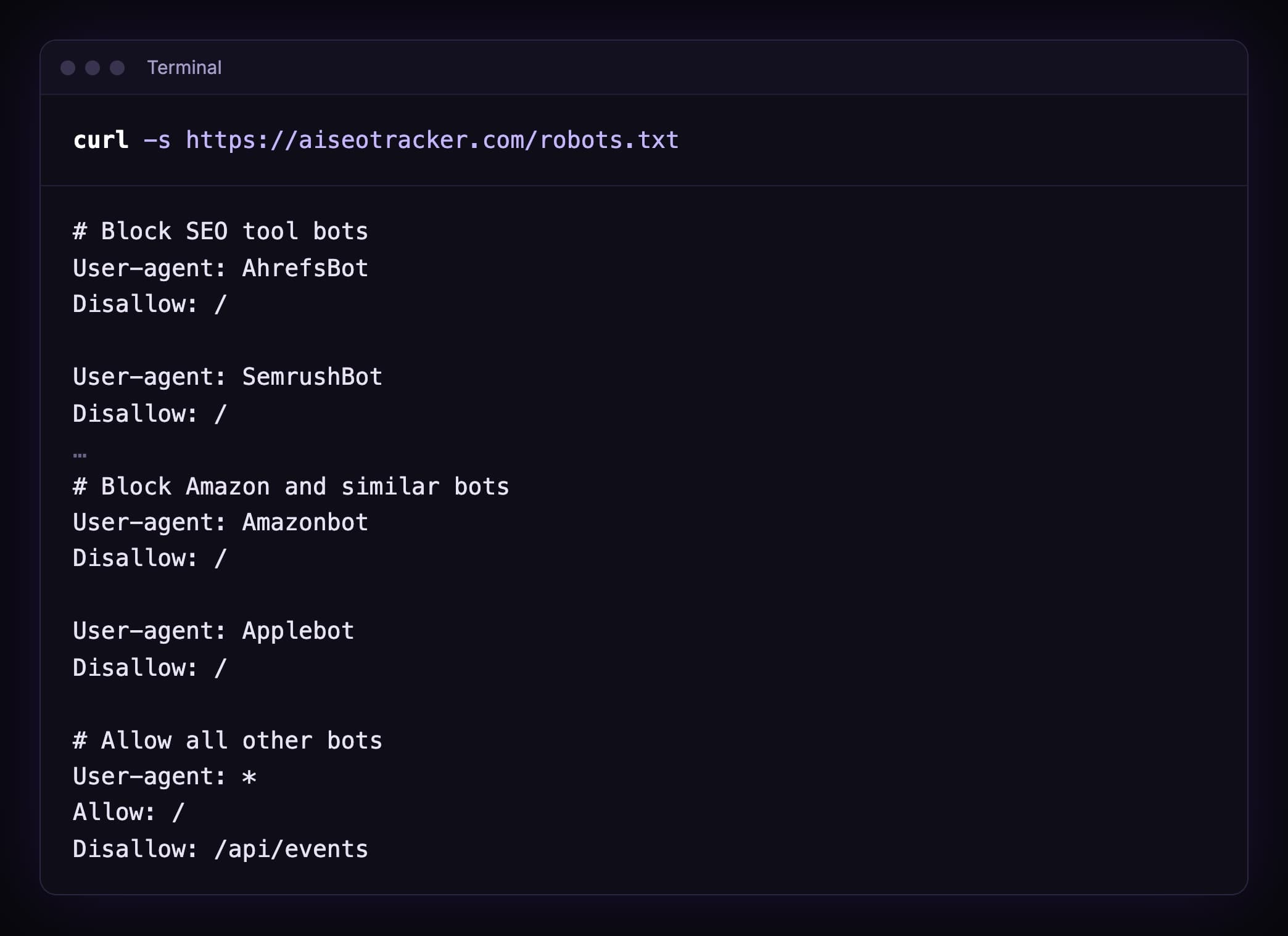
OAI-SearchBot,PerplexityBot, Googlebot and Bingbot: allowed. Good.- Applebot: blocked. Apple says Applebot powers search in Siri, Spotlight and Safari. It's not one of the five engines we track. But it's a choice to make on purpose.
Result 6. One mention in 30 days
Google's AI Overview named us once, on 7 September, in a "further exploration" line.
Not as a recommendation.
So the audit says: access is fine, pages exist, and the engines cite lists we're not on. The work is outreach, plus clearer naming on our own pages.
That's a very different plan from "add schema".
The report to hand over
An audit isn't done until someone can act on it.
Here's the data block our report skill fills from the MCP tools before it writes a word. Ours, filled for real:
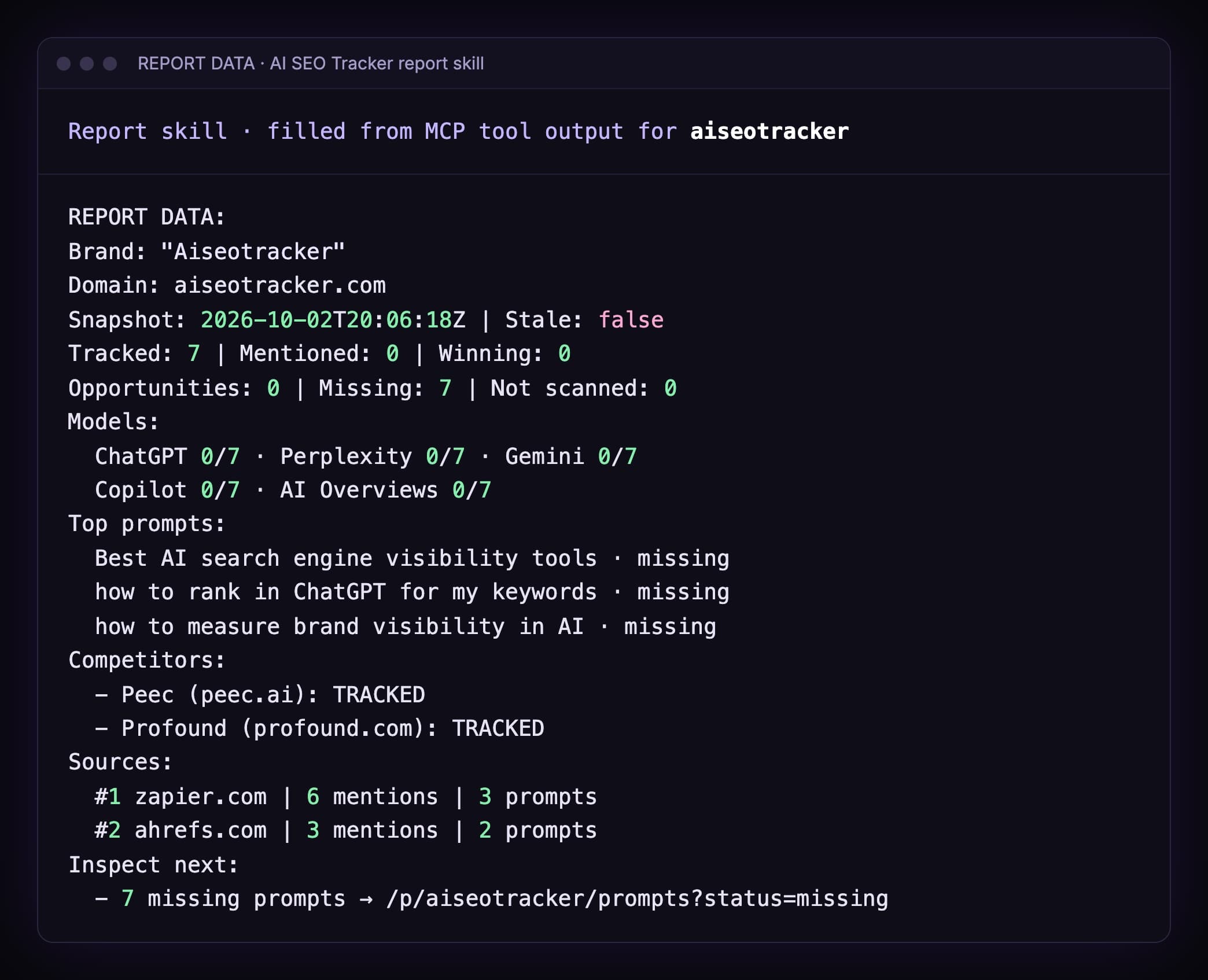
Your one-page report needs six parts:
- Scope: the prompts, engines, runs and dates.
- Scores: mention rate, share of voice and citation rate, per engine.
- Gaps: the prompts where a rival is named and you are not.
- Sources: the top cited pages, sorted by owner.
- Blockers: crawler, indexing and wrong-fact findings.
- Next check: the date you run the same prompts again.
Want a short brief written for you? It covers prompts, ranks, rivals and top cited domains. It does not check crawlers. Connect our MCP server and paste:
Fetch https://aiseotracker.com/ai-seo-report/SKILL.md and write the AI SEO report brief for [your-domain.com].
What to fix first
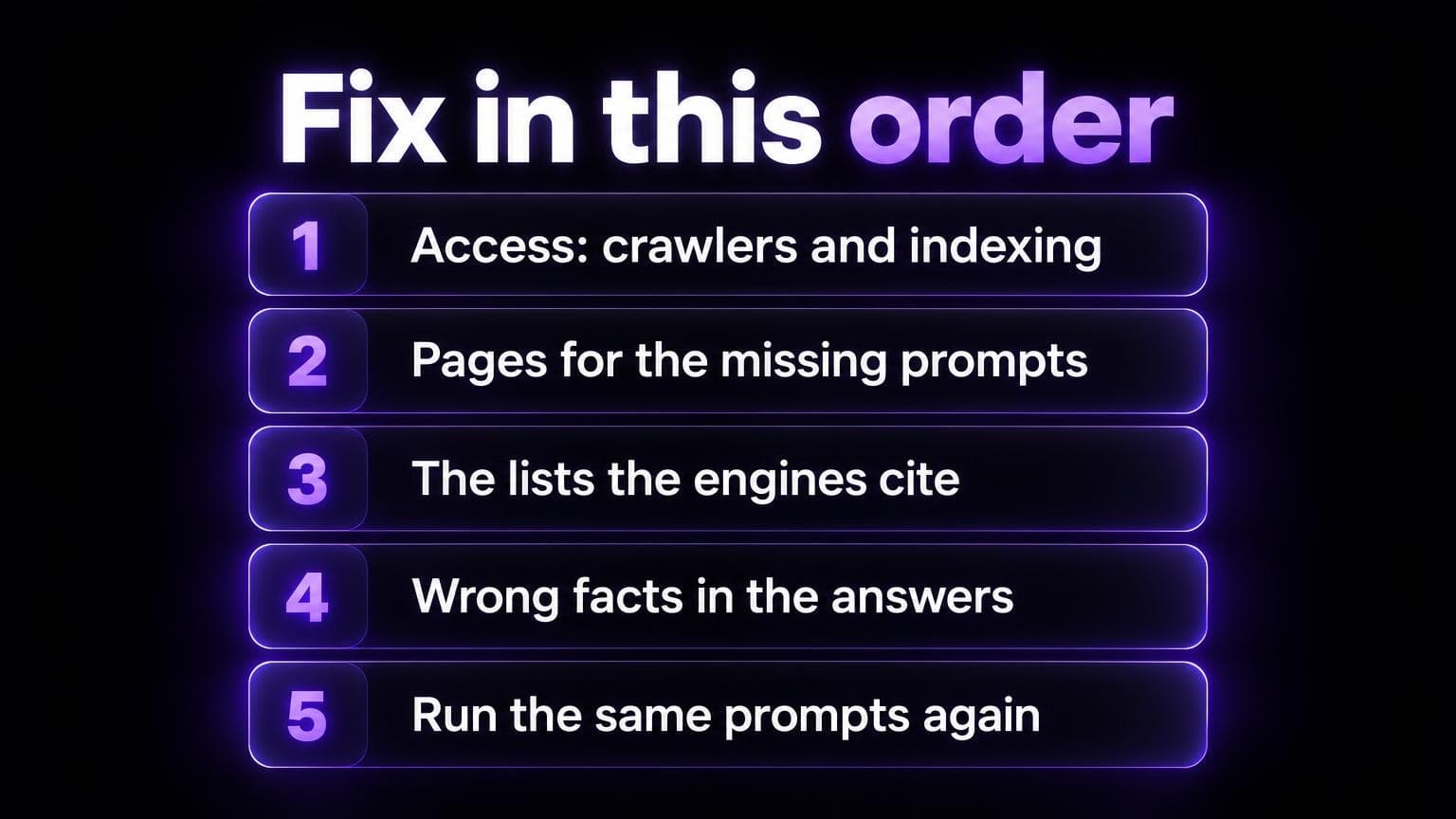
- Access. A blocked crawler is the cheapest reason to be missing.
- Pages for the missing prompts. One page per intent. Answer first, facts in plain text.
- The lists the engines cite. Pitch the editors. How to get into listicles.
- Wrong facts. Fix your pages. Ask third parties for corrections.
- Run the same prompts again. Same wording, same engines. That's the only test.
No one knows how fast an engine picks up a change. So the re-run is the proof, not the calendar.
FAQ
Is there a free GEO audit?
You can do one free, by hand. A sheet and the five engines are enough. It just takes time.
Our free tools help: Page Inspector, keyword research and the leaderboard.
The automated version is our $49 report: up to 50 prompts on five engines, scanned daily for 7 days.
How many prompts do I need?
20 to 50 for a first audit. Enough to cover each buyer intent, few enough to read every answer.
How often should I run it?
I recommend a re-run of the same prompts every month, and a full audit each quarter.
What's the difference between a GEO audit and an AEO audit?
Mostly the name. Both check if AI answers name and cite you. The terms compared.
Does schema or llms.txt fix a GEO audit?
Not on the evidence so far. Google says AI features need no special markup. What the data says.
Which engines should I audit?
The ones your buyers use. If you don't know, all five: ChatGPT, Perplexity, Gemini, Copilot and Google AI Overviews.