



TL;DR
- AI search visibility: AI SEO Tracker. Tracks ChatGPT, Perplexity, Gemini, Copilot, and AI Overviews, and the Page Inspector shows what to fix on each page.
- Off-site placements: Respona for done-for-you placements on pages AI already cites, or LinkDR for AI outreach you approve.
- Content optimization: Surfer SEO if you have the budget, NeuronWriter if you do not.
- Keyword and SERP research: Ahrefs for serious work, or Mangools for solo SEO.
- Automation at scale: Alli AI, once you manage 10+ client sites.
Does AI name your brand? Check your site.
Every SEO tool now slaps "AI" on its homepage. Most of them are thin GPT wrappers that waste your time.
Search has changed. Your content is no longer just competing on Google. It is competing for AI citations inside ChatGPT, Perplexity, and Google AI Overviews. The old SEO stack only covers half the job.
To save you from burning your budget, I tested dozens of options on live agency projects. This guide breaks down the 14 best AI SEO tools in 2026. I have grouped them by job, from visibility tracking to automated link building.
You will learn how to track where your brand appears. We will also cover how to secure placements on sites AI already trusts, and how to optimize content for the LLM era.
Let's get into it.
How I picked these AI SEO tools
There are 50+ tools that call themselves AI SEO software right now. I cut the list to 14 using three filters.
1. I've used it on a real project. Either on my own sites, on client work at the agency, or through close talks with someone who runs it daily. No tools I just found on Google and reviewed off their homepage.
2. The AI layer changes the output. Not just a "Generate with GPT" button bolted onto a keyword tool. The AI has to do real work, like score your content against ranking pages, track brand mentions in AI answers, or push page changes at scale.
3. The price fits solo SEOs and small agencies. Most picks sit between $7 and $129 a month. A couple climb to $249-$299/mo for agency tools, and I flag those clearly. No "Contact sales" only tools made the main list.
Summary of 14 best AI SEO and AI visibility tools
| Tool | Category | Best for | Starting price | Free option? |
|---|---|---|---|---|
| AI SEO Tracker | AI search visibility | Tracking ChatGPT/Perplexity citations + page-level fixes | $79/mo | No, $49 one-time report |
| Rankscale | AI search visibility | Multi-LLM tracking incl. AI Overviews | $20/mo | No |
| SE Ranking | AI search visibility | Sentiment + Google AI Overviews tracking | $129/mo | 14-day trial |
| Respona | Link building | Done-for-you placements on pages AI already cites | ~$100/placement | Contact for campaigns |
| Surfer SEO | Content optimization | Live Content Score + AI visibility | $49/mo | 7-day refund |
| NeuronWriter | Content optimization | Budget Surfer alternative | $23/mo | 7-day trial |
| Frase | Content optimization | One AI agent for full content workflow | $49/mo | 7-day trial |
| Ahrefs | Keyword + SERP research | Best keyword + backlink data | $29/mo | Free Ahrefs plan |
| Semrush | Keyword + SERP research | All-in-one SEO + AI visibility | $139.95/mo | Free account |
| Mangools | Keyword + SERP research | Cheapest full SEO toolkit | $30.50/mo | Free + AI Search Grader |
| LinkDR | Link building | AI outreach from competitor backlink profiles | $100/link | $25 onboarding credit |
| Keywords Everywhere | Keyword + SERP research | Browser extension overlay on Google + ChatGPT | $84/yr (~$7/mo) | Limited free |
| AIclicks | AI search visibility | Multi-platform AEO tracking + AI content recommendations | $59/mo | 3-day trial |
| Alli AI | SEO automation | On-page SEO at scale + AI crawler enablement | $299/mo | 10-day trial |
AI search visibility tools
Your customers now ask ChatGPT, Perplexity, and Gemini for product picks. Google now shows AI Overviews on most informational queries, which means users get their answer at the top of the SERP without clicking through. If your brand does not show up in those AI answers, you lose the click before the search even ends.
These AI search optimization tools track where your site appears across AI answer engines and inside Google AI Overviews. You see which prompts cite you, which ones skip you, and which competitors take the spot instead. A few tools go further and tell you what to fix on the page so you get picked up next time.
Here are the three visibility monitors I run weekly.
1. AI SEO Tracker
Best for: SEOs who want to track AI visibility AND see exactly what to fix on each page
Starting price: $79/mo (Basic), $199/mo (Pro with Page Inspector)
Free plan: No free scan or free trial. Signup is free and shows the suggested prompts before payment. The AI SEO report costs $49 once
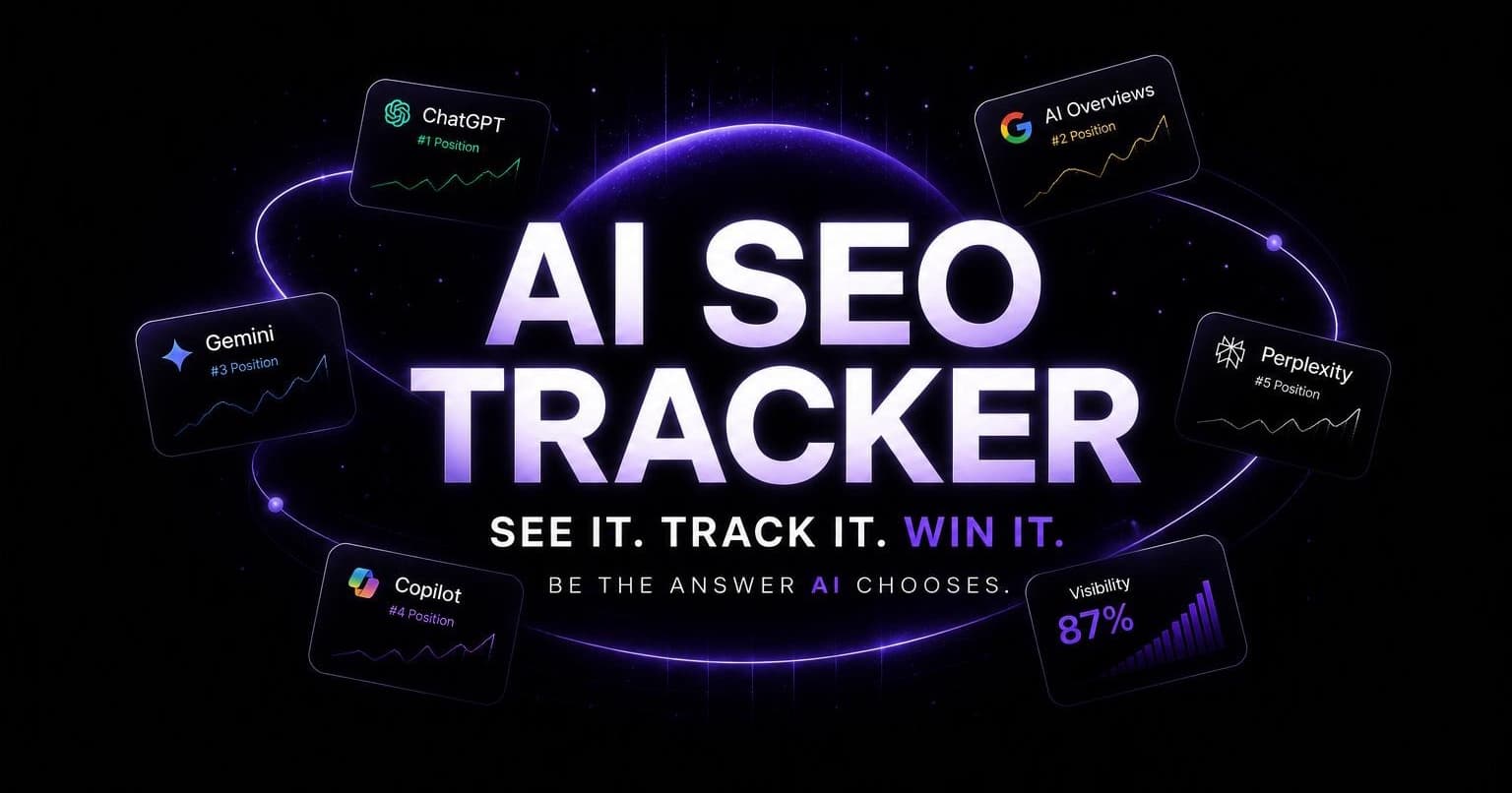
AI SEO Tracker monitors your brand mentions across ChatGPT, Perplexity, Gemini, Copilot, and AI Overviews from one dashboard. You add the prompts you want to track, pick your competitors, and get a weekly report showing who gets cited and where.
The feature that changed how I work is the Page Inspector. You paste a URL and the tool shows you how AI engines read that page. It flags missing entities, weak answers, and thin sections that LLMs skip. Most AI SEO tools stop at tracking. This one gives you the fix.
I use it for weekly client reports on AI share of voice, and I run the Page Inspector on underperforming blog posts before rewrites. The $49 AI SEO report scans up to 50 prompts on five AI engines for 7 days, and you keep the report.
Basic at $79/mo covers 50 prompts. Pro at $199/mo unlocks the Page Inspector, competitor analysis, and unlimited seats. If you care about the fix side, Pro is the one.
Pros:
- Page Inspector tells you what to fix, not just where you rank
- $49 one-time AI SEO report: up to 50 prompts on five AI engines for 7 days
- Clean weekly reports that drop straight into client decks
- Unlimited team seats on Pro
Cons:
- Page Inspector is locked to the $199/mo Pro plan
- Tracks 5 AI engines. Claude and Grok are not in the report.
- Basic plan's 50 prompts runs out fast for agency use
2. Rankscale.ai
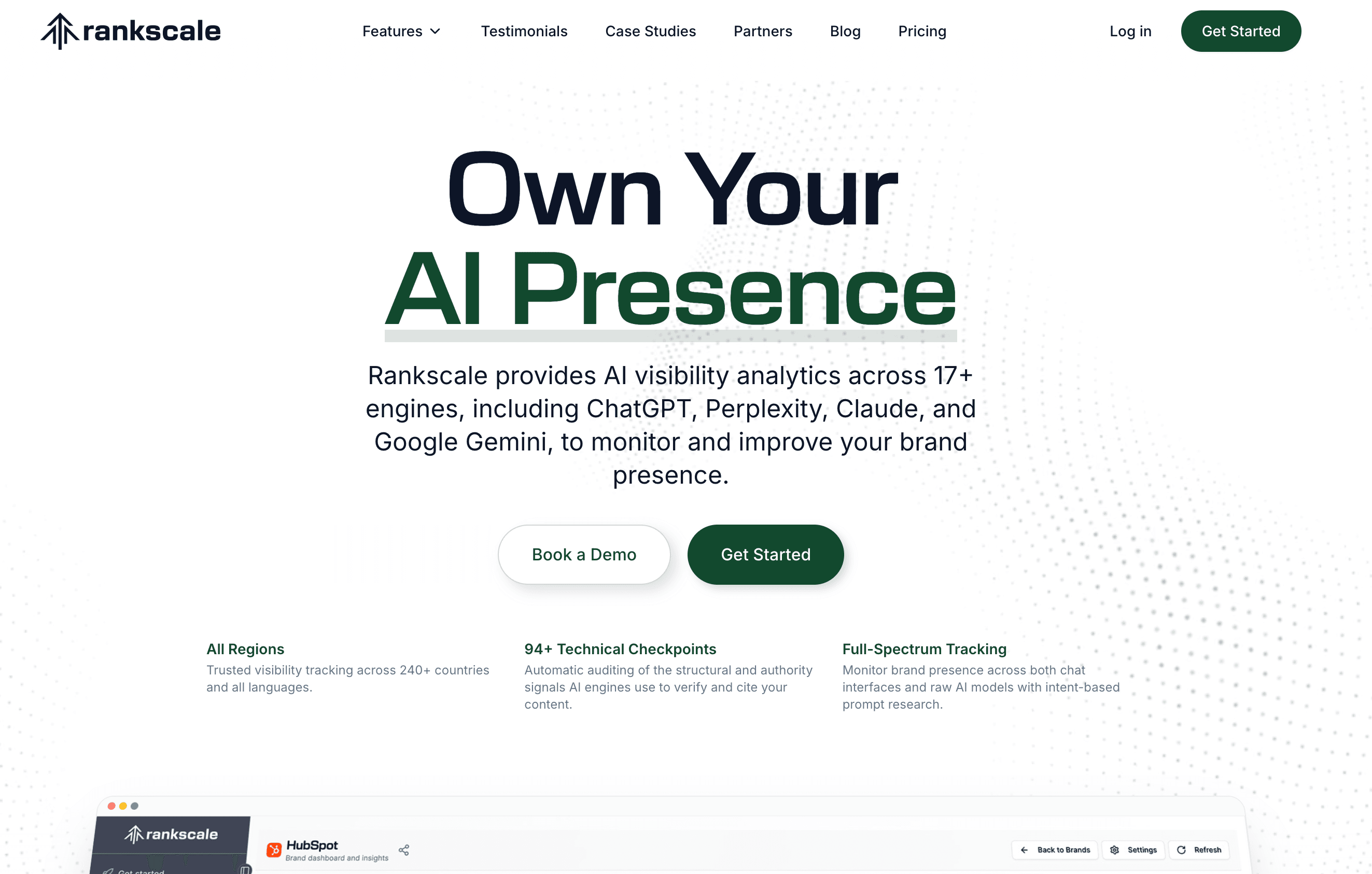
Best for: Freelancers and small agencies who want cheap, flexible AI visibility tracking across 20+ LLMs
Starting price: $20/mo (Essential), $99/mo (Pro), $780/mo (Scale)
Free plan: No, $20 Essential plan works as a low-risk starter
Rankscale takes a different angle on AI search optimization tools. Instead of fixed prompt caps, you pay for credits. One credit equals one AI response, and unused credits roll over to the next month. That rollover is the real win, since you never lose budget on a quiet week.
The model coverage is the biggest edge. Rankscale tracks 20+ LLMs including ChatGPT, Perplexity, Gemini, Claude, Google AI Overviews, AI Mode, DeepSeek, Grok, and Copilot. Most AI SEO tools stop at 4 or 5 engines.
Each run saves a full snapshot of the AI response, your mention position, and the source domains cited. You can export to CSV or pipe the data into Looker Studio for client dashboards.
Essential gives 120 credits and 10 web audits. Pro bumps that to 1,200 credits and 50 page audits. Scale at $780/mo unlocks 12,000 credits and unlimited audits for agencies tracking dozens of brands.
Pros:
- Credit pricing lets you adjust tracking to your exact budget
- Tracks 20+ LLMs, more than any other tool on this list
- Unused credits roll over to the next month
- Web audits give page-level content recommendations
Cons:
- UI has a learning curve, not as clean as simpler tools
- Shows what shifts but doesn't always explain why
- $20 plan runs out fast if you track more than a couple of brands
3. SE Ranking
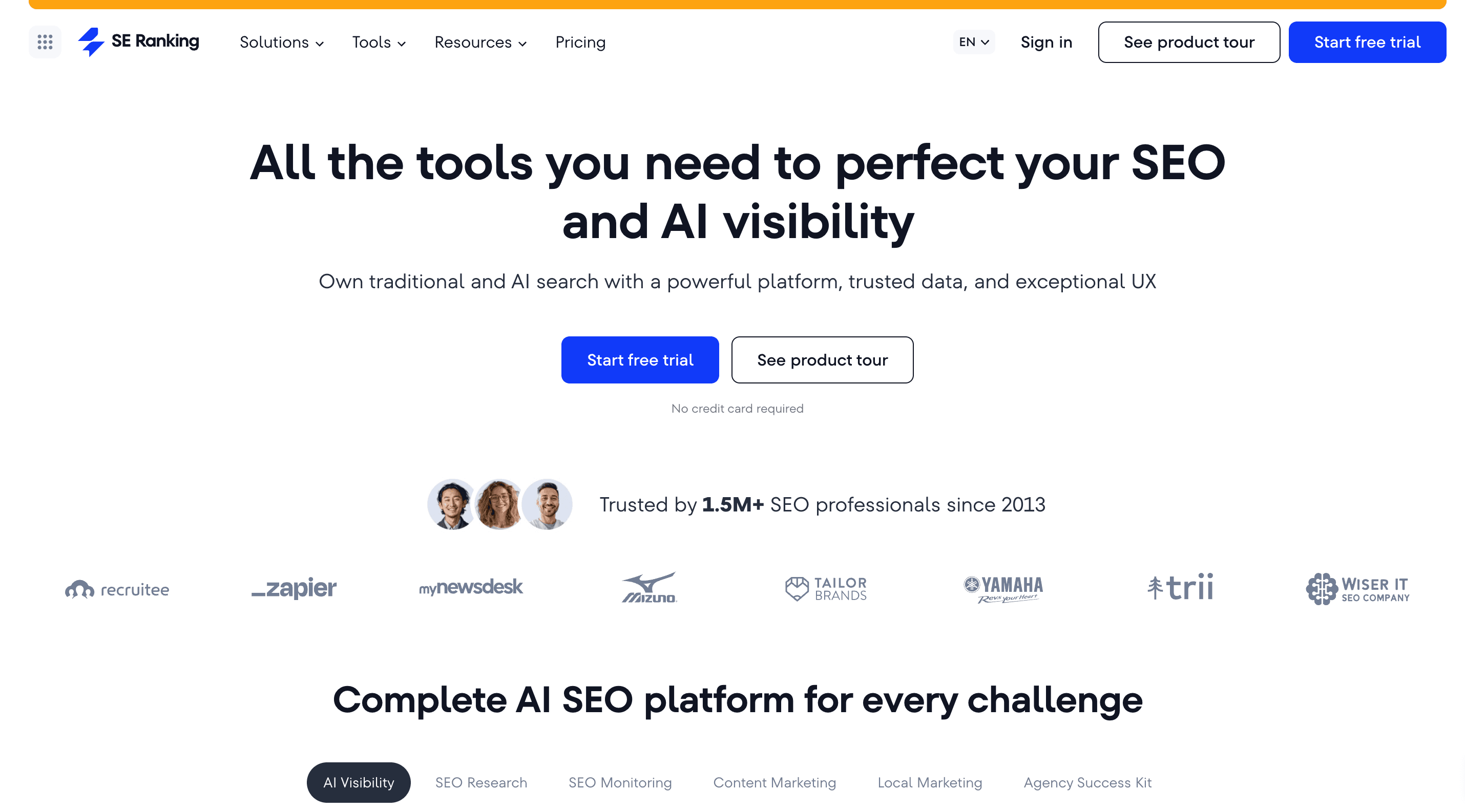
Best for: Marketing teams running SEO and Generative Engine Optimization (GEO) from one platform
Starting price: $129/mo (Core), AI Search add-on $89/mo
Free plan: 14-day free trial, no credit card
SE Ranking has moved from a classic SEO tool to a mixed SEO + GEO platform. AI tracking is no longer a side tab. It now sits inside the Core and Growth plans, so you manage Google rankings and AI visibility from one dashboard.
Core at $129/mo gives you 100 AI prompts per day. Growth plan lifts that to 250 per day. Daily prompts turn GEO tracking into a habit instead of a monthly report.
The suite covers five surfaces: Google AI Overviews, AI Mode, ChatGPT, Perplexity, and Gemini. The "No cited" view inside the GEO Research module flags AI answers where competitors get cited but you don't. Useful for spotting content gaps fast.
The $89/mo AI Search add-on unlocks SE Visible. It shows if AI answers talk about your brand in a good, bad, or neutral way, and tracks how that changes over time.
Pros:
- 100 daily AI prompts on the base plan
- Dedicated GEO Research module with competitor gap view
- One platform for SEO and GEO workflows
Cons:
- $129/mo is steep for solo freelancers
- White-label and full AI dashboard are extra add-ons that push cost past $300/mo
- Most useful if you go all-in on the full platform
Link building and off-site placement tools
Visibility tools tell you which listicles, roundups, and publisher pages shape AI answers. These two handle the outreach side: earning a spot on those pages after you know the gap.
Respona is the done-for-you route when you want placements on AI-cited URLs without running outreach yourself. LinkDR is the workflow route when you want competitor-derived prospects, AI-drafted pitches, and approval before anything goes live.
4. Respona
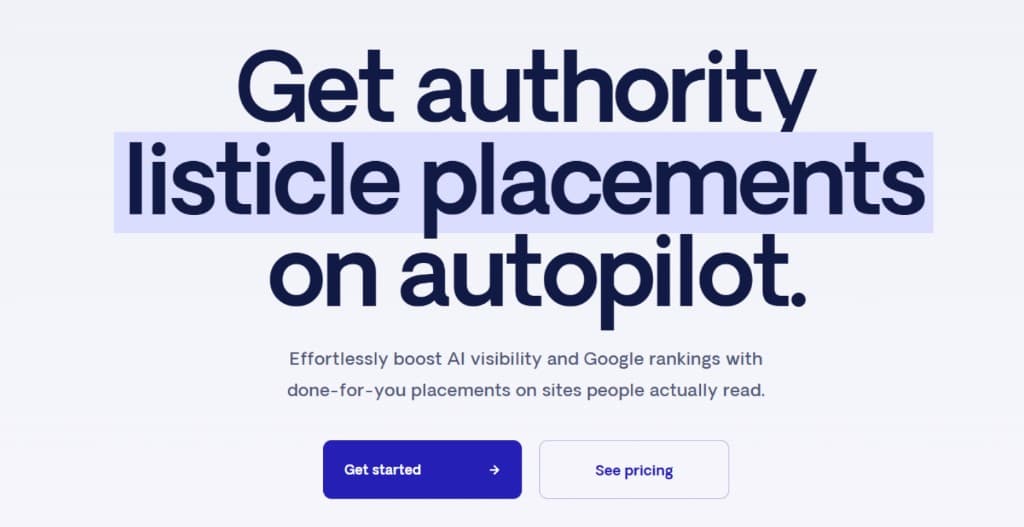
Best for: Teams that know where AI cites competitors but need help earning placements on those same pages
Starting price: From ~$100 per placement (varies by site authority and traffic)
Free plan: No - campaign-based pricing
Most AI SEO tools stop at measurement. They tell you ChatGPT cited a listicle you are not on. Respona is built for the next step: getting you onto the articles, listicles, and publisher pages that already shape AI answers.
The workflow starts with AI visibility campaigns. You identify the exact URLs and domains cited for your target prompts across ChatGPT, Google AI Overviews, Perplexity, and similar systems. Respona maps competitor citation patterns so you see which third-party pages keep winning the same queries.
Where it differs from DIY outreach is the done-for-you placement model. Respona handles prospecting, publisher outreach, content coordination, and securing guest posts, editorial mentions, link insertions, and listicle inclusions on sites with real traffic and topical fit.
Pros:
- Targets the same off-site pages AI engines already trust
- Combines citation research with managed outreach (not just a contact database)
- Strong fit for listicle and comparison queries where AI pulls third-party roundups
Cons:
- Per-placement pricing adds up fast on competitive categories
- Not a dashboard for daily prompt tracking - pair with a visibility monitor
- Works best when your on-site content is already solid
5. LinkDR
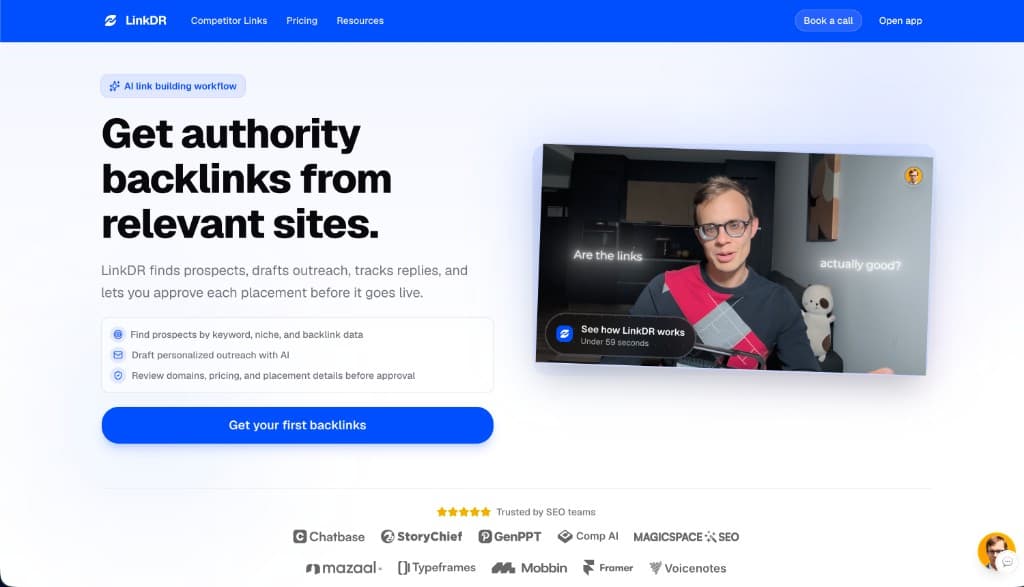
Best for: Founders and SEO teams who want competitor-derived link prospects, AI-drafted outreach, and approval control before anything goes live
Starting price: From $100 per link (DR 20+ tier). DR 50+ placements from $400/link
Free plan: $25 new-account onboarding credit (7 days). Free competitor domain analysis to start
LinkDR is an AI link building workflow, not a generic contact database. You enter a competitor domain, LinkDR pulls their backlink profile, filters spam, and ranks prospects by relevance with match scores. Guest posts, resource pages, and contributor slots show up in one list instead of a spreadsheet you build by hand.
The outreach layer is where the AI actually earns its keep. LinkDR reads the prospect's article before drafting email. References specific quotes and angles so the pitch does not read like a mail merge. You still approve domains, pricing, and placement details before anything goes live.
Pricing is order-based, not a flat SaaS seat. DR tiers run from $100/link (DR 20+) up to $500/link (DR 60+). Listicle and product-review placements add 20%. Auto-approve matching sites knocks 10% off when you trust the filters.
Pros:
- Starts from sites that already link to competitors, not cold guessing
- AI personalization references the target article, not template fluff
- You review each domain and total cost before payment
Cons:
- Per-link pricing adds up fast if you need volume
- Not a daily AI visibility monitor - pair with a citation tracker
- Order workflow is built for link buying, not DIY-only outreach

AI content optimization tools
These tools help you write content that actually ranks. You paste your draft into the tool, and it scores your page against the top results on Google for your keyword. It tells you which words are missing, which sections are thin, and which questions your competitors answer that you don't.
Think of them as a second pair of eyes that have read every top-ranking page on your topic. Most SEO writers I know use one of these daily. Here are the three worth paying for.
6. Surfer SEO
Best for: Writers and agencies who want live content scoring plus built-in AI visibility tracking
Starting price: $49/mo (Discovery), $99/mo (Standard), $182/mo (Pro)
Free plan: No free trial. 7-day money-back guarantee
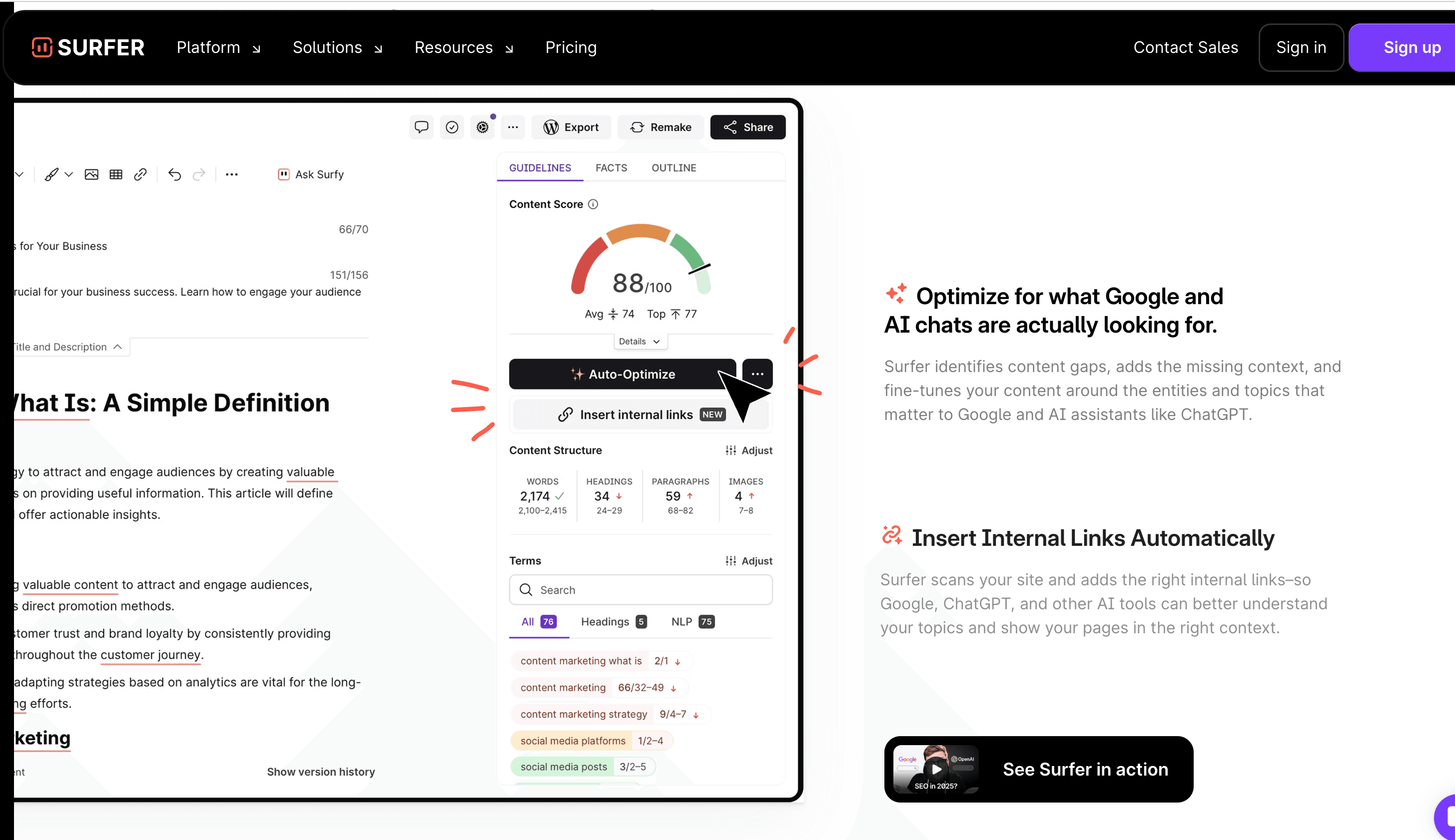
Surfer is the most-used content optimization tool in SEO. You paste your draft into the Content Editor, and it gives you a live score from 0 to 100 based on how your draft compares to top-ranking pages for your keyword.
The score goes up as you add the right words, hit the right length, and cover the right subtopics. Surfer's own study shows a 0.28 correlation between the score and Google rankings.
The Content Editor runs inside Google Docs and WordPress. Surfer also built AI visibility tracking into every plan, so you see where your pages show up in ChatGPT and other AI answers without paying extra.
Standard at $99/mo covers 360 documents and 25 AI prompts tracked weekly. Pro at $182/mo gives 50 prompts refreshed daily plus internal linking and a cannibalization report. Peace of Mind at $299/mo unlocks unlimited documents and 100 AI prompts.
Pros:
- Live Content Score that updates as you type
- AI visibility tracking built in from the $99 Standard plan, no add-on needed
- Works inside Google Docs and WordPress
Cons:
- Keyword research is a topic cluster tool, not a full Ahrefs replacement
- No free trial, only a 7-day refund window
- Daily AI prompt refresh needs the $182 Pro plan
7. NeuronWriter
Best for: Bloggers, freelancers, and small teams who want Surfer-level content optimization at a quarter of the price
Starting price: $23/mo (Bronze), $45/mo (Silver), $69/mo (Gold)
Free plan: 7-day free trial under Gold plan features
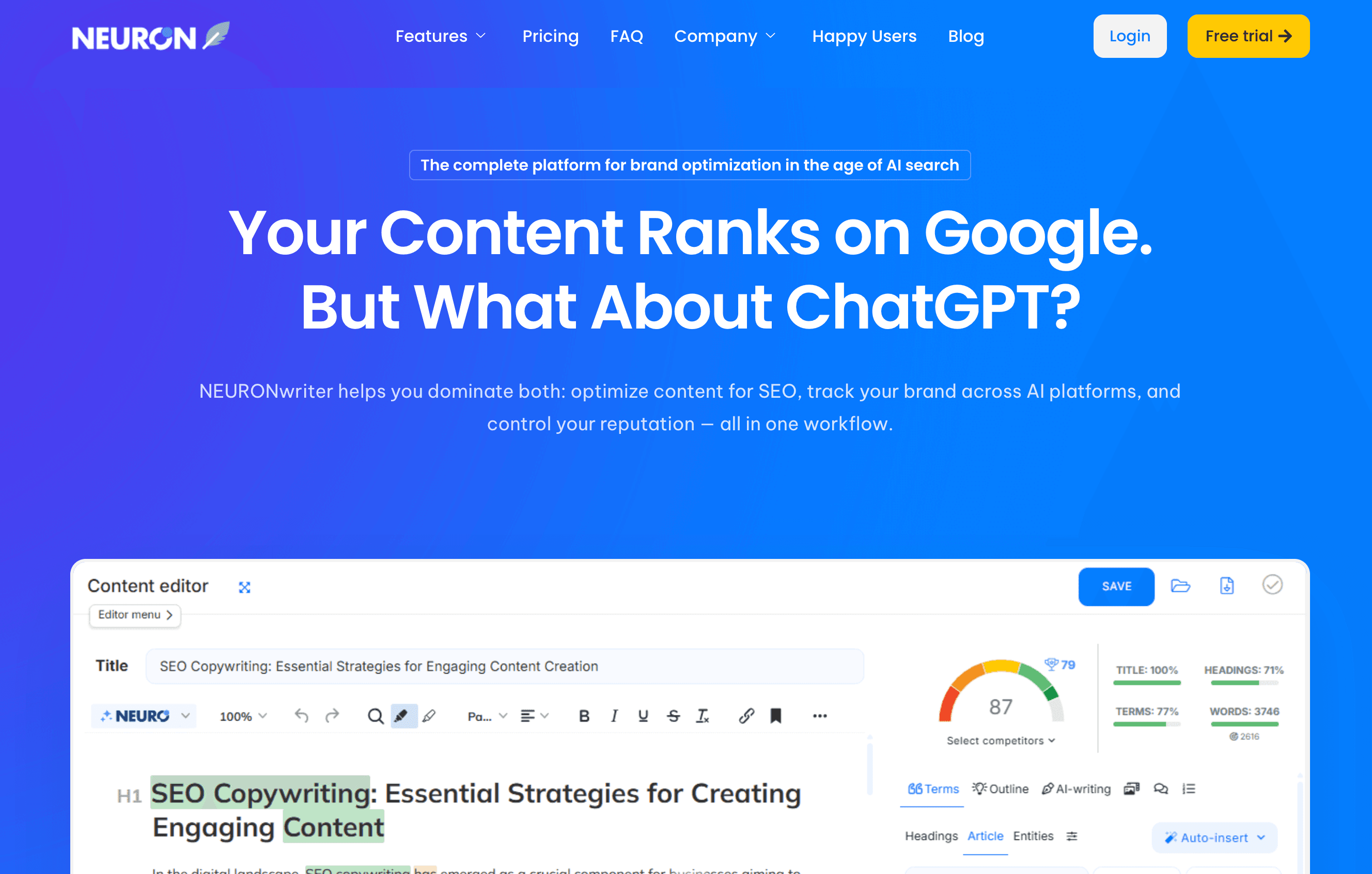
NeuronWriter is the budget pick in the content optimization tool category. It does what Surfer does, pulling top-ranking pages for your keyword, runs NLP on them, and tells you which terms, headings, and questions to cover. But it starts at $23/mo instead of $99/mo.
You paste your draft into the editor and get a live content score. Terms light up green when you include them, yellow when you overuse them, and red when you stuff them. Simple visual system that works even for writers who are not SEOs.
The AI drafting layer runs on GPT-4o and Claude Sonnet 3.5, so first drafts come out usable. Gold at $69/mo unlocks Google Search Console, WordPress, plagiarism checks, and custom AI templates.
Bronze at $23/mo gives you 2 projects, 25 analyses, and 15,000 AI credits. Fine for a solo blogger.
Pros:
- Cheapest proper AI content optimization tool at $23/mo
- Uses GPT-4o and Claude Sonnet 3.5 for drafting
- Chrome extension works inside WordPress and Google Docs
Cons:
- UI less polished than Surfer, small learning curve
- AI-generated content still needs editing before publishing
- Integrations locked to the $69/mo Gold plan
8. Frase
Best for: Content marketers who want one AI agent running research, briefs, optimization, and AI visibility tracking
Starting price: $49/mo (Starter), $129/mo (Professional), $299/mo (Scale)
Free plan: 7-day free trial
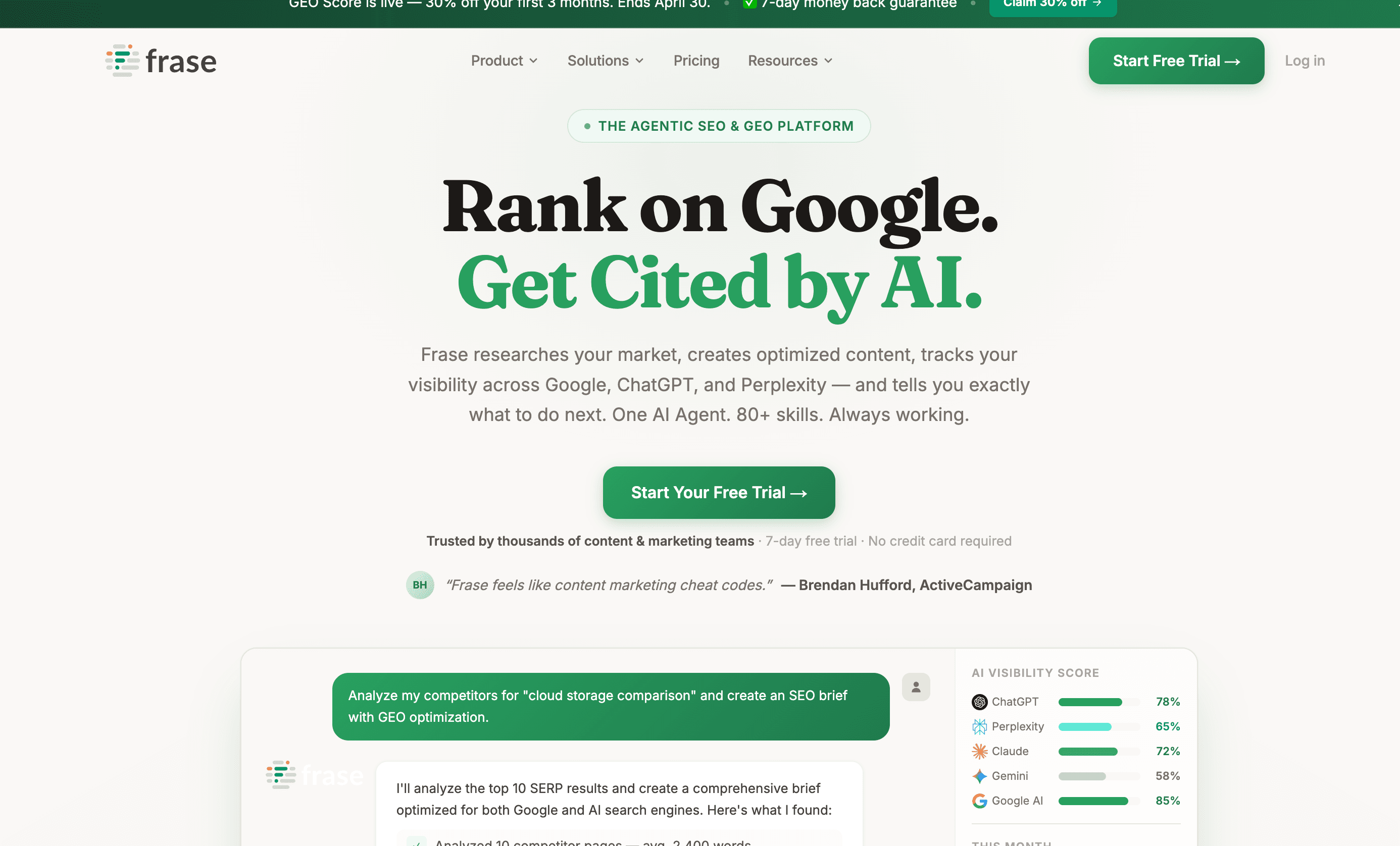
Frase is built around a single AI agent that handles research, brief generation, optimization scoring, AI visibility tracking, site audits, and publishing through an API.
The brief builder is the standout feature. You enter a keyword and Frase pulls the top-ranking pages, extracts headings, word counts, and People Also Ask clusters, then builds a writer-ready brief in 30 seconds. That saves two to three hours per article.
The editor scores your draft in real time against top results. Frase also added a GEO layer that flags passages likely to get cited by AI answer engines like ChatGPT and Perplexity.
Starter at $49/mo covers 10 AI-optimized articles, 50 audit pages, and tracks 2 AI platforms. Professional at $129/mo jumps to 40 articles, 250 audit pages, and 3 seats. Scale at $299/mo gives 100 articles and 5 seats for agencies.
Pros:
- Brief builder is the fastest in the category at 30 seconds per brief
- AI visibility and GEO scoring included on every plan
- Works alongside Ahrefs or Semrush for keyword data
Cons:
- Starter's 10 articles per month fills up fast for working writers
- Interface is dense with multiple panels, steeper curve than Surfer
- No keyword research, you need a tool upstream
Keyword and SERP research tools
Keyword research is not just volume and KD anymore. AI search engines pull answers from whole groups of related questions, not one keyword at a time. People Also Ask boxes, AI Overviews, and ChatGPT answers all pick content from different angles on the same topic.
The AI SEO tools in this section help you find those angles fast. Some are full SEO platforms (Ahrefs, Semrush) that now mix AI into every feature. Others do one job really well, like keyword overlays in the browser. Here are the four I keep open in my browser.
9. Ahrefs
Best for: SEOs who want a full search and AI marketing platform from one trusted brand
Starting price: $29/mo (Starter), $129/mo (Lite), $249/mo (Standard), $449/mo (Advanced), $1,499/mo (Enterprise)
Free plan: Yes, Ahrefs Free gives limited Site Explorer and Site Audit on your own site
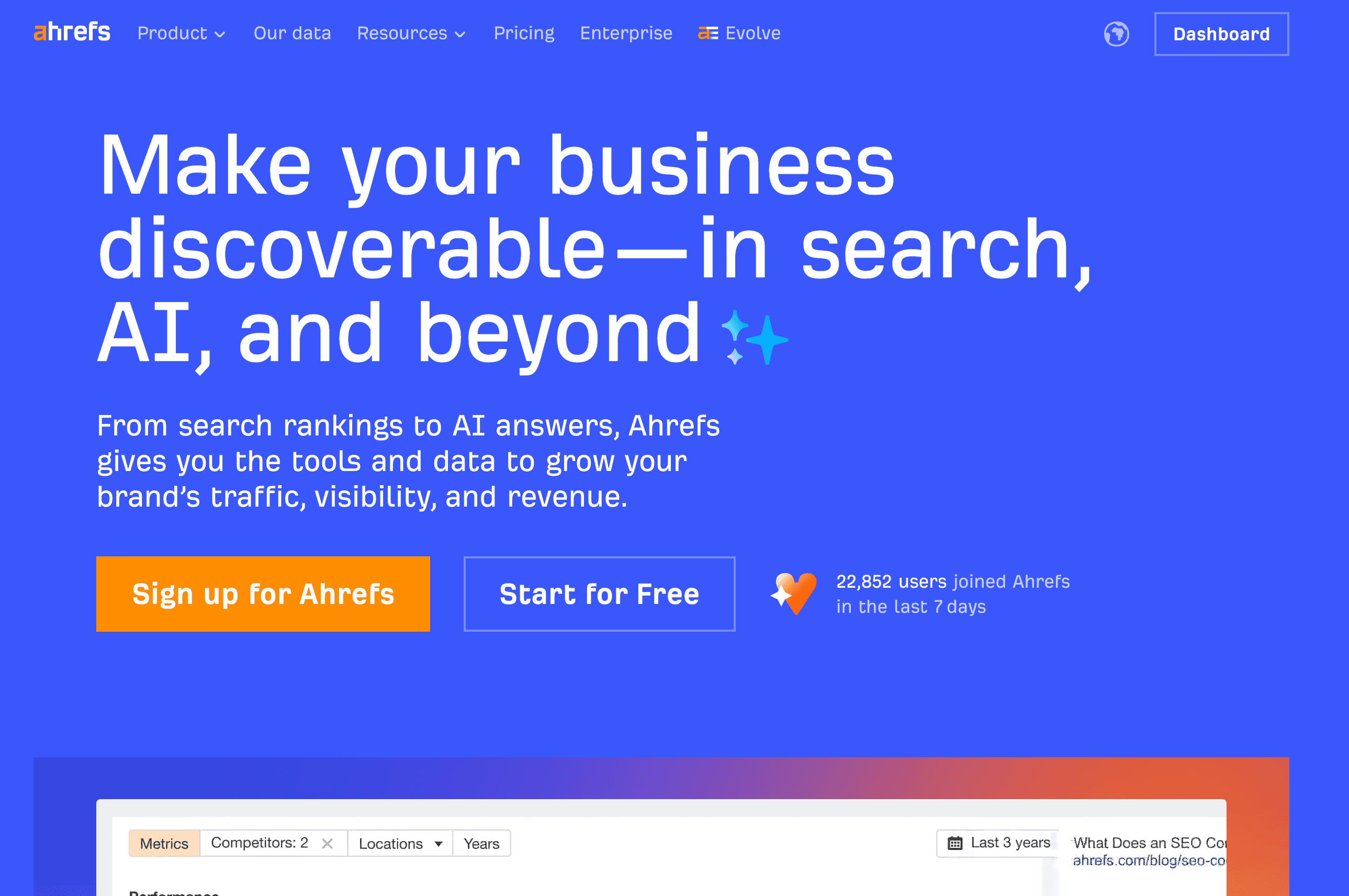
Ahrefs has rebuilt itself as an AI marketing platform, not just an SEO tool. The classic features (backlinks, keyword data, rank tracking) are still there. But now you also get Brand Radar (tracks your brand mentions across LLMs), Custom Prompts (track AI prompts you care about), AI Content Helper, and AI Content Grader.
The data is what you actually pay for. Ahrefs runs the second-most active web crawler after Google, so the keyword and backlink data is fresher than most rivals. 44% of Fortune 500 marketers use it.
Lite at $129/mo gives 750 tracked keywords and 5 AI prompts. Standard at $249/mo gives 2,000 keywords, 10 prompts, plus Content Explorer and keyword clusters. Advanced at $449/mo unlocks 5,000 keywords, 20 prompts, and Looker Studio.
Pros:
- Best web data in the SEO space, second-largest crawler after Google
- Free Ahrefs plan covers small site owners well
- AI features included from Lite, no add-on needed
Cons:
- No free trial on paid plans
- AI prompt limits are tight (5 on Lite, 10 on Standard)
- Content Kit (deeper AI Content Helper + Grader) and Brand Radar AI add-ons cost extra at $99/mo and $199/mo
10. Semrush
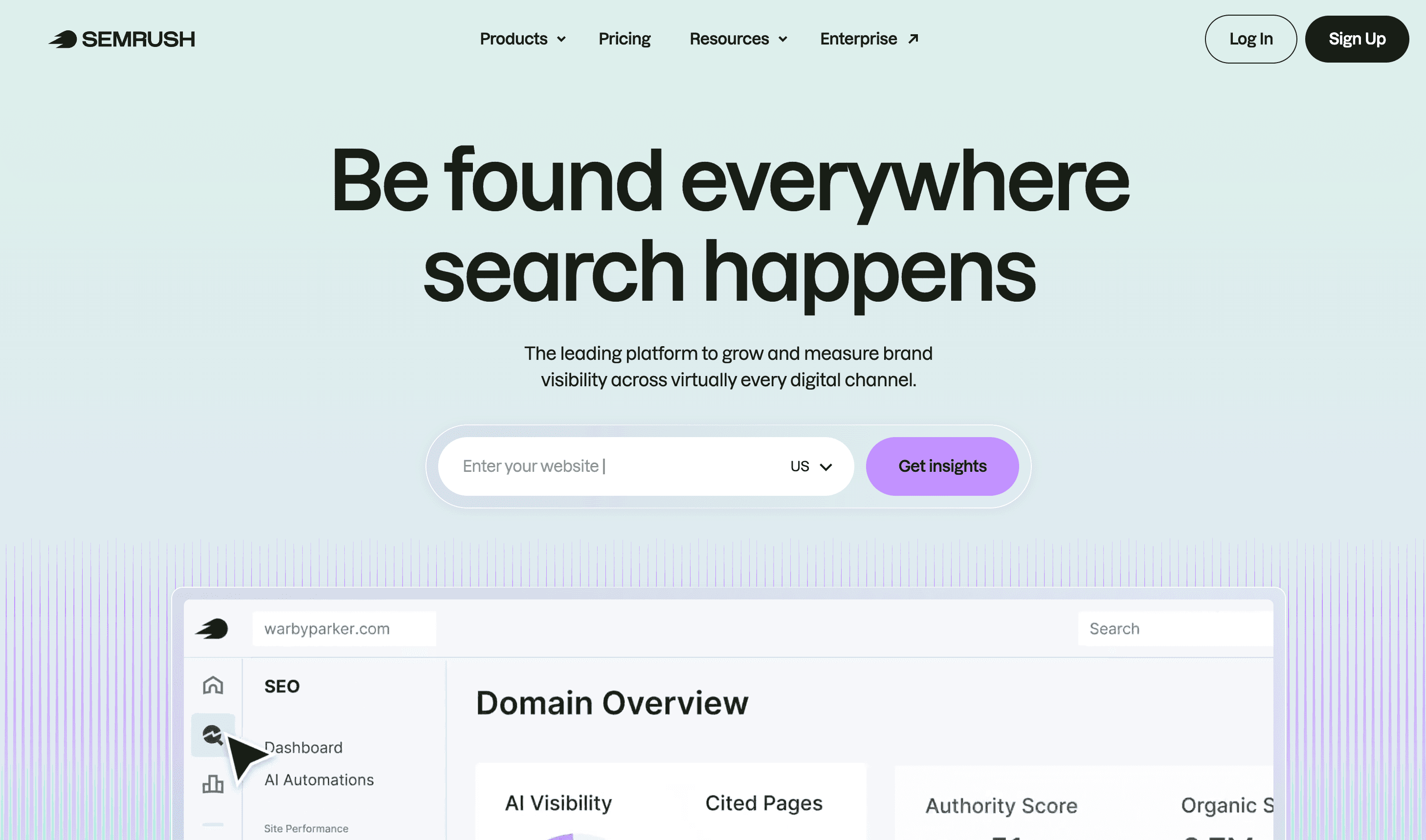
Best for: SEOs and agencies who want one platform for SEO and AI visibility tracking
Starting price: $139.95/mo (Pro), $249.95/mo (Guru), $499.95/mo (Business)
Free plan: 7-day free trial. Free account with 10 daily searches
Semrush has split its product into two paths. The classic SEO plans (Pro, Guru, Business) cover keyword research, backlinks, site audits, and rank tracking. The newer Semrush One bundles add AI visibility tracking for ChatGPT, Gemini, Google AI Overviews, and AI Mode.
The data depth is the main draw. Semrush has 27 billion keywords, 43 trillion backlinks, and 213 million LLM prompts. Brands like Shopify, Booking.com, and Samsung use it daily.
Pro at $139.95/mo gives 5 projects and 500 tracked keywords. Guru at $249.95/mo unlocks 15 projects, 1,500 keywords, historical data, and the Content Marketing Toolkit (where the AI writing and content scoring sit). Business at $499.95/mo gives 40 projects, 5,000 keywords, and API access.
For AI visibility, you can buy the AI Visibility Toolkit as a $99/mo add-on, or pick a Semrush One bundle from $199/mo.
Pros:
- Largest backlinks and keyword database in the SEO space
- AI Visibility Toolkit covers ChatGPT, Gemini, Perplexity, and AI Overviews
- Free account with 10 daily searches lets you test before paying
Cons:
- Pricing climbs fast with extra seats ($45/mo per user on Pro)
- AI tracking is a paid add-on, not in base SEO plans
- Dense interface with a real learning curve
11. Mangools
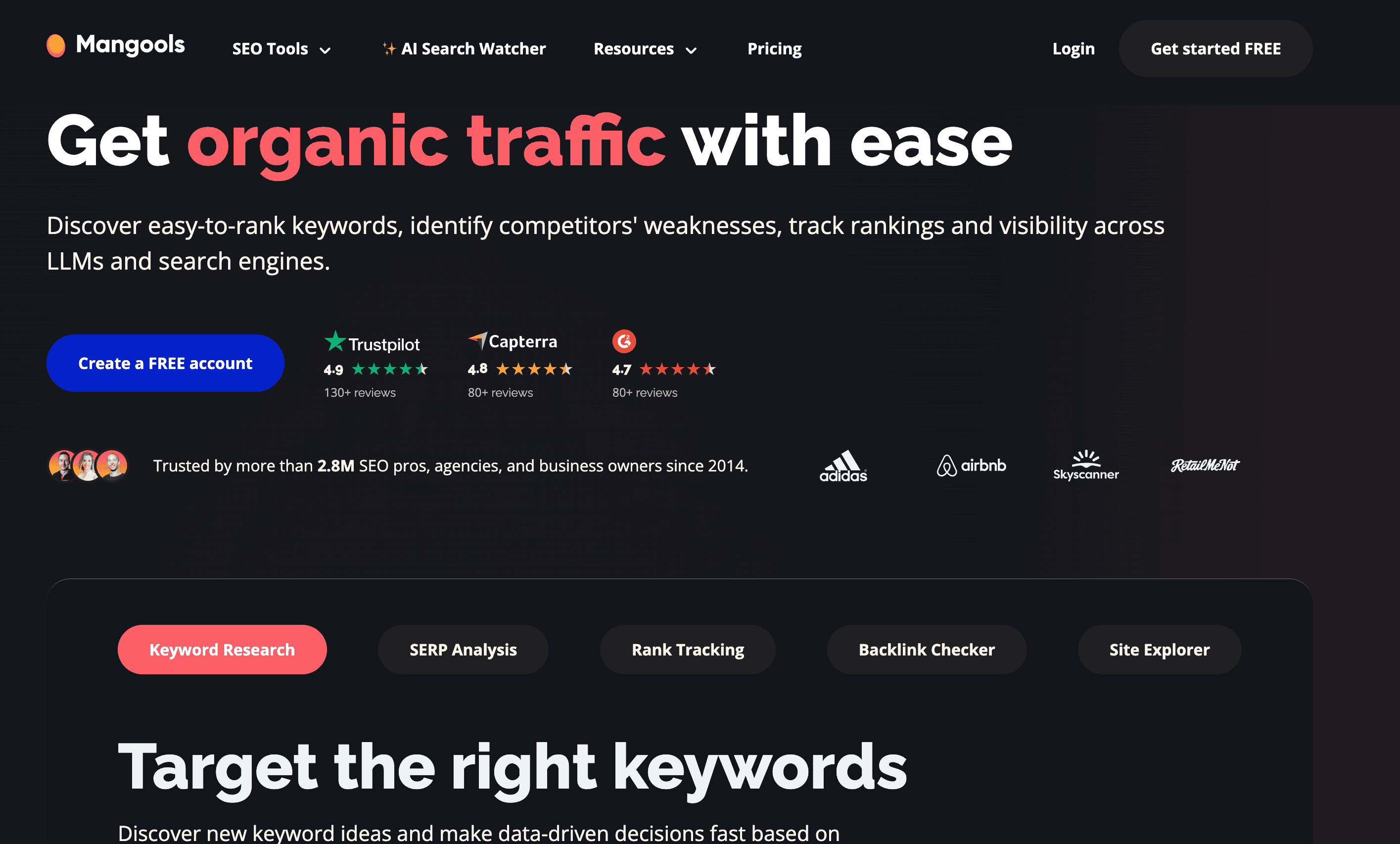
Best for: Bloggers, freelancers, and small agencies who want full SEO tools plus AI tracking at a fraction of Ahrefs and Semrush prices
Starting price: $30.50/mo (Basic), $40.50/mo (Premium), $70.50/mo (Agency). Save ~35% on annual billing
Free plan: Yes, free account with limited daily lookups. 48-hour money-back guarantee
Mangools is the budget pick in this category. You get five SEO tools in one bundle: KWFinder for keyword research, SERPChecker for SERP analysis, SERPWatcher for rank tracking, LinkMiner for backlinks, and SiteProfiler for site analysis. Trusted by 2.8M users, with Airbnb, Adidas, and Skyscanner on the customer list.
Every plan now bundles in AI Search Watcher PRO, which tracks 500 monitored prompts across multiple LLMs like ChatGPT, Gemini, and Claude. There is also a free AI Search Grader that gives you a quick visibility audit with no account needed.
Basic at $30.50/mo gives 100 keyword lookups per day, 200 tracked keywords, and 100k backlinks. Premium at $40.50/mo gives 500 daily lookups, 700 tracked keywords, and 3 extra seats. Agency at $70.50/mo unlocks 1,200 daily lookups, 1,500 tracked keywords, 1.2M backlinks, and 5 extra seats.
Pros:
- Best price-to-value ratio on this list, full SEO + AI bundle from $30.50/mo
- AI Search Watcher PRO with 500 prompts included on every plan
- Free AI Search Grader runs a brand visibility check in seconds
Cons:
- Backlink data is thinner than Ahrefs (9.5T rows vs 43T)
- No deep technical SEO audits
- 48-hour refund window is shorter than most rivals' 7-day trials
12. Keywords Everywhere
Best for: SEOs, content creators, and ecommerce sellers who want keyword data inside Google, YouTube, Amazon, and ChatGPT without opening a separate tool
Starting price: $84/yr (Bronze), $168/yr (Silver), $480/yr (Gold). Annual billing only
Free plan: Limited free version, paid credits last 1 year
Keywords Everywhere is the browser extension I keep installed in Chrome. It overlays search volume, CPC, and competition data directly on Google, YouTube, Amazon, eBay, Etsy, ChatGPT, Search Console, and 15+ other sites. No tab switching needed.
This is the cheapest tool on the list. Bronze at $84/yr (about $7/mo) gives 100,000 credits, enough for most solo SEO work in a year. Silver at $168/yr unlocks SEO Minion and 400,000 credits. Gold at $480/yr gives 2M credits plus a course library.
The ChatGPT integration is the AI-era standout. You see search volume right inside ChatGPT, so when you brainstorm keywords with the AI, you instantly know which ones have real demand. The new AI Overview Metrics also show how often AI Overviews trigger for any keyword.
Used by 1.5M+ marketers including Adobe, Netflix, Samsung, and Salesforce.
Pros:
- Cheapest tool on this list at $7/mo, credits last a full year
- Works inside ChatGPT, Google, YouTube, Amazon, and 15+ sites
- AI Overview Metrics show which keywords trigger Google AI Overviews
Cons:
- Credits expire after 1 year, no rollover
- Annual billing only, no monthly option
- Lighter on features than Ahrefs or Semrush
AEO tracking tools
AI visibility is not only about knowing whether ChatGPT mentioned you today. The next layer is understanding which prompts, competitors, and source pages shape those answers across the full set of AI engines people actually use.
13. AIclicks
Best for: Agencies and in-house teams who need full AI visibility coverage across 10+ platforms, with built-in content creation and competitor intelligence
Starting price: $59/mo (Starter), $189/mo (Pro), $499/mo (Business)
Free plan: No, 3-day full-access trial with card
AIclicks was built by an agency team that ran AI SEO campaigns for clients before the product existed. That origin shows up in the workflow: the platform is built around tracking, source discovery, competitor intelligence, and content recommendations instead of just another rank graph.
The platform tracks prompts across ChatGPT, Perplexity, Gemini, Claude, Google AI Overviews, Google AI Mode, Grok, DeepSeek, Meta AI, and Microsoft Copilot. Prompts run daily on each LLM you select, which helps capture what real users see instead of relying only on sanitized API responses.
The Sources tab is the strongest part of the product. It shows every domain and URL the AI engines cite across your tracked prompts, scored by prompt coverage, topic breadth, and citation frequency. That turns the report into a practical outreach list: the pages AI already trusts, where a mention can move your visibility score. AIclicks also publishes its own guide to the best AEO tracking tools if you want a deeper comparison of this category.
The Competitors tab auto-discovers brands appearing across your prompts. Once added, you see their share of voice, which prompts they win, and which sources cite them but not you. The Recommendations tab turns that data into three action types: content to create, outreach targets to contact, and conversations to join. Each content recommendation connects to a one-click AI article generator.
Starter gives 30 tracked prompts across 3 LLMs, 1 website, and 10 AI articles per month. Pro moves to 150 prompts, 4 LLMs, 3 websites, and adds Google Analytics integration. Business unlocks 300 prompts, 6 LLMs, unlimited websites, and a dedicated specialist.
Pros:
- Runs prompts via headless browsers, not APIs, so results better match what real users see
- Sources tab gives a ranked outreach list based on actual AI citation data
- Competitor discovery is automatic, no manual setup required
- Built-in AI article generation, not just tracking
- Dedicated specialist on Business plan
Cons:
- Pricing sits above entry-level tools, with Starter at $59/mo
- LLM selection is capped by plan tier, from 3 on Starter to 6 on Business
- Full feature depth takes a few sessions to learn
AI SEO automation tools
Most "SEO automation" tools are just AI writers with a fancy dashboard on top. The one below is different. It actually automates on-page SEO at scale, like updating titles, meta descriptions, internal links, and schema markup across thousands of pages from one dashboard.
If you manage a large site or run multiple client accounts, this is the type of tool that gives your week back. Here is the one I trust.
14. Alli AI
Best for: Agencies and large sites that need to deploy on-page SEO changes across thousands of pages without dev work
Starting price: $299/mo (Business), $599/mo (Agency), Enterprise custom. Save up to 17% on annual billing
Free plan: 10-day free trial
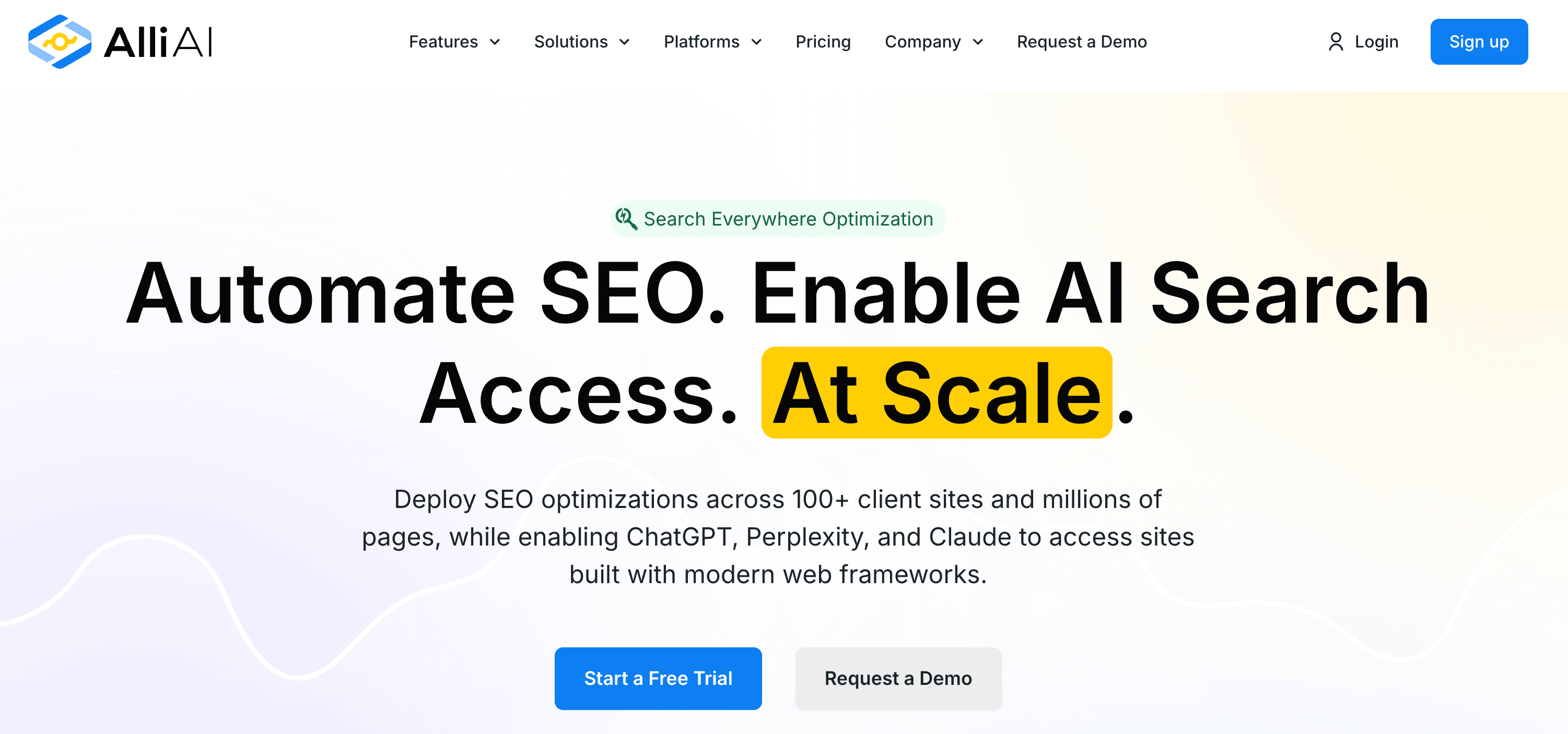
Alli AI handles SEO at portfolio scale. You create one optimization rule, like "add target keyword to all H1 tags," and it deploys across every matching page on every site you connect. Update 10,000 title tags across 50 sites in under 60 seconds, no FTP or dev access needed.
The standout feature in 2026 is AI Crawler Enablement. Sites built with React, Vue, or Next.js often look blank to ChatGPT, Perplexity, and Claude because those crawlers do not run JavaScript. Alli AI uses server-side rendering to serve pre-rendered HTML to AI bots, which fixes the blind spot. Their data shows 63% of modern sites have this problem.
Other features I use: AI internal linking, schema markup generator, SEO A/B testing on titles, and bulk meta description rewrites. Works on WordPress, Shopify, Wix, or any custom CMS via a JavaScript snippet.
Pros:
- Deploys SEO changes across 100+ sites from one dashboard
- Server-side rendering for AI crawlers fixes the JavaScript blind spot
- Visual browser editor lets you edit any element without code
Cons:
- $299/mo entry price is steep for solo SEOs
- Only 10-day trial, short window to test ranking impact
- Learning curve on the rule-based deployment model
Final thoughts
You do not need 14 AI SEO tools. You need 3 or 4 that cover the whole job.
The shift in 2026 is simple. Tracking alone is not enough, and content alone is not enough. You need to know where you show up in AI answers, fix the pages that need it, and build content that earns citations from both Google and LLMs. One tool cannot do all of that yet.
If I had to build a stack from scratch today, I would pick four tools.
For AI search visibility, I would start with AI SEO Tracker. A $49 one-time report, page-level fixes, and tracking across ChatGPT, Perplexity, Gemini, Copilot, and AI Overviews.
For off-site work, pair that with Respona (managed listicle placements on AI-cited pages) or LinkDR (competitor backlinks + AI outreach you approve).
For content optimization, Surfer if you have the budget, NeuronWriter if you do not.
For keyword and SERP research, pick Ahrefs for serious work or Mangools for solo SEO. For automation at scale, Alli AI is worth it once you manage 10+ client sites.
Most of these tools have a free trial or a free tier. Try one or two before you commit to a yearly plan. The market moves fast, and what works for me may not work for your stack.
If you want to see where your site shows up in ChatGPT, Perplexity, Gemini, Copilot, and AI Overviews, get the $49 report from AI SEO Tracker. Signup is free and shows the suggested prompts before payment.