

TL;DR
- Clicks: 8% click with an AI summary. 15% without.
- AI Overviews: On 16% to 48% of searches. Depends who you ask.
- Traffic: AI sends about 1% of site traffic. Almost all from ChatGPT.
- Citations: 77% of what AI cites are listicles. Our own data.
- What goes with citations: Brand mentions, 0.664. Backlinks, 0.218.
- Stability: 45.5% of AI Overview sources change between checks.
- Stop quoting: Six numbers that don't hold up.
Does AI name your brand? Check your site.
Most AI SEO stats are junk.
Somebody quotes a blog. That blog quoted another blog. Nobody opened the study.
So I opened them. Every number here links to its source. With the date and the sample.
Plus our own data: 343 questions scanned across five AI engines.
Where studies disagree, you get both. Last checked 3 October 2026.
How often AI Overviews appear
Five studies. Five answers.
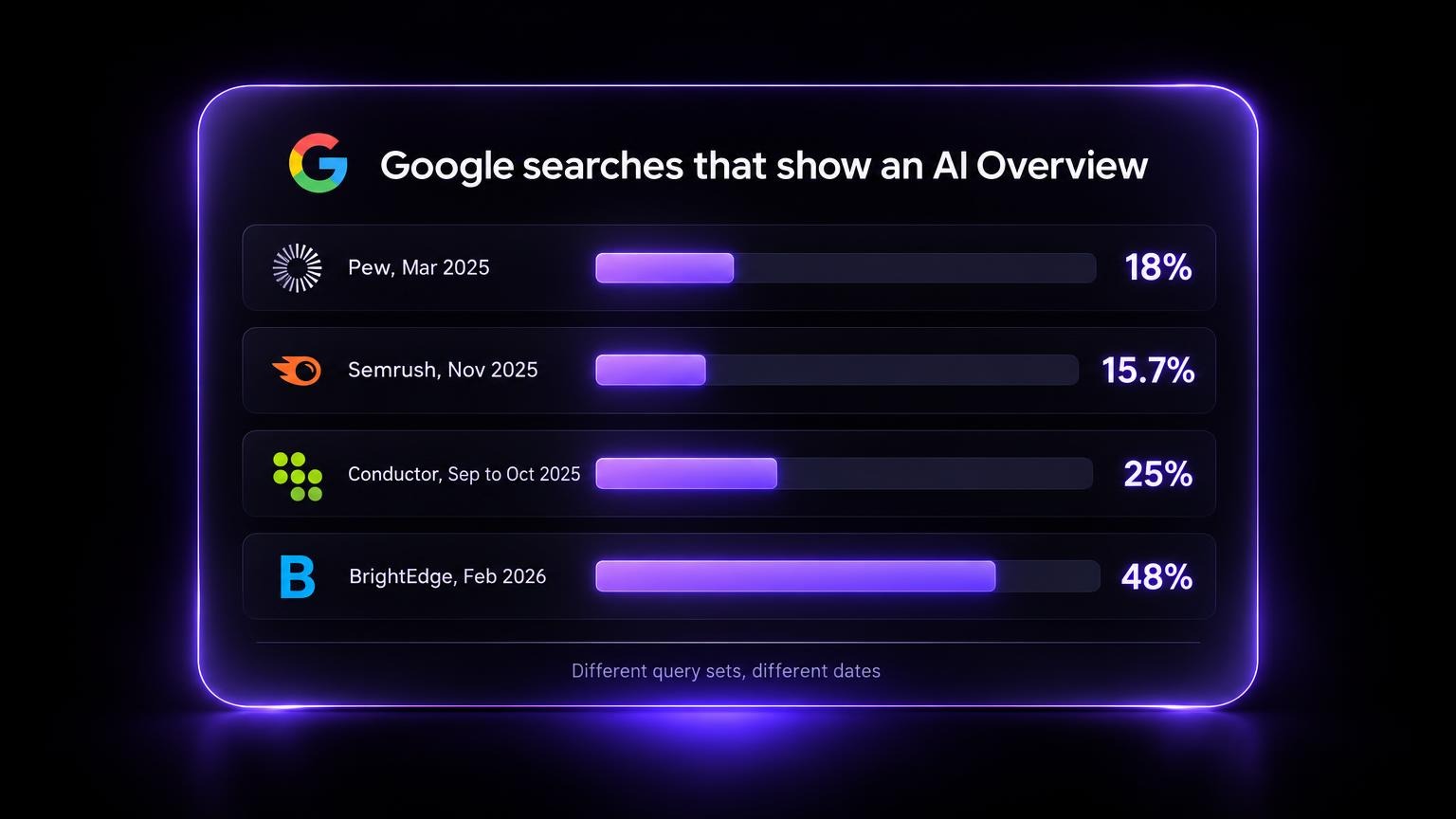
| Who | Share with an AI Overview | Sample |
|---|---|---|
| Pew | 18% | 68,879 real searches, March 2025 |
| Semrush | 15.69% (Nov). Peaked at 24.61% in July | 10M+ keywords, 2025 |
| Conductor | About 25% | 21.9M US searches, autumn 2025 |
| BrightEdge | 48% | Its own query set, Feb 2026 |
| Ahrefs | 21% of keywords | 146M results pages, Nov 2025 |
Why so different?
Pew counted real people searching. Semrush counted keywords in a database. BrightEdge picked its own queries.
They're not measuring the same thing.
What to say: "16% to 25% of searches". Name the source. Or "48% of BrightEdge's tracked queries".
It also depends on the search. Pew again:
- 8% of one or two word searches got an AI summary.
- 53% of searches with ten or more words.
- 60% of searches that start with who, what, when or why.
And what the summary looks like:
- 67 words. The median length.
- 88% cite three or more sources.
Check your own: how to track Google AI Overviews.
What AI answers do to clicks
This is the scary one.
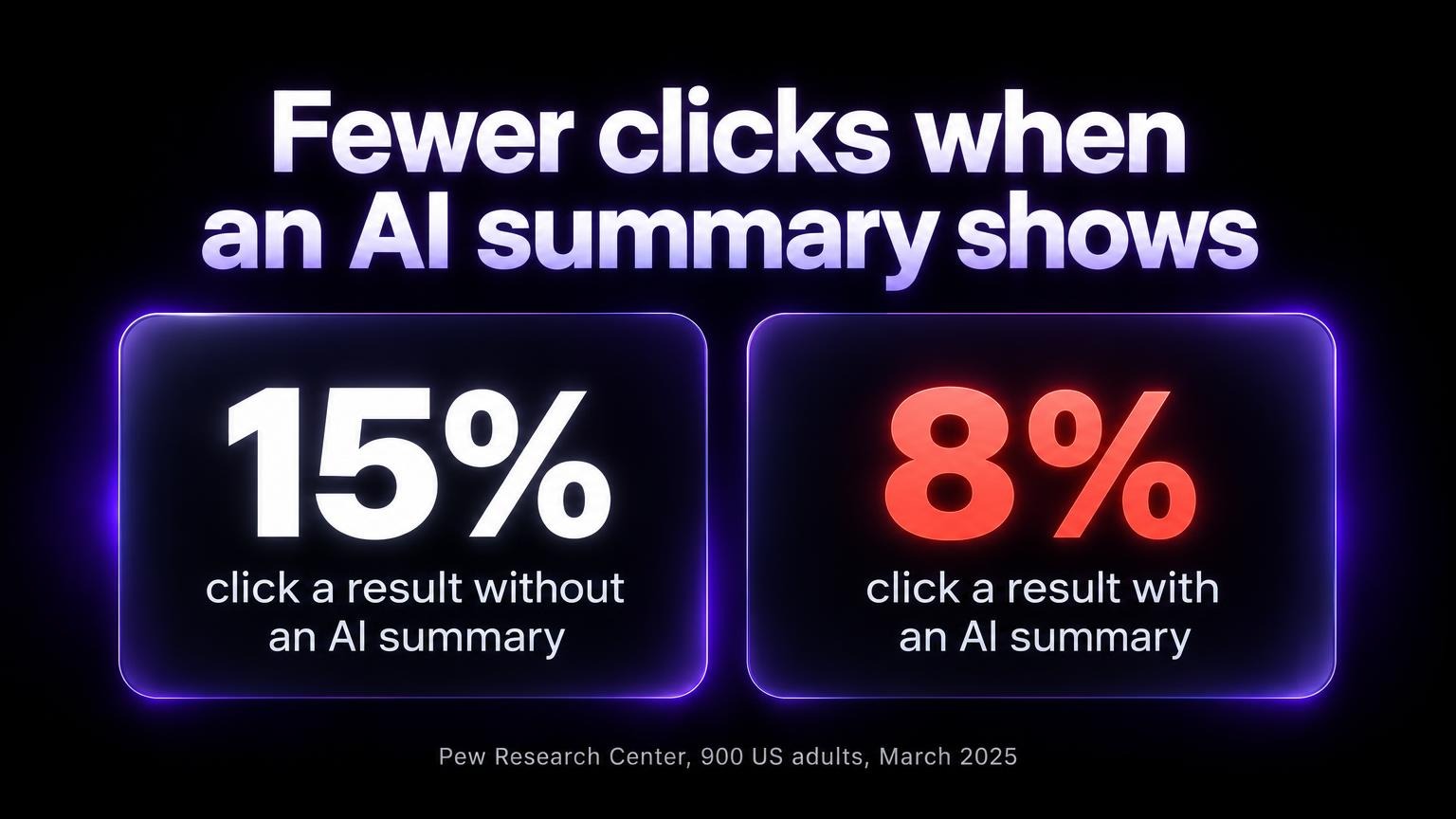
| Study | Finding | Sample |
|---|---|---|
| Pew | 8% click with an AI summary. 15% without. 1% click a link inside it | 900 US adults, March 2025 |
| Ahrefs | 58% lower click rate for the #1 result | 300,000 keywords, Dec 2025 |
| Seer | Organic CTR fell from 1.76% to 0.61% | 3,119 queries, 2024 to 2025 |
| Seer | Brands cited in the AI Overview got 35% more clicks | Same data |
| Semrush | Zero-click rate went down: 33.75% to 31.53% | 200,000+ keywords |
| SparkToro | 68.01% of US searches end without a click | Jan to Apr 2026 |
Notice the odd one out.
Semrush tracked the same keywords before and after they got an AI Overview. Zero-click didn't rise.
So is it the AI Overview? Or were those searches never going to click?
Honestly, nobody knows yet. These are correlations.
One more from Seer: getting cited in the AI Overview went with 35% more clicks. So the box isn't only bad news.

Does AI name you?
See if AI mentions your brand. Then get the pages to fix.
How many people use AI search
A lot.
- 900 million people use ChatGPT each week. TechCrunch, February 2026.
- 1 billion people use Google's AI Mode each month. Google, May 2026.
- 9.5 billion visits a month go to AI tools. Similarweb.
Careful with the first two. One is weekly. One is monthly. Both come from the company that owns the product.
Now the twist.
How much traffic AI search sends
Everyone uses ChatGPT. Almost nobody clicks out of it.
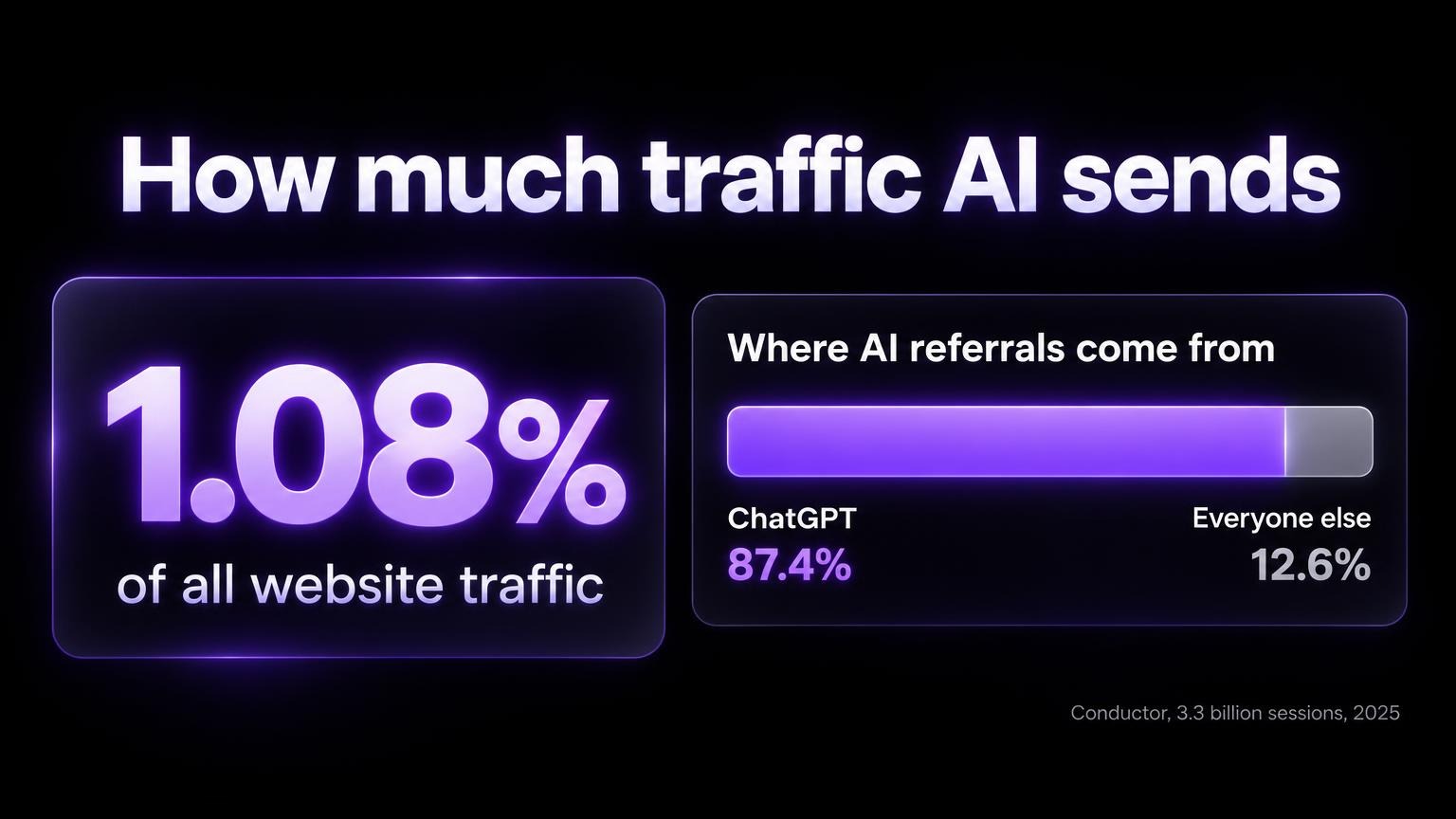
The usage is huge. The traffic it sends you is not:
| Study | Finding | Sample |
|---|---|---|
| Conductor | 1.08% of all traffic. 87.4% from ChatGPT | 3.3B sessions, 2025 |
| Previsible | Grew 9.9x in 19 months. 92.4% from ChatGPT | 166 GA4 properties |
| Semrush | An AI visitor is worth 4.4x an organic one | 500+ topics. They sell AI tools |
| Vercel | ChatGPT sends 10% of new signups | One company, June 2025 |
| Tally | ChatGPT is its #1 referrer. 2,000+ signups from AI tools | One company, June 2025 |
So: small. Growing fast. Almost all ChatGPT.
And volatile. In Previsible's data, ChatGPT referrals dropped by half in one month. Copilot is down 96% from its peak.
The interesting stat is 4.4x. Fewer visitors. Better ones.
Find yours: how to track AI search traffic.
What AI engines cite
This part is our own data.
Every month we ask five AI engines the same "best X" questions. 343 questions. 14,597 cited links.
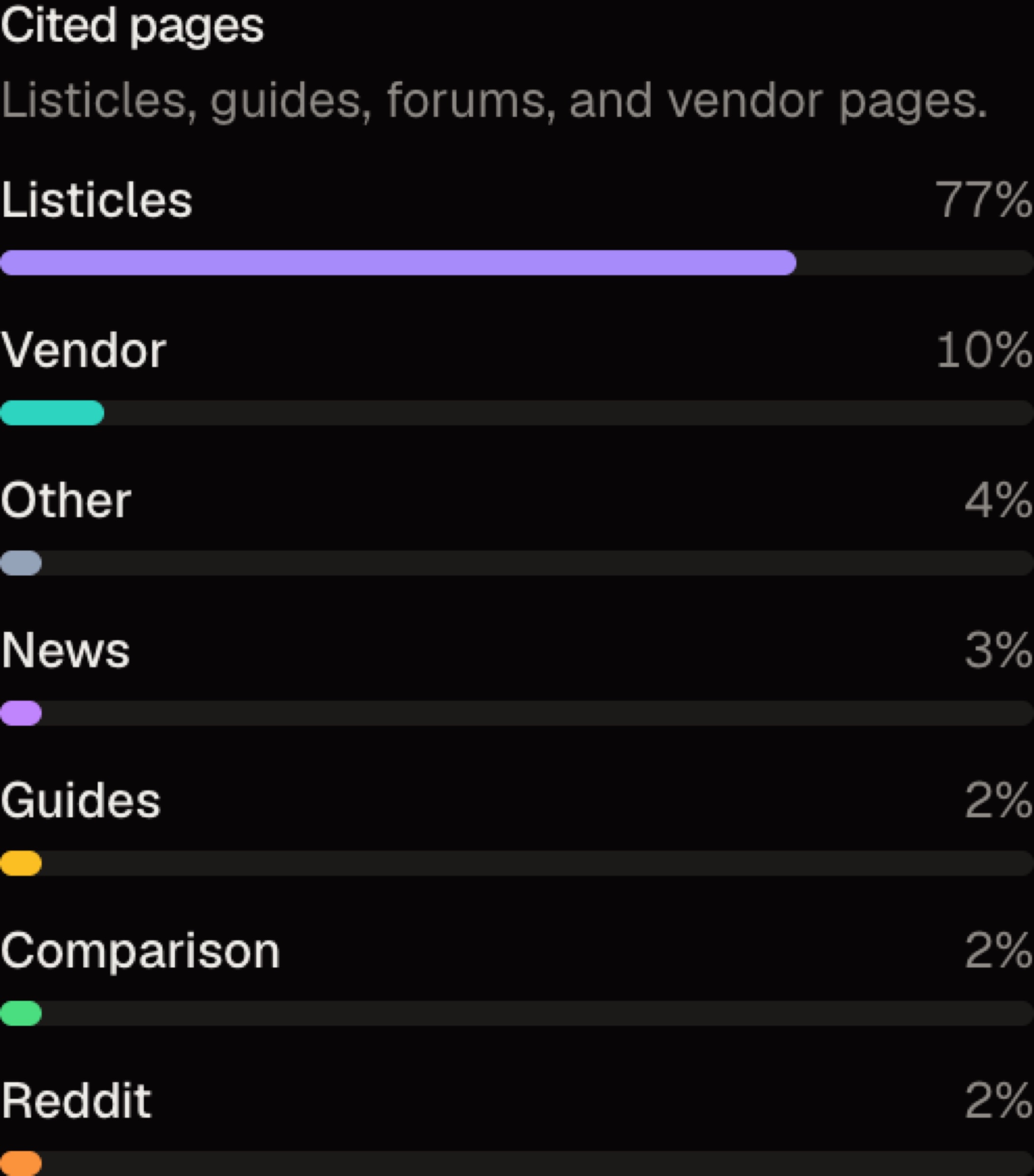
77% of cited links are listicles.
Vendor pages: 10%. News: 3%. Reddit: 2%.
So for "best X" questions, AI reads lists. If you're not on the lists, you're not in the answer.
The most cited site? YouTube. 5.3% of all links. Then rtings.com, pcmag.com, forbes.com, techradar.com.
But look at it per engine. It's almost all Google.
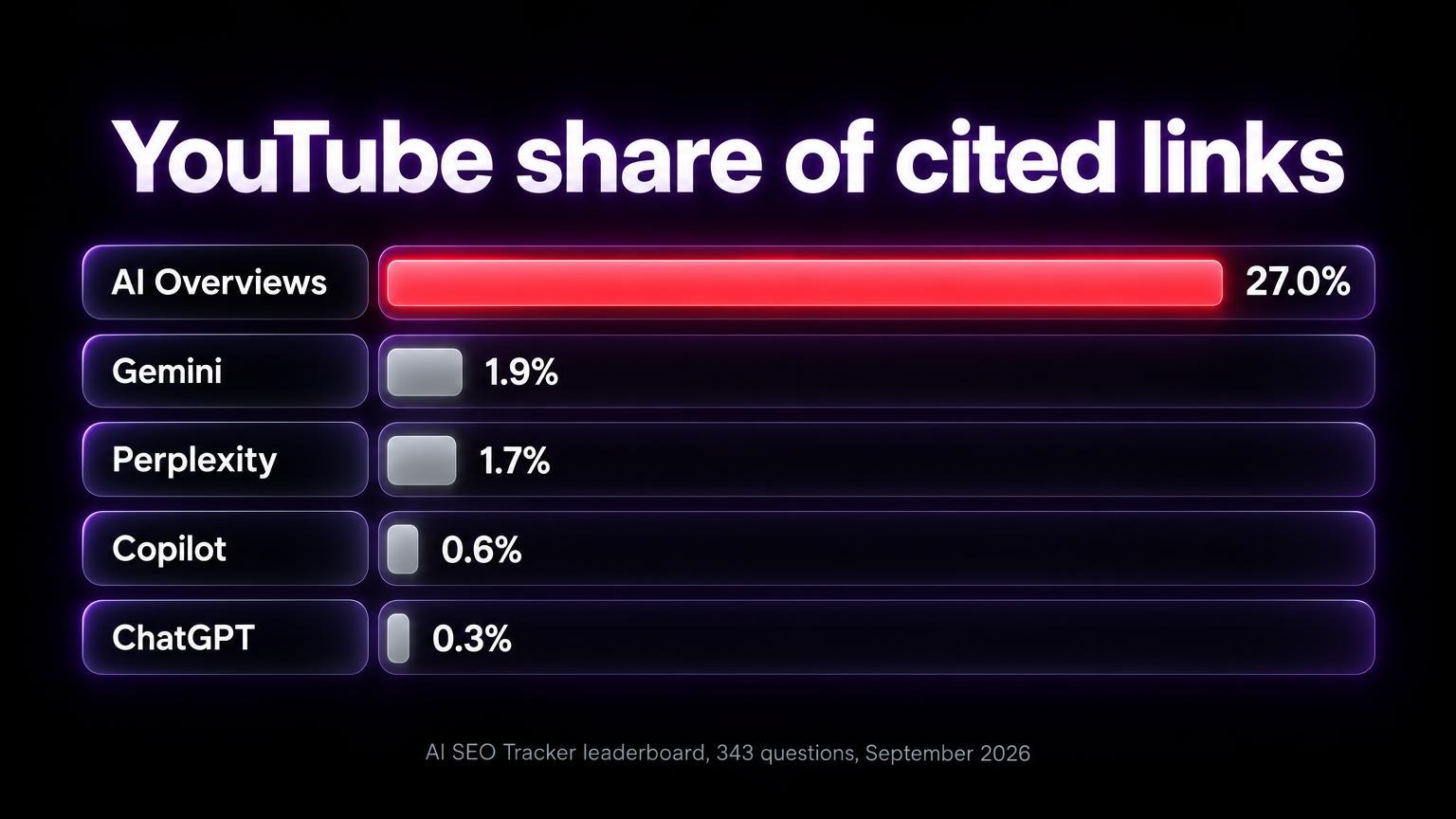
Ahrefs sees the same thing with different data. YouTube takes 22.9% of the AI Overview citations that go to the 50 most-cited sites. Reddit: 18.5%. September 2026.
And in ChatGPT, "best X" lists were 43.8% of source links. 750 prompts, December 2025. Lower than our 77%. Theirs is ChatGPT only, and it counts blog lists only. The two numbers don't measure the same thing.
Each engine cites a different amount:
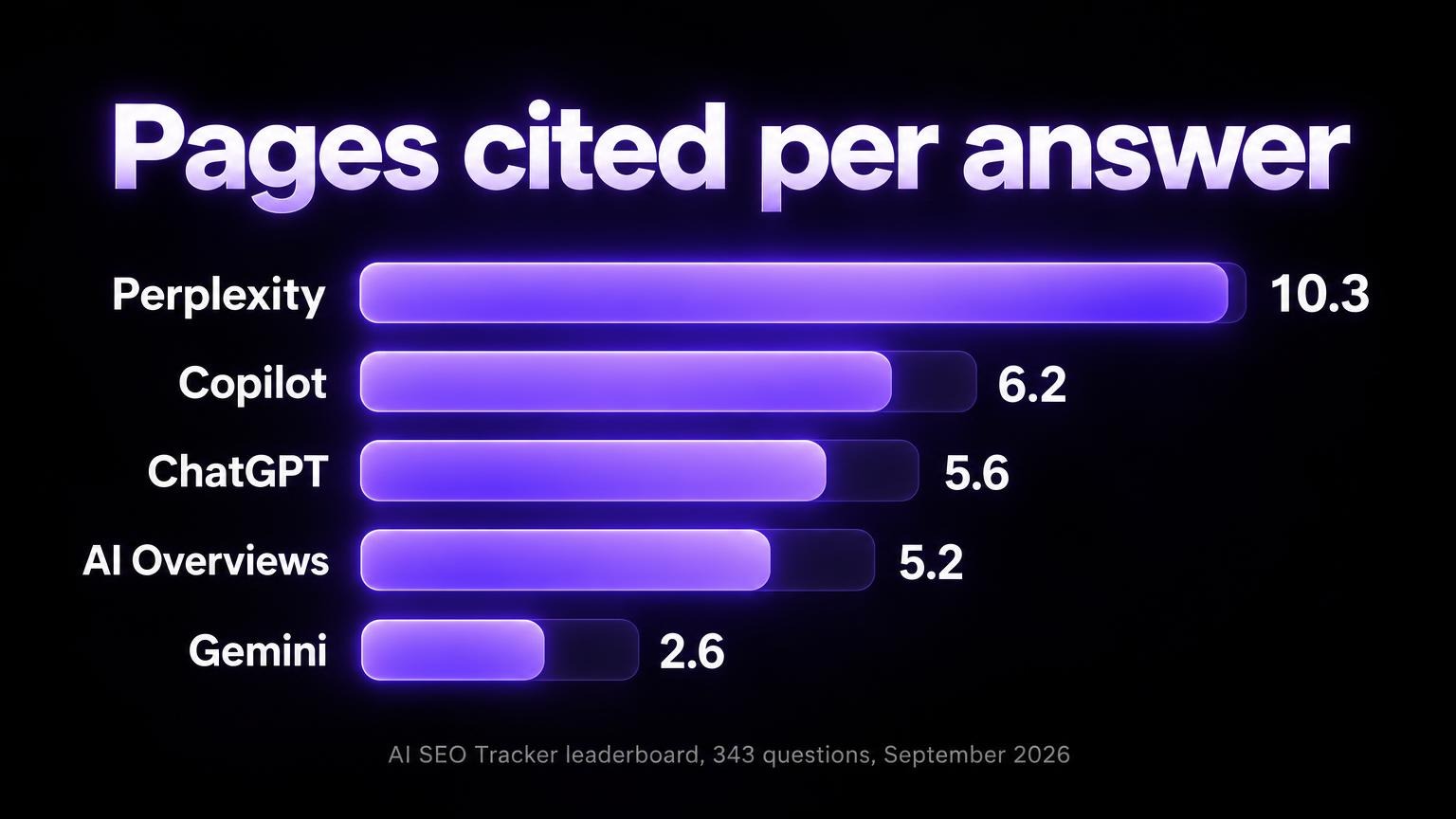
And Gemini often cites nothing. No sources in 81 of its 343 answers. Count those too, and its average drops to 2.0.
And being cited is not the same as ranking. Ahrefs found only 37.9% of AI Overview citations sit in the top 10. Down from about 76% in July 2025.
The other assistants overlap with Google even less. Ahrefs ran 15,000 prompts in 2025:
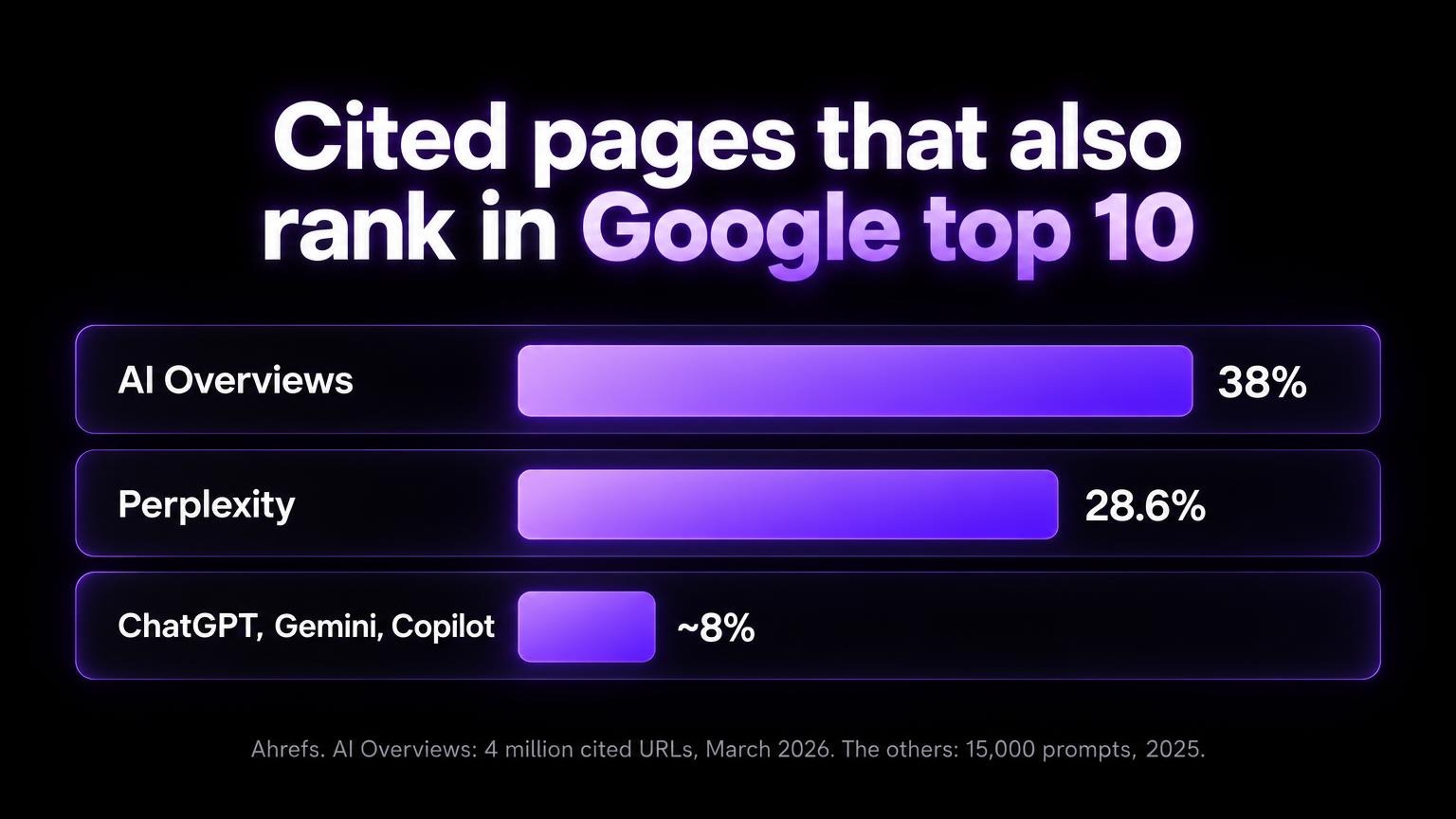
- 12% of cited URLs ranked in Google's top 10. On average.
- 28.6% for Perplexity. The highest.
- About 80% didn't rank in Google at all for that prompt.
Limits: mostly consumer topics. One scan a month. Our page-type labels are automatic, so treat them as rough.
How to get on those lists: get into AI visibility listicles.
How the five engines disagree
Ask five engines the same question. Get five lists.
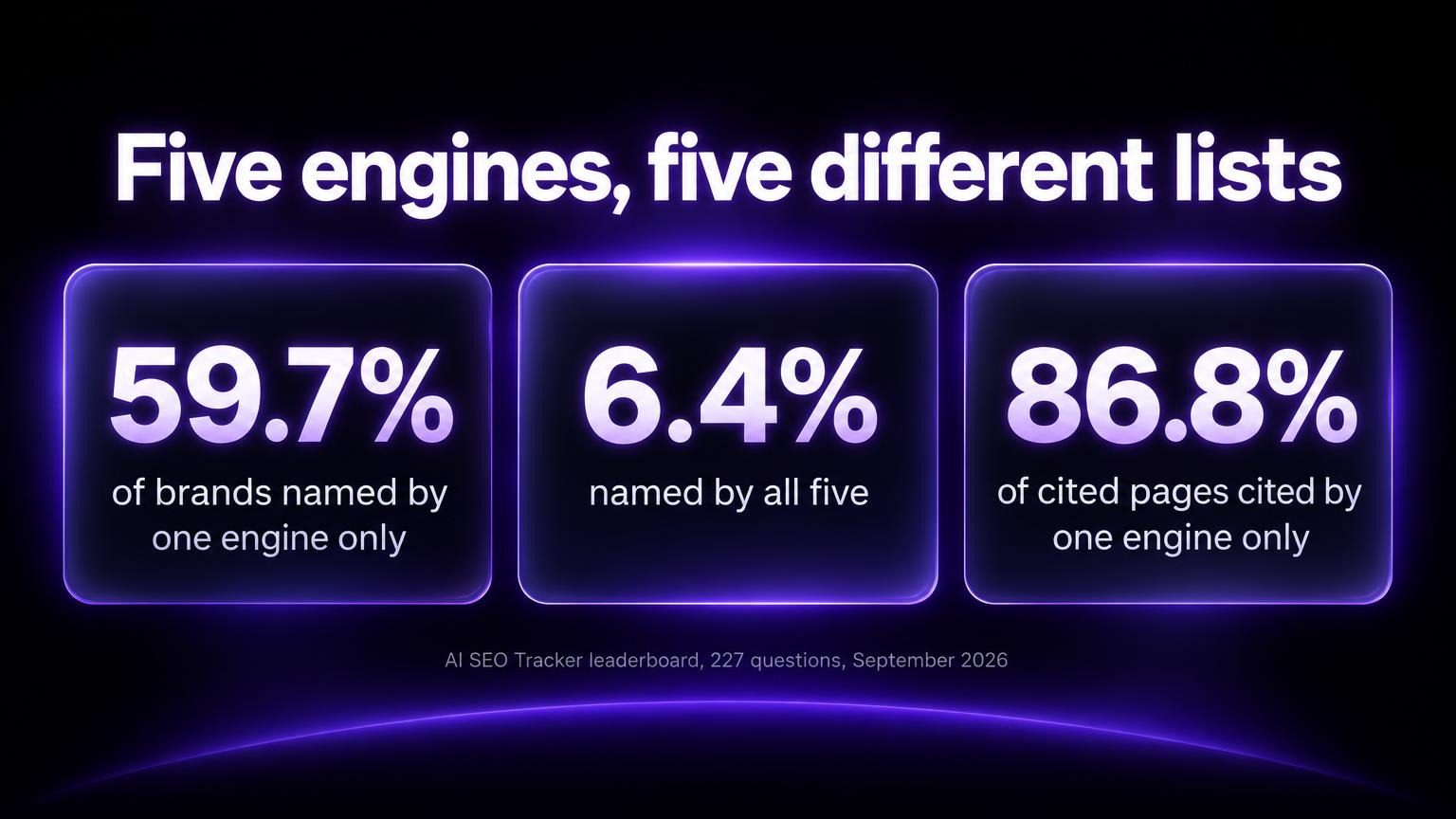
- 59.7% of brands were named by one engine only.
- 6.4% were named by all five.
- 43% of questions had no brand that all five agreed on.
- 11 of 255 questions had the same #1 on all five. That's 4%.
- 4.5 to 6.6 products named per question, depending on the engine.
- 86.8% of cited pages were cited by one engine only.
Real example: "best SEO tool". Ahrefs is #1 on ChatGPT. And #6 on Gemini.
If you track one engine, you miss most of the picture.
Limits: one answer per engine per scan. We don't scan Claude or AI Mode.
What goes with getting cited
Everyone wants the ranking factors. Nobody has them.
What we have: correlations.
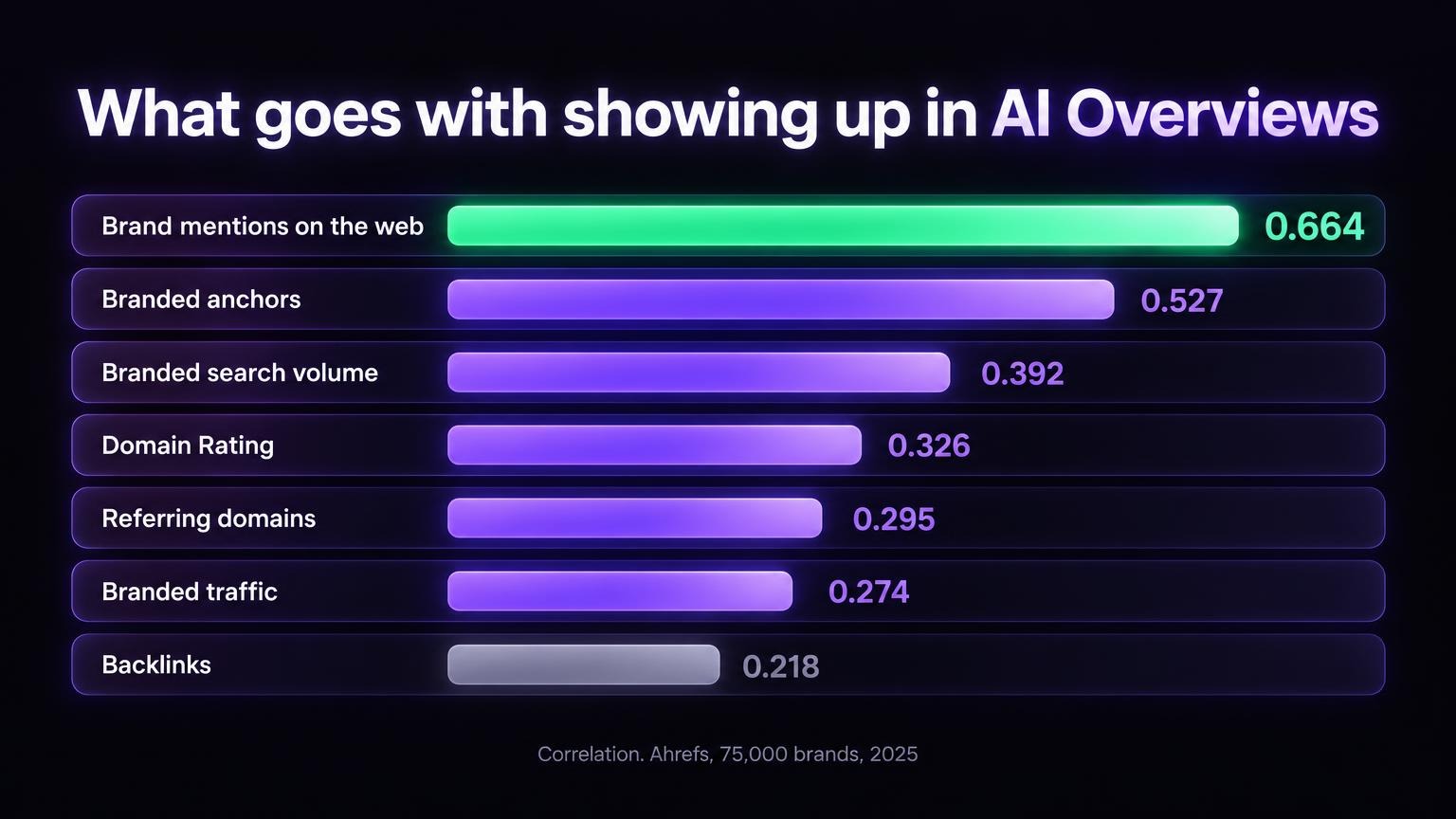
Brand mentions: 0.664. Backlinks: 0.218.
So people talking about you goes with AI visibility three times more than links do.
Is it cause? No idea. Big brands have more of everything.
A later Ahrefs study put YouTube mentions on top: 0.737.
Small things, measured:
| What | Finding | Source |
|---|---|---|
| Readable URL | Cited 89.78% of the time. 81.11% without | Ahrefs, 1.4M ChatGPT prompts, April 2026 |
| Title matches the question | Similarity 0.602 for cited pages. 0.484 for the rest | Same study |
| Adding schema | AI Overviews -4.6%. AI Mode +2.4%. ChatGPT +2.2% | Ahrefs, 1,885 pages against 4,000 controls, May 2026 |
| Brand size | Household names in 73% of answers. Mid-size 44%. Small 11% | Ranqo preprint, 100,000+ answers. A vendor |
Read the schema row twice. Schema did nothing. Two of three numbers are noise, and Ahrefs can't pin the third on schema.
How much AI answers change
A lot. This is why one screenshot proves nothing.
| Study | Finding | Sample |
|---|---|---|
| Ahrefs | 70% chance an AI Overview changed between two checks | 43,000 keywords, one month |
| Ahrefs | 45.5% of cited URLs were new each time | Same data |
| arXiv preprint | Cited sources overlap 34% to 42% day to day | Same prompts, run daily, 2026 |
| SparkToro | Under 1 in 100 chance of the same brand list twice | 2,961 runs, 600 volunteers, January 2026 |
The preprint's advice: run each prompt at least 7 times a day. It also says a week is too short. It wants 2 to 4 weeks.
Our report scans daily for 7 days. That beats one scan. It's still short of the paper's advice.
One scan is a coin flip.
What AI crawlers can read
Is your site built in React? Read this.
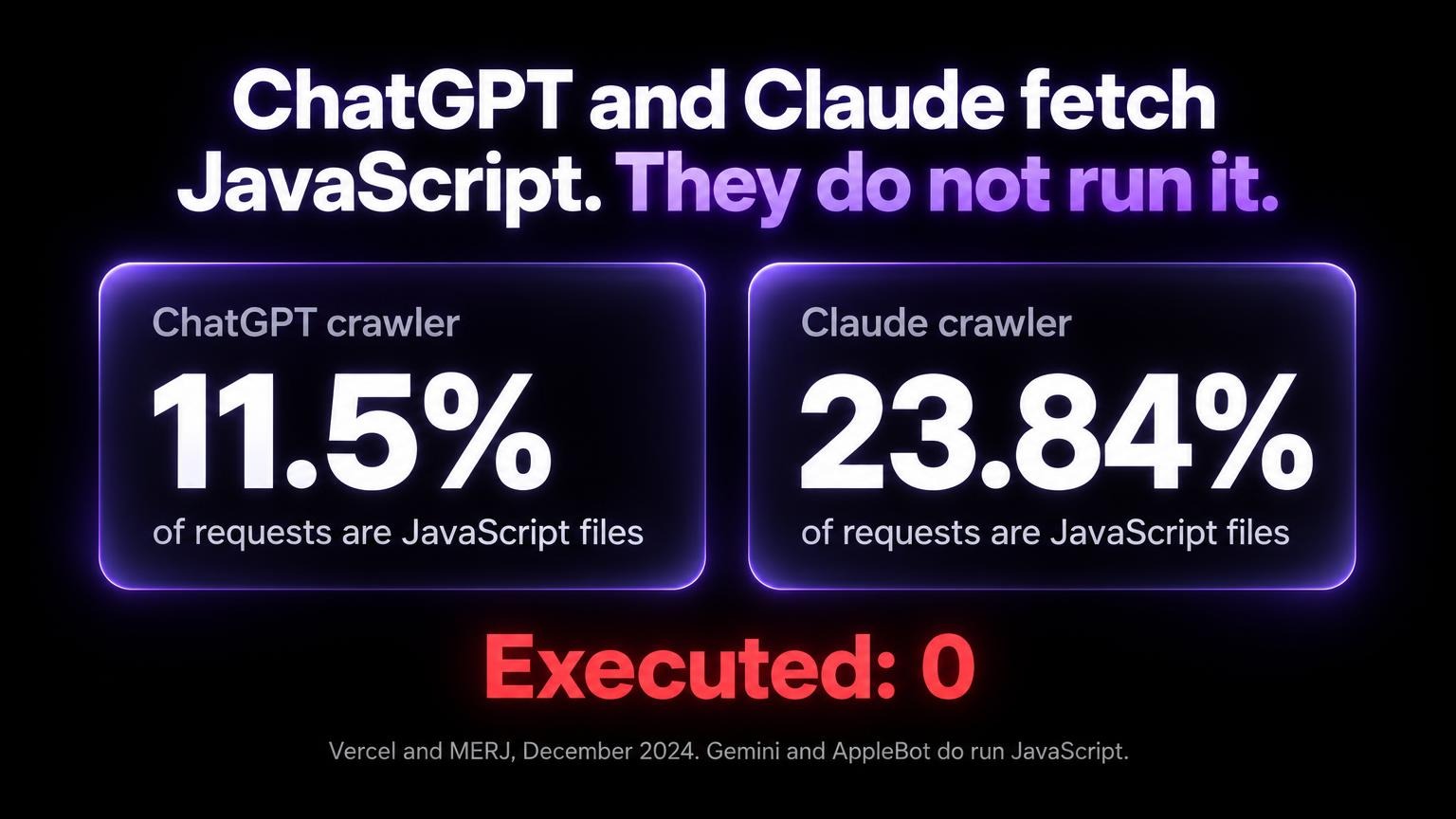
Vercel and MERJ watched AI crawlers across Vercel's network for a month:
- 569 million fetches by GPTBot.
- 370 million by Claude's crawler.
- 314 million by AppleBot.
- 11.50% of ChatGPT's requests were JavaScript files. 23.84% of Claude's.
- Zero were executed by ChatGPT's or Claude's crawlers. (AppleBot and Gemini do run JavaScript.)
So if your content appears only after JavaScript runs, ChatGPT's and Claude's crawlers see an empty page.
Limits: December 2024. One network. Crawlers change.
See what an AI reads on your page: Page Inspector.
What the GEO research found
The famous numbers all come from one paper: GEO: Generative Engine Optimization. KDD 2024.
What it found:
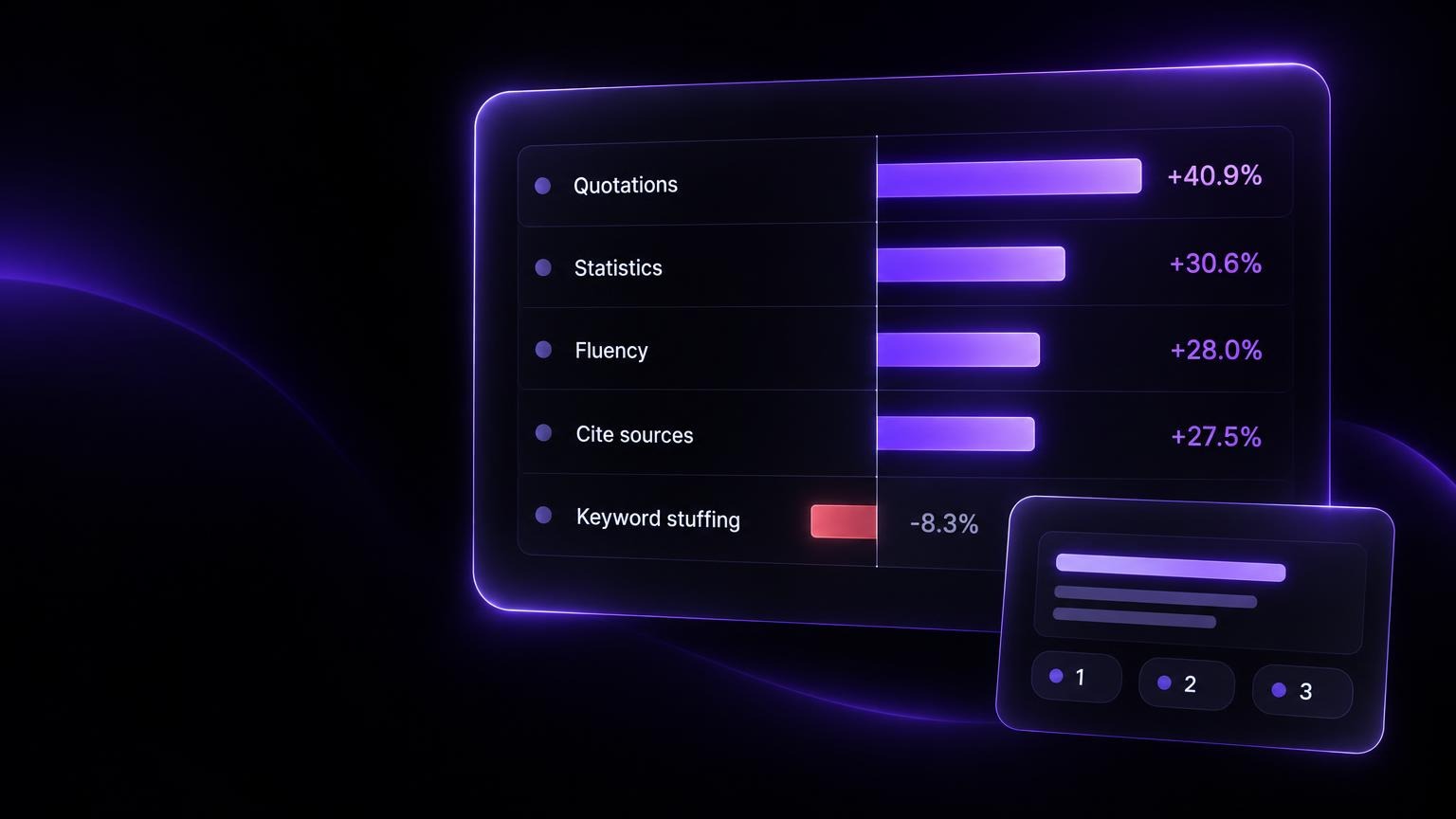
- Adding sources, quotes and statistics: 30% to 40% more visibility.
- Better fluency: 15% to 30%.
- Keyword stuffing: 10% worse (on Perplexity).
The catch nobody mentions: they tested on GPT-3.5. In 2023.
It's a benchmark. Not a test on today's ChatGPT. Use it for direction.
The tactics: generative engine optimization.
Statistics to stop quoting
You've seen these everywhere. Each one has a problem.
| The number | The problem | Say this instead |
|---|---|---|
| Search drops 25% by 2026 | A 2024 forecast. Never measured | "Gartner forecast in 2024" |
| 58.5% zero-click | 2024 data | 68.01% for early 2026 |
| AI traffic up 527% | 19 sites. Tiny base | 9.9x across 166 sites |
| AI Overviews cut clicks 50% | No single number exists | Give the range. Name the study |
| AI SEO market: $3 billion | Reports differ by 10x | Don't quote one |
| Keyword stuffing: minus 10% | Perplexity only, 2023 | Say where it was measured |
I also removed four survey stats from this page (the "84% of marketers" kind). I couldn't find a primary source for any of them.
What to do with these numbers
- Check your own referrals. Look for chatgpt.com in GA4. Expect about 1%.
- Get on the lists. 77% of citations are listicles.
- Get talked about. Mentions go with visibility more than backlinks do.
- Put the content in the HTML. ChatGPT's and Claude's crawlers don't run JavaScript.
- Track more than one engine. They barely overlap.
- Scan more than once. Half the sources change.
- Measure your own. Our report is $49, once. Up to 50 prompts, five engines, 7 days.
FAQ on AI SEO statistics
Is SEO still relevant with AI?
Yes. AI sends about 1% of traffic. The other 99% still comes from somewhere.
Is it true that 58.5% of Google searches end without a click?
That's 2024. The 2026 number is 68.01%. Different panels, so it's a rough trend.
How much traffic does AI search send?
About 1%. And 87% to 92% of it is ChatGPT.
Do AI Overviews reduce clicks?
Probably. Pew, Ahrefs and Seer say yes. Semrush's before-and-after test says no. Check your own Search Console.
Which AI engines should I track?
Start with five: ChatGPT, Perplexity, Gemini, Copilot and AI Overviews. Those are the ones we scan.
How we checked these numbers
I read every figure on the study's own page. 2 and 3 October 2026.
One exception: Gartner blocked automated reads, so I used the Internet Archive copy.
Vendor warning: Semrush, Conductor, BrightEdge, Previsible and Seer all sell tools here. So do we. Read vendor data with one eyebrow up.
Our leaderboard numbers are live counts. They move every month.