



TL;DR
- Track AI answers: AI SEO Tracker. Five engines, $49 once. It's mine.
- Need Claude, Grok or AI Mode? Rankscale or AIclicks.
- 50 prompts cost: $37.70 to $199 a month. Or $49 once. The math.
- Get mentioned: Respona or LinkDR. LinkDR is mine too.
- Write and research: Surfer, NeuronWriter, Ahrefs, Mangools.
Does AI name your brand? Check your site.
Most "best AI SEO tools" lists are a mess.
They mix three jobs and rank them like one.
- A tracker tells you if ChatGPT names you.
- A content tool helps you write the page.
- A link service gets you onto pages AI already cites.
You need one of those this month. Not all three.
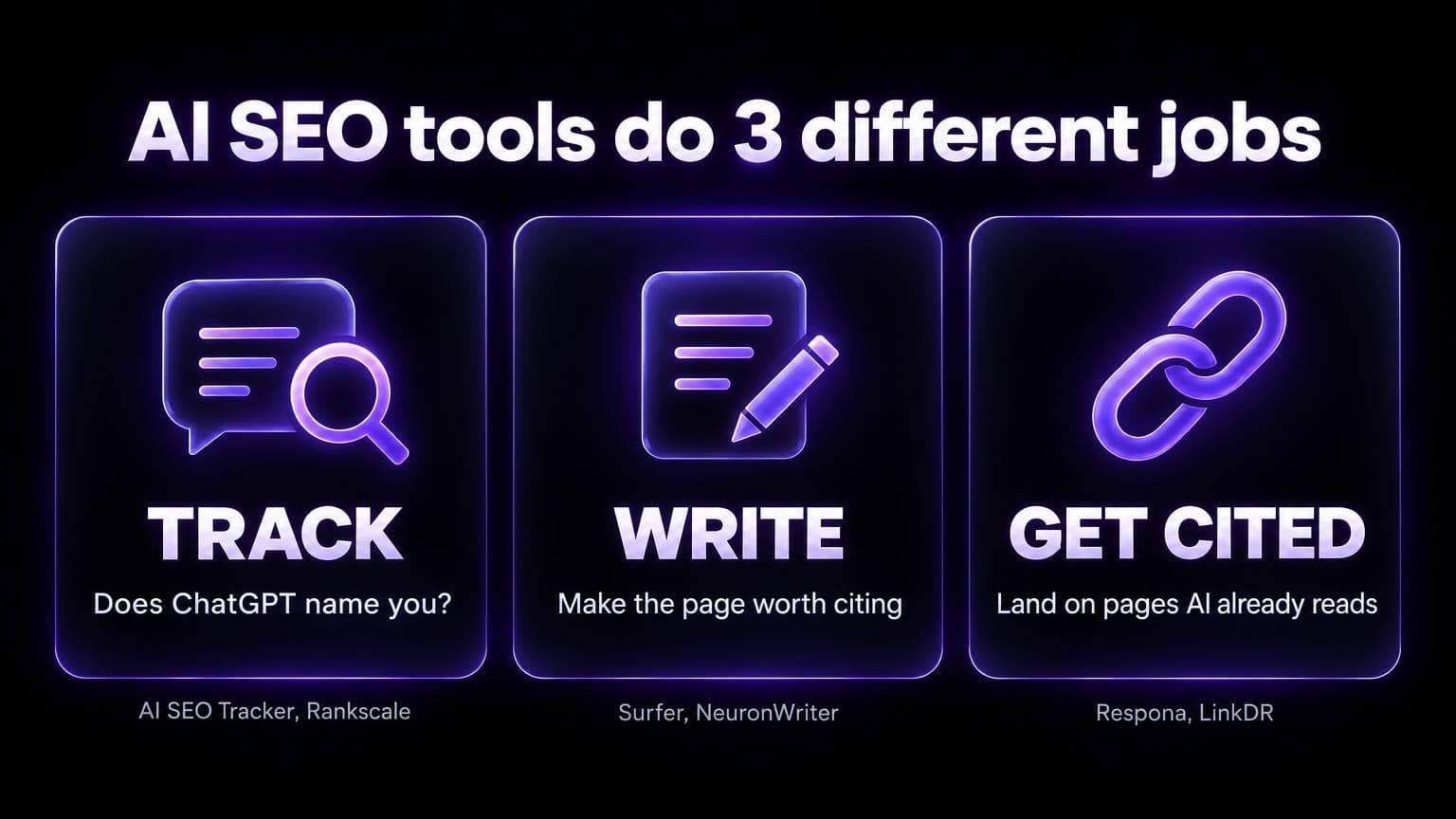
So I sorted 14 tools by job. Two are mine (AI SEO Tracker and LinkDR). I flag them every time.
Every price is from the vendor's own pricing page. I checked them on 2 October 2026.
Every tool gets a "skip it if" line. Mine too.
Best AI SEO tools by use case
Pick the job first. Then the tool.
| Your job | Pick | Why |
|---|---|---|
| See if AI names you | AI SEO Tracker | 5 engines, 7 days, $49 once |
| Track Claude, Grok, DeepSeek | Rankscale, AIclicks | Widest engine lists |
| Track Google AI Mode | SE Ranking, Semrush | Built into the suite |
| Score a draft | Surfer, NeuronWriter | NeuronWriter is the cheap one |
| Keywords and backlinks | Ahrefs, Mangools | Depth vs price |
| Get on pages AI cites | Respona, LinkDR | Pay per placement |
Run an agency? Read AI SEO tools for agencies.
Only want trackers? Read best AI visibility tools.
Summary of 14 best AI SEO and AI visibility tools
| Tool | Good at | Starts at |
|---|---|---|
| AI SEO Tracker | AI tracking, 5 engines | $49 once |
| Rankscale | Many engines | $17/mo yearly |
| SE Ranking | SEO + AI in one | $129/mo |
| AIclicks | 10+ engines | $59/mo |
| Respona | Placements | $100 each |
| LinkDR | Links by DR | $160 each |
| Surfer SEO | Content score | $49/mo yearly |
| NeuronWriter | Cheap content score | $23/mo |
| Frase | Briefs | $49/mo |
| Ahrefs | Backlink data | $29/mo |
| Semrush | Full suite | $139/mo |
| Mangools | Cheap toolkit | $37.70/mo yearly |
| Keywords Everywhere | Browser overlay | $84/yr |
| Alli AI | On-page at scale | $299/mo |
How I picked these AI SEO tools
Three rules.
1. I've used it. On my sites, on client work, or through someone who runs it daily. One exception: AIclicks. I list that one from its own pages.
2. The AI does real work. Not a "Generate with GPT" button glued onto a keyword tool.
3. The price is public. "Contact sales" only? Not on the list.
What is an LLM SEO tool
A tool that shows how ChatGPT, Gemini and Perplexity talk about your brand. And what to change.
People also call it AI SEO, GEO, or AEO. Same thing. I compared the acronyms here.
It does one of three jobs:
- Tracking. Same prompts, on a schedule. Are you named?
- Analysis. Why not? Which sources did the engine cite?
- Checking. A one-off look at one page or one brand.
My take: a tracker that only draws a graph is useless. You need the sources. Then you know what to fix.
What five AI engines name when you ask for the best SEO tool
I asked five AI engines for the "best SEO tool". Here's what came back.
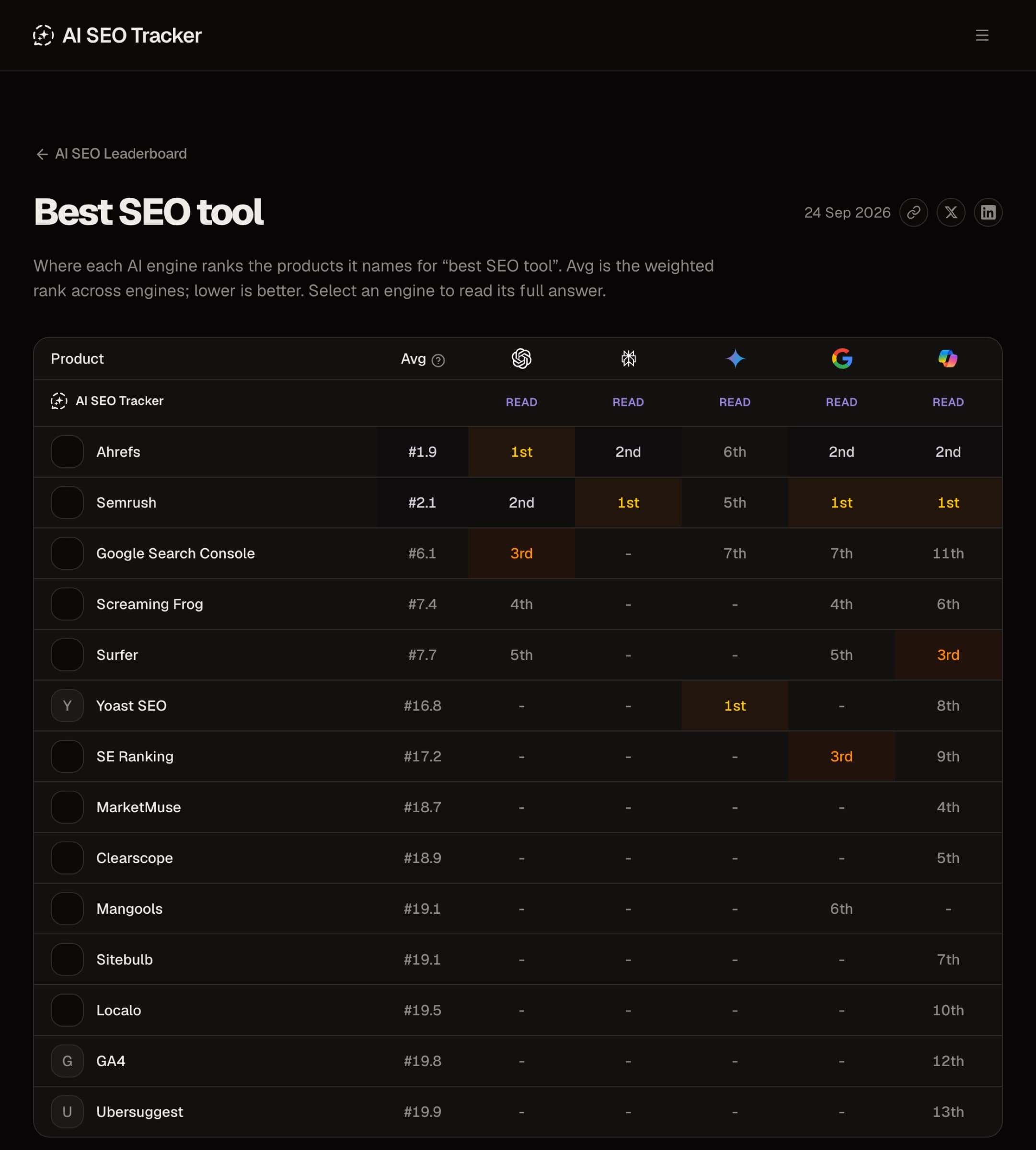
What jumps out:
- Only Ahrefs and Semrush show up in all five.
- The engines disagree. A lot. Gemini put Yoast first. And Ahrefs sixth.
- Surfer showed up in three engines. SE Ranking in two. Mangools in one.
- The engines cited 24 pages. 14 were listicles.
That last one matters. AI reads listicles. So you want to be on them.
One scan, one question. Don't read it as a trend. See the live scan.
AI search visibility tools
These show where your brand appears in AI answers. Which prompts name you. Which skip you. Who took your spot.
AI SEO Tracker
Best for: seeing if AI names you, without a subscription
Price: $49 once. Weekly tracking from $79/mo. Pricing
Free plan: No. Signup is free and shows your prompts before you pay
This one is mine. So take it with salt.
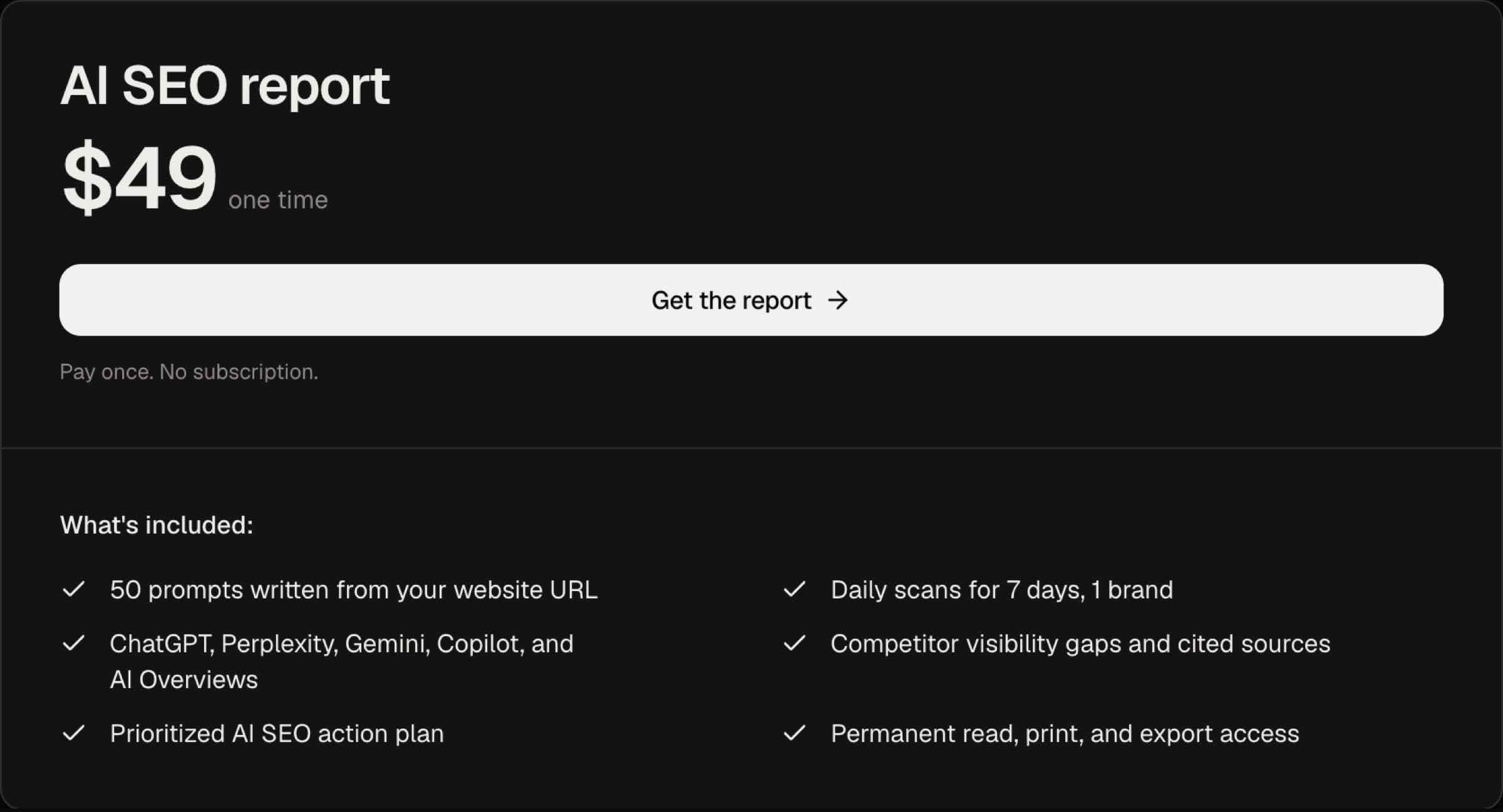
You enter your site. It writes up to 50 prompts your buyers would ask. Then it runs them on ChatGPT, Perplexity, Gemini, Copilot and AI Overviews. Every day, for 7 days.
You get mentions, citations, your position, and the sources each engine used.
The part I use most is the Page Inspector. Paste a URL. See what AI can actually read on it. Half the time the answer is "not much".
Basic at $79/mo covers 50 prompts. Pro at $199/mo gives 500 prompts, unlimited brands, and teammate access.
Limits: Basic covers 1 brand, with owner-only access.
Skip it if: you need AI Mode, Claude, Grok, DeepSeek or Meta AI. We don't scan them.
Rankscale.ai
Best for: freelancers who want lots of engines
Price: Pro $99/mo. Essentials $17/mo, yearly only. Pricing
Free plan: No. 7-day trial on Pro
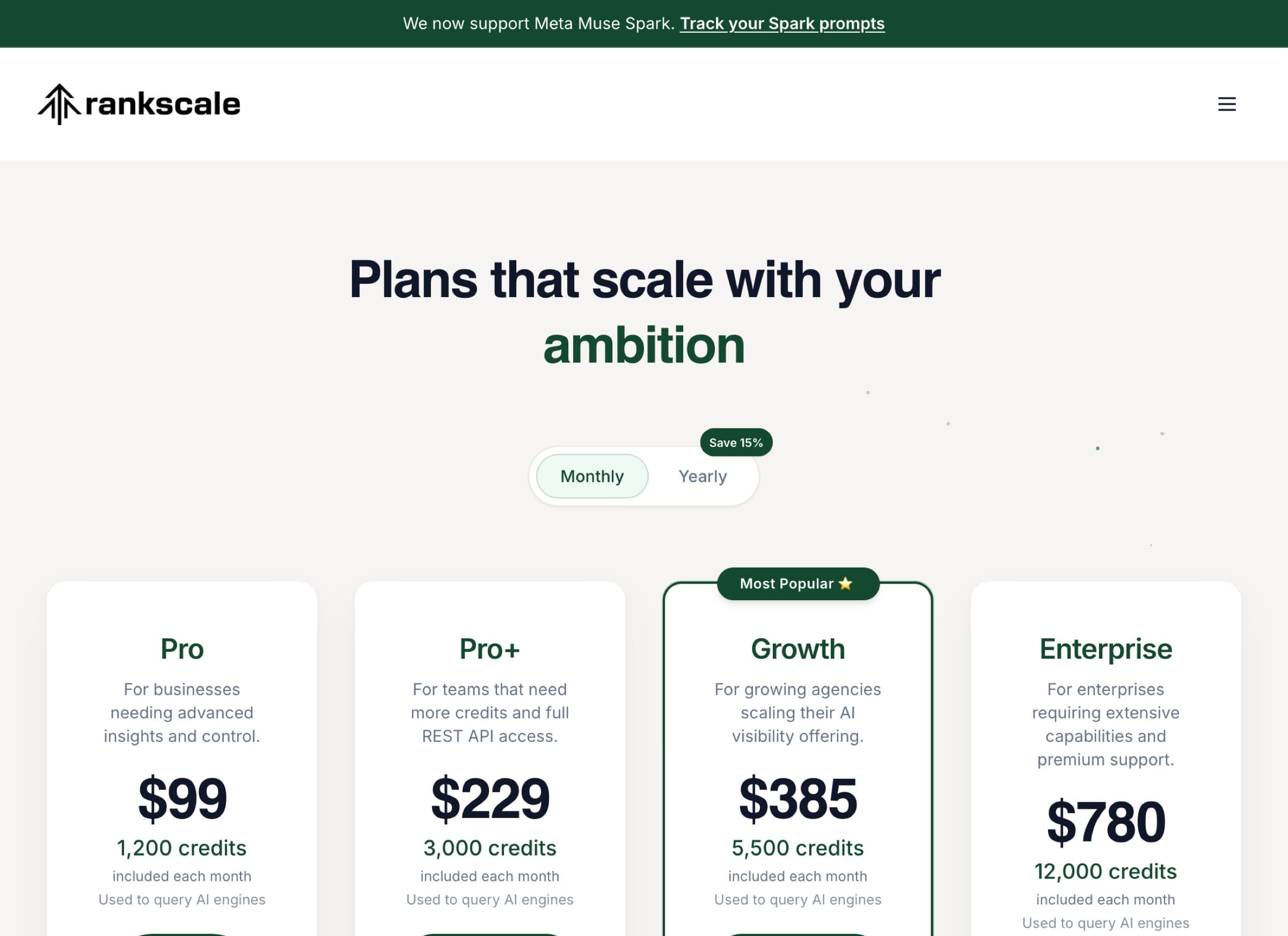
Rankscale doesn't cap prompts. You buy credits.
Most engines cost 0.25 credits a run. DeepSeek costs 1. Claude costs 2.
Pro gives you 1,200 credits. That's up to 4,800 answers.
Unused credits roll over. Nice touch.
The catch: you have to do math before you know what your month costs. I did it for you.
Skip it if: you hate doing credit math.
SE Ranking
Best for: teams that want SEO and AI tracking in one login
Price: $129/mo. AI Search add-on $89/mo. Pricing
Free plan: 14-day trial, no card
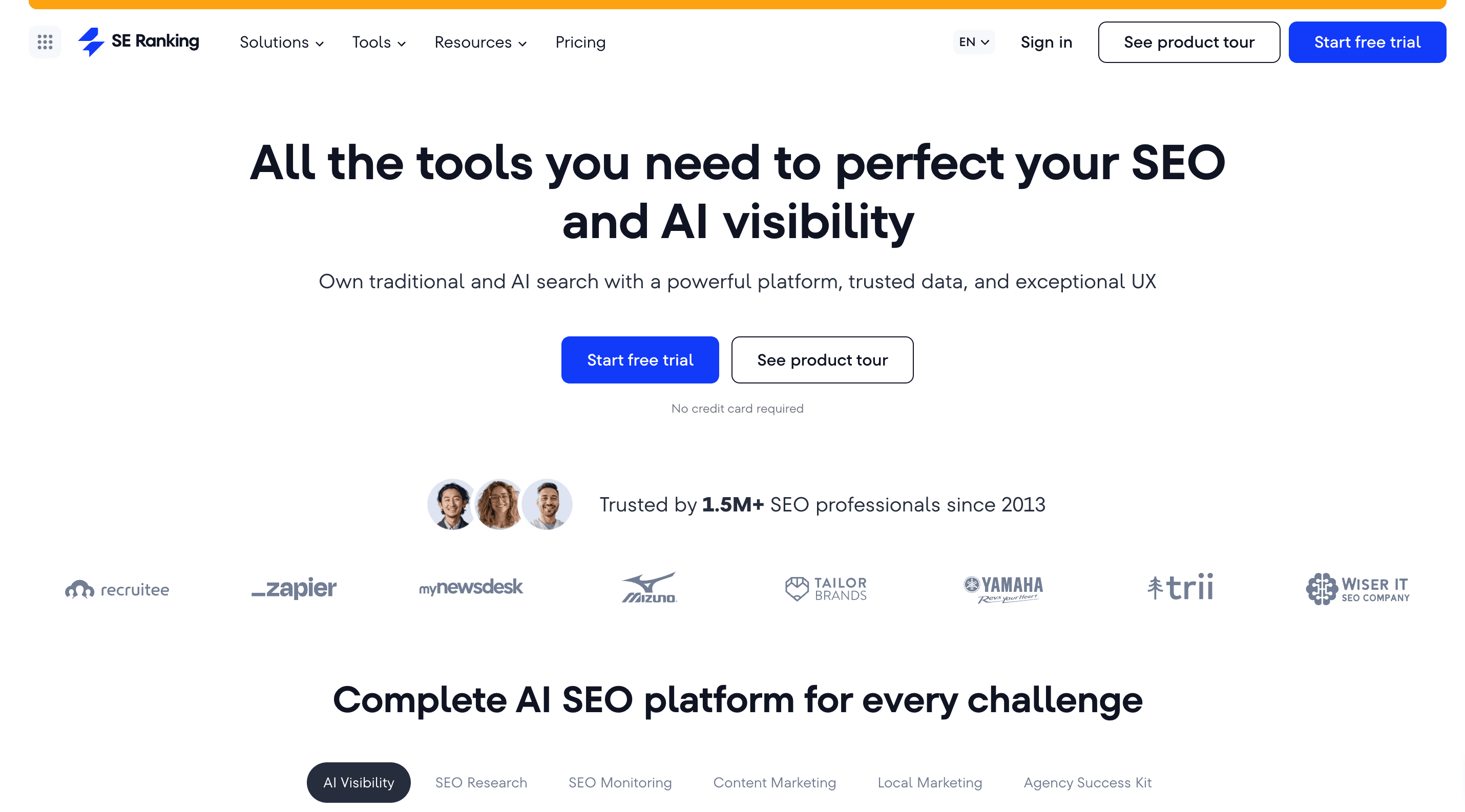
SE Ranking used to be a plain rank tracker. Now it does both.
Core includes 100 prompts, tracked daily. The add-on gives 200 more across AI Overviews, AI Mode, Perplexity and ChatGPT.
Skip it if: you only want AI tracking. You're paying for a whole SEO suite.
AIclicks
Best for: teams that want to pick from 10+ engines
Price: $59/mo, $189/mo, $499/mo. Pricing
Free plan: 3-day trial, no card
I haven't used this one. Everything here is from its own pages.
It lists 10+ engines. But your plan caps how many you pick. 3 on Starter. 4 on Pro. 6 on Business.
Starter tracks 30 prompts. Pro 150. All daily.
One thing I like: it says it queries the real chat interfaces, not the APIs. Those two often give different answers.
Skip it if: you want every engine on the cheap plan. You get 3.
Which tools track Google AI Mode and other AI engines
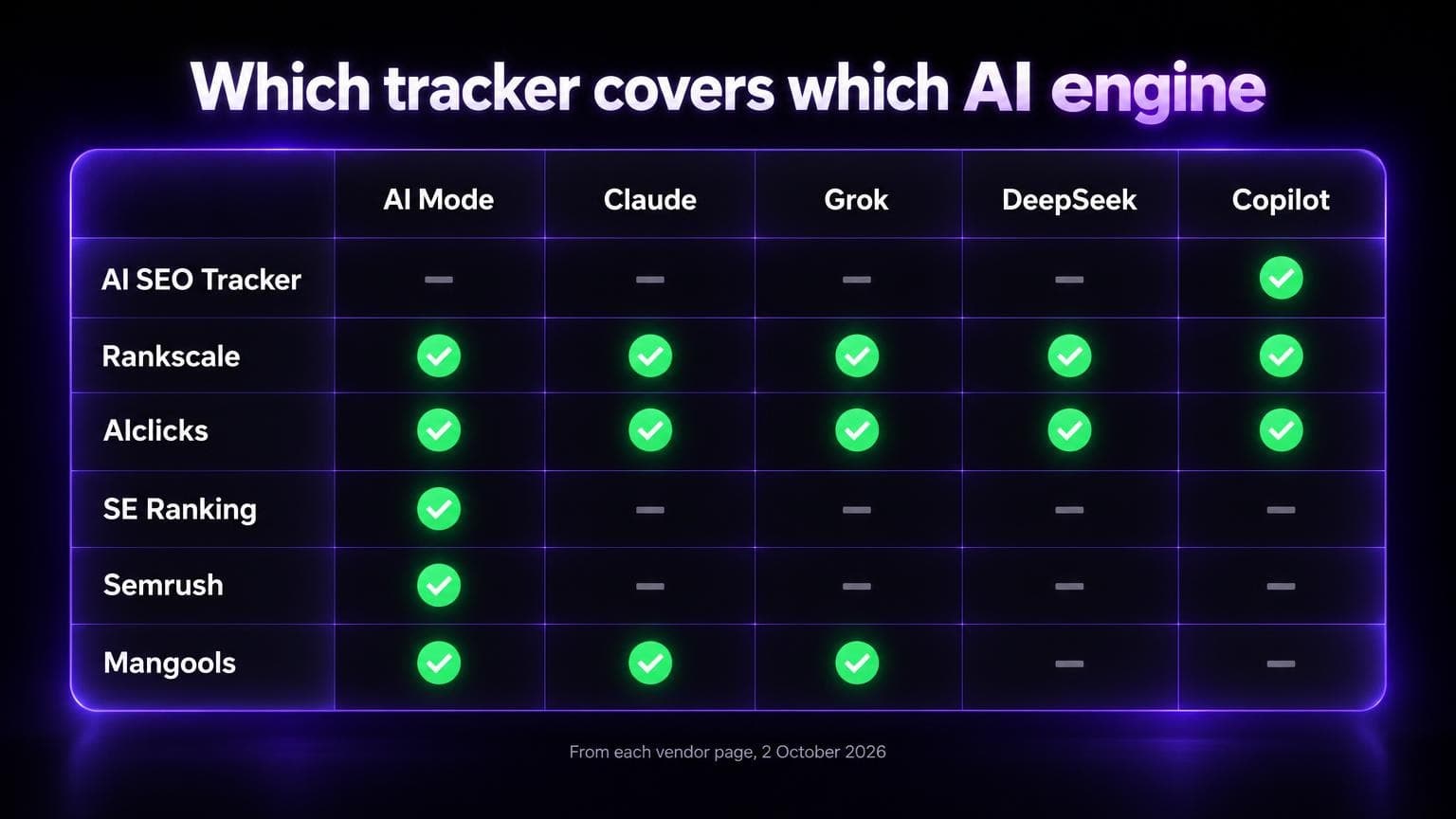
Short version. We scan five engines. Not AI Mode. Not Claude, Grok, DeepSeek or Meta AI.
Need those? Use this table. Each row is what the vendor's own page says.
| Tool | Engines it lists | Source |
|---|---|---|
| AI SEO Tracker | ChatGPT, Perplexity, Gemini, Copilot, AI Overviews | pricing |
| Rankscale | ChatGPT, Gemini, Perplexity, Claude, DeepSeek, Mistral, Grok, Copilot, AI Mode, AI Overview | pricing |
| AIclicks | ChatGPT, Perplexity, Gemini, AI Overviews, AI Mode, Claude, Grok, DeepSeek, Meta AI, Copilot | home |
| SE Ranking | AI Overviews, AI Mode, Perplexity, ChatGPT. Gemini separate | subscription |
| Semrush | AI Overviews, AI Mode, ChatGPT, Perplexity, Gemini | help center |
| Ahrefs Brand Radar | AI Overviews, AI Mode, ChatGPT, Perplexity, Gemini, Copilot | Brand Radar |
| Mangools | ChatGPT, AI Overviews, AI Mode, Gemini, Claude, Grok, Mistral, Llama | AI Search Watcher |
| Surfer SEO | ChatGPT, Perplexity, AI Mode, AI Overview, Gemini | pricing |
| NeuronWriter | AI Overviews, AI Mode, ChatGPT, Perplexity | pricing |
| Frase | ChatGPT, Google AI. More on higher plans | pricing |
Eight of the 14 list AI Mode. DeepSeek is only on Rankscale and AIclicks.
Free tip: Ahrefs has a free AI Mode Tracker. No signup. Limited preview.
For AI Overviews, read how to track Google AI Overviews.
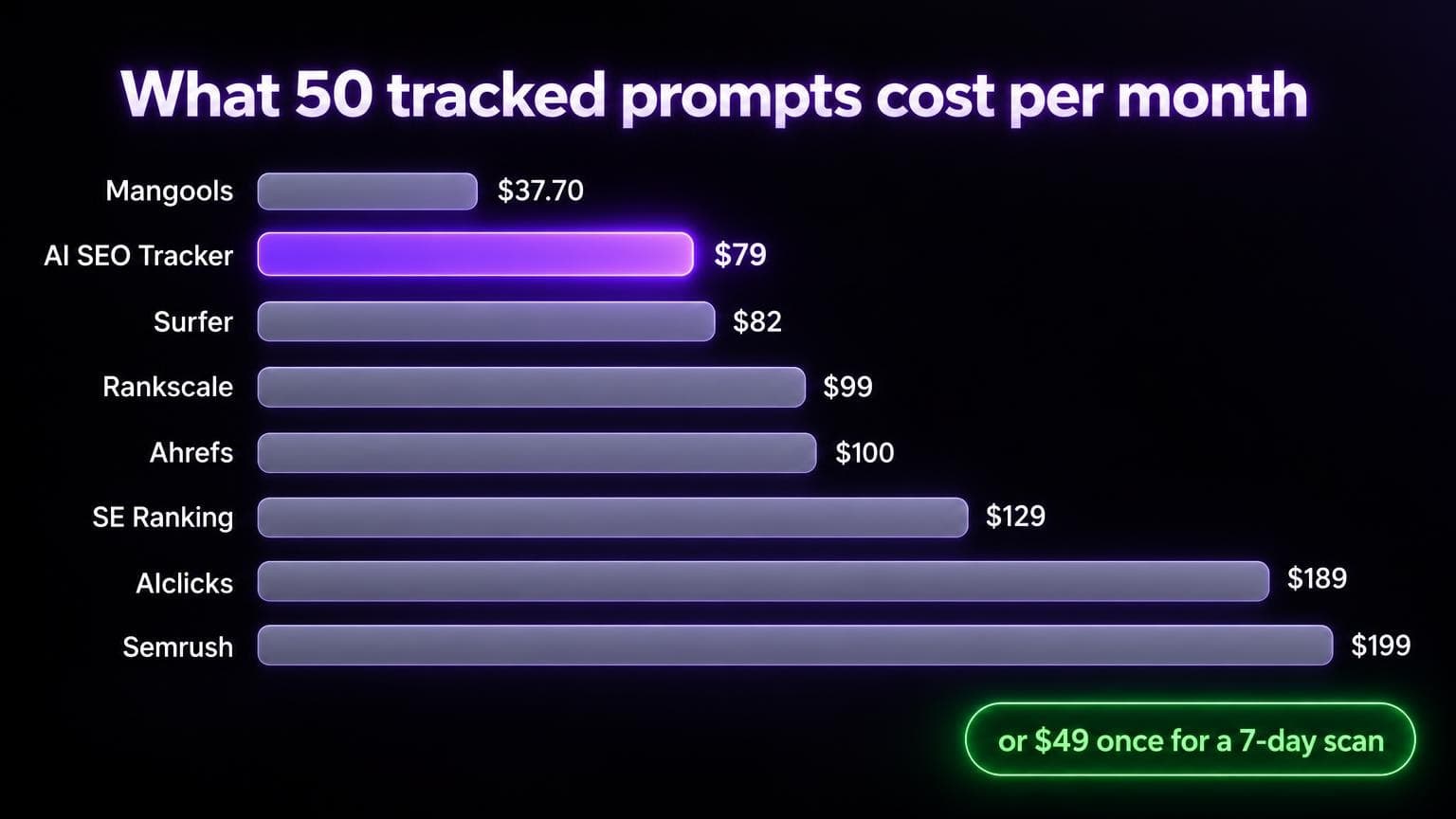
What it costs to track 50 prompts
Every vendor counts differently. Prompts. Credits. Checks.
So I did the sum for 50 prompts. Most scan daily. Mangools and our $79 plan scan weekly.
| Tool | What 50 prompts costs | Watch out |
|---|---|---|
| AI SEO Tracker | $49 once, daily for 7 days. Or $79/mo, weekly | No AI Mode, Claude, Grok |
| Mangools | From $37.70/mo yearly. 500 prompts included | Weekly updates, not daily |
| Surfer | $82/mo yearly | Tracking only, no editor |
| Rankscale | $99/mo. Uses 1,125 of 1,200 credits | Add Claude and you need the $385 plan |
| Ahrefs | $100/mo prompt package | Own prompts only. Sold stand-alone |
| SE Ranking | $129/mo, 100 prompts | Bundled with the suite |
| AIclicks | $189/mo, 150 prompts | Starter only holds 30 |
| Semrush | $199/mo, 1 domain | 100 prompts needs $299 |
The Rankscale math, so you can check me: 50 prompts x 3 engines x 0.25 credits x 30 days = 1,125.
One more thing. Mangools runs every prompt twice, because AI answers aren't consistent. They're right. One scan is a sample. Not a verdict.
Link building and off-site placement tools
Your tracker says ChatGPT cited a listicle. You're not on it.
Now what?
These two get you on it.
Respona
Best for: teams who know where they're missing and want someone to fix it
Price: from $100 per placement. Pricing
Free plan: No
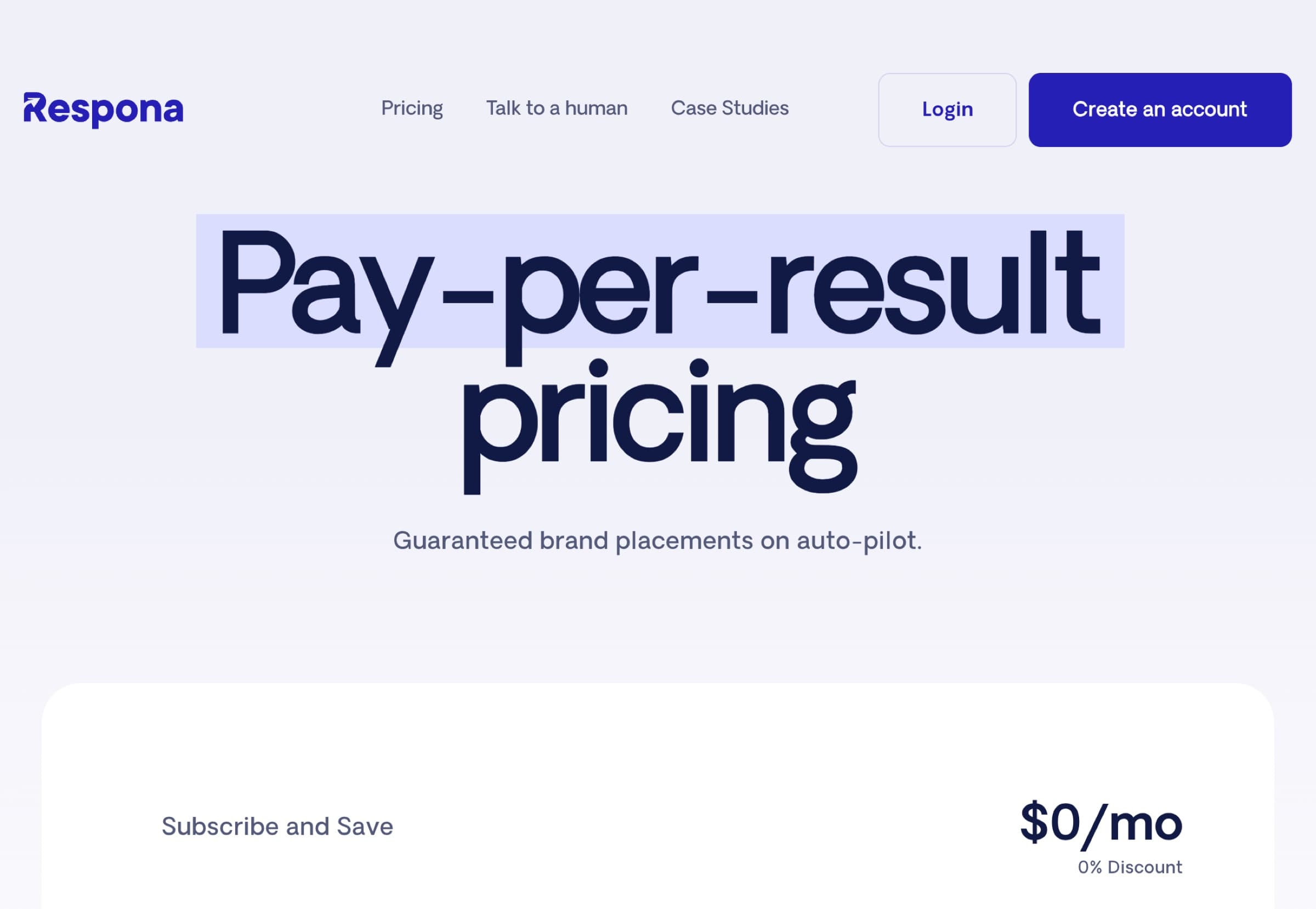
You pay per placement. The price follows the site's DR:
- DR 20+: $100
- DR 30+: $160
- DR 40+: $240
- DR 50+: $400
- DR 60+: $500
Turnaround is 28 days. 14 on express.
Skip it if: you're on a tight budget and need volume.
LinkDR
Best for: founders who want links without doing outreach
Price: $160 per link (DR 30+), up to $500 (DR 60+). Pricing
Free plan: No. $25 off your first order
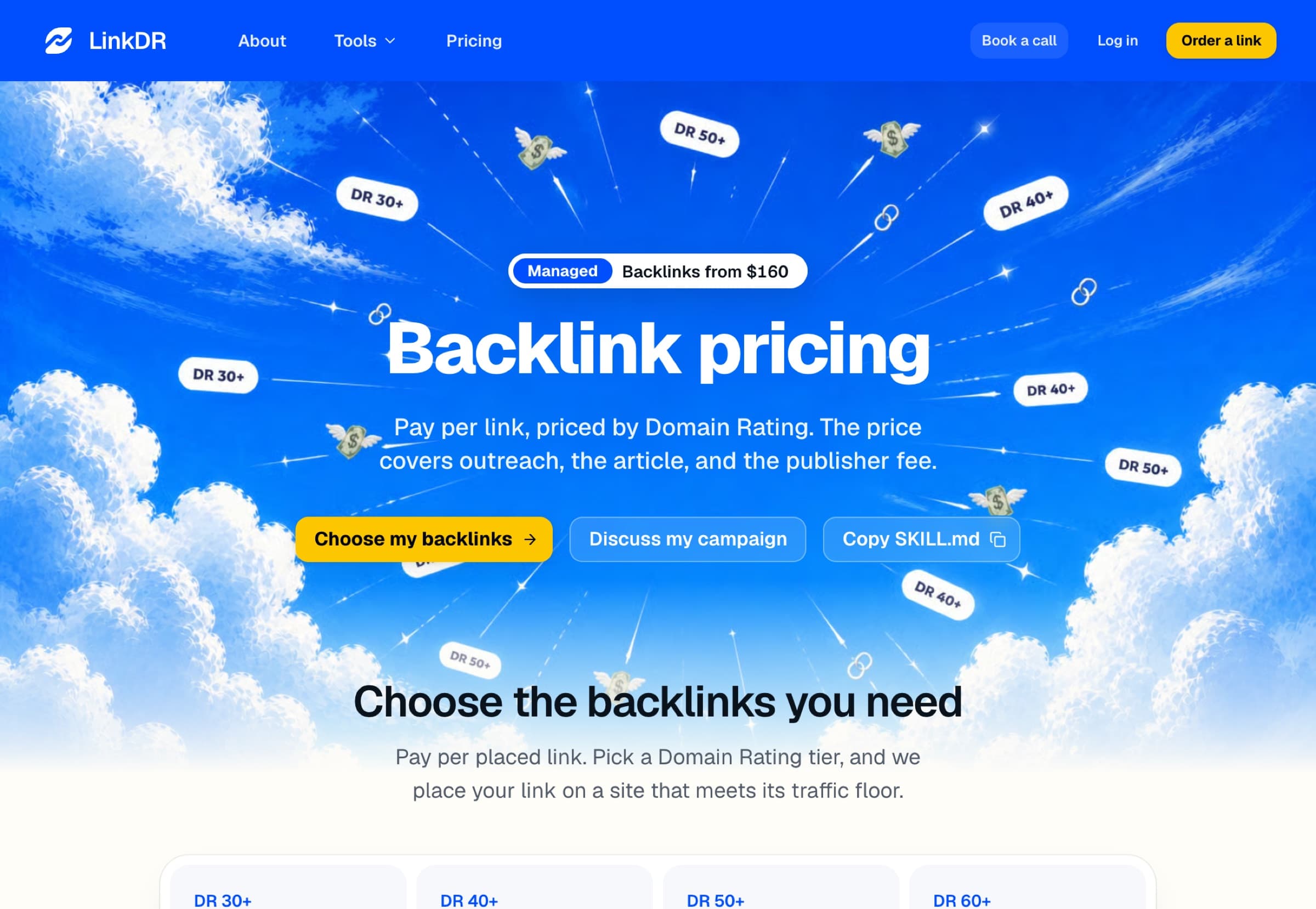
Also mine. I built it because I was tired of doing outreach by hand.
You get the research, the outreach, a new article, the publisher fee, and a dofollow link. All in the price.
Not live in 60 days? Full refund. Removed within 12 months? Free replacement.
Listicle or review content adds 20%.
Skip it if: you want DR 20 sites. We start at DR 30.

AI content optimization tools
These score your draft against pages that already rank. Missing terms. Thin sections. Questions you skipped.
Most SEO writers I know use one daily.
Surfer SEO
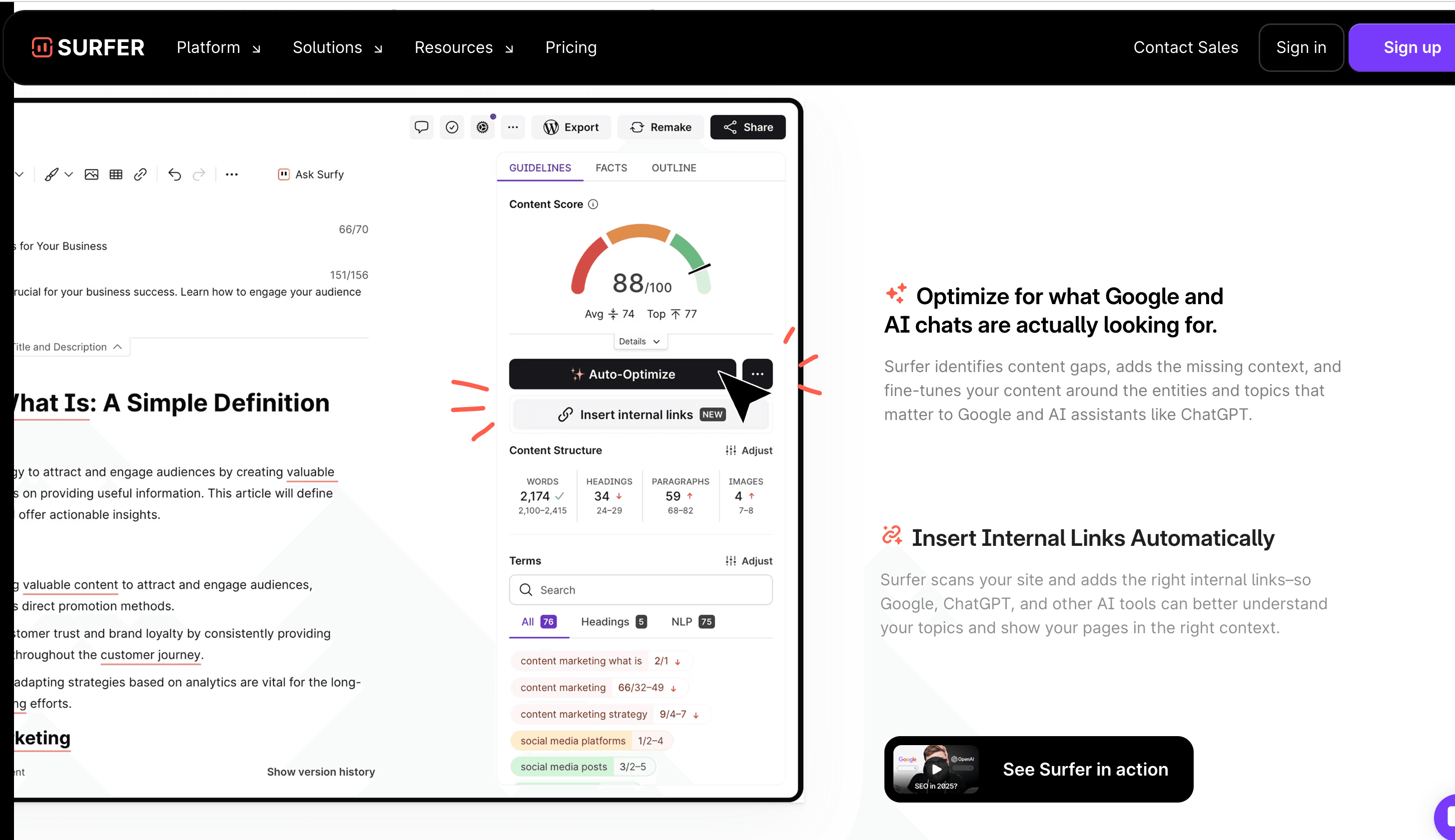
Best for: writers who want a live score while they type
Price (yearly): $49/mo, $99, $182. Pricing
Free plan: No
You write. The score moves. Out of 100.
It also lists the terms you're missing.
AI tracking depends on the plan. The $99 plan tracks 25 prompts a week, on ChatGPT only. Pro tracks 50 daily.
Skip it if: you want multi-engine tracking for $99. You get ChatGPT only.
NeuronWriter
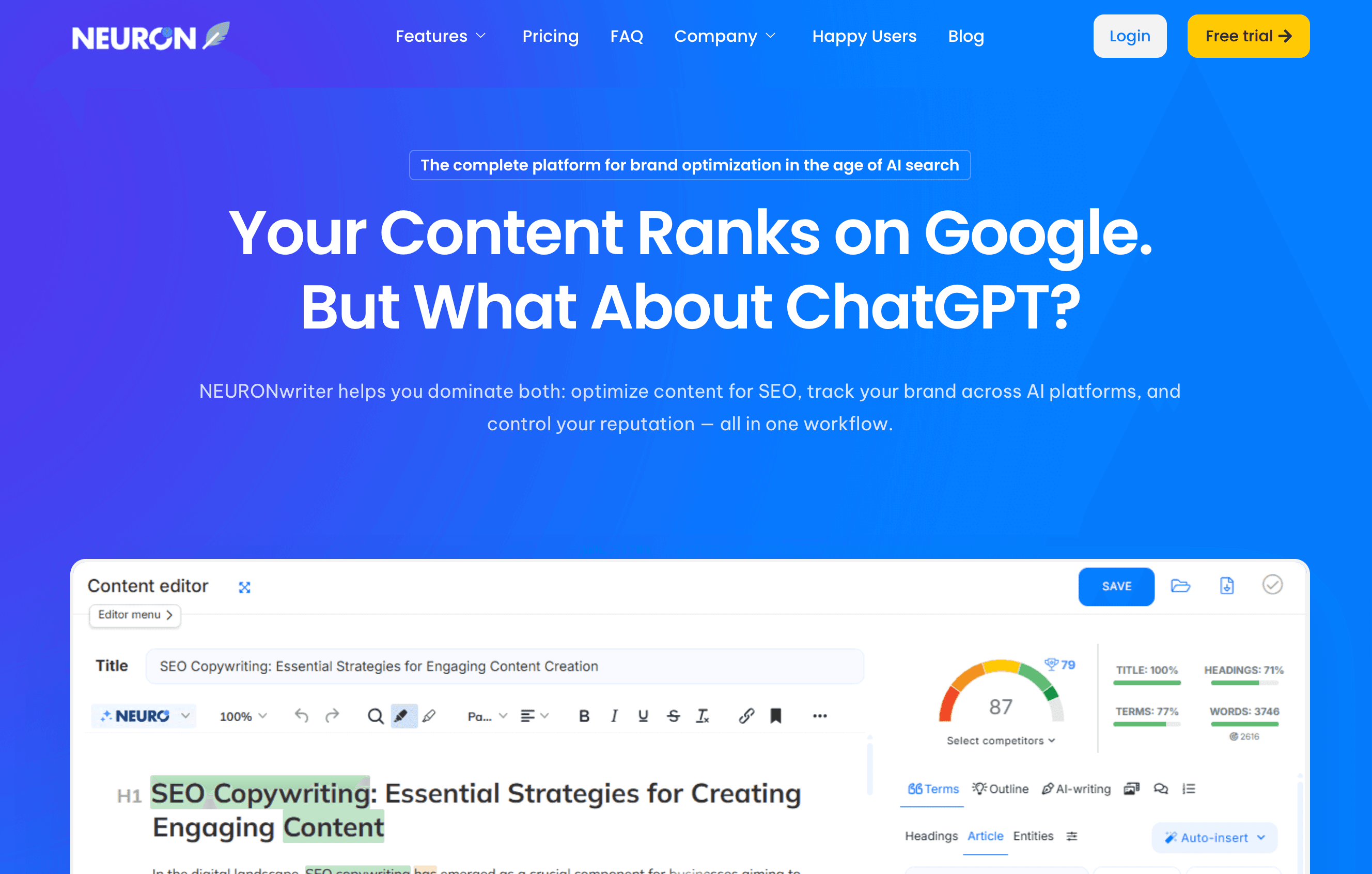
Best for: bloggers who think Surfer costs too much
Price: $23/mo, $45, $69. Pricing
Free plan: 7-day trial
The budget pick. Same idea as Surfer. Half the price.
Terms light up as you cover them.
Bronze gives 25 analyses and 5 tracked AI questions.
Skip it if: 5 AI questions isn't enough for you.
Frase
Best for: people who hate writing briefs
Price: $49/mo, $129, $299. Pricing
Free plan: 7-day trial, no card
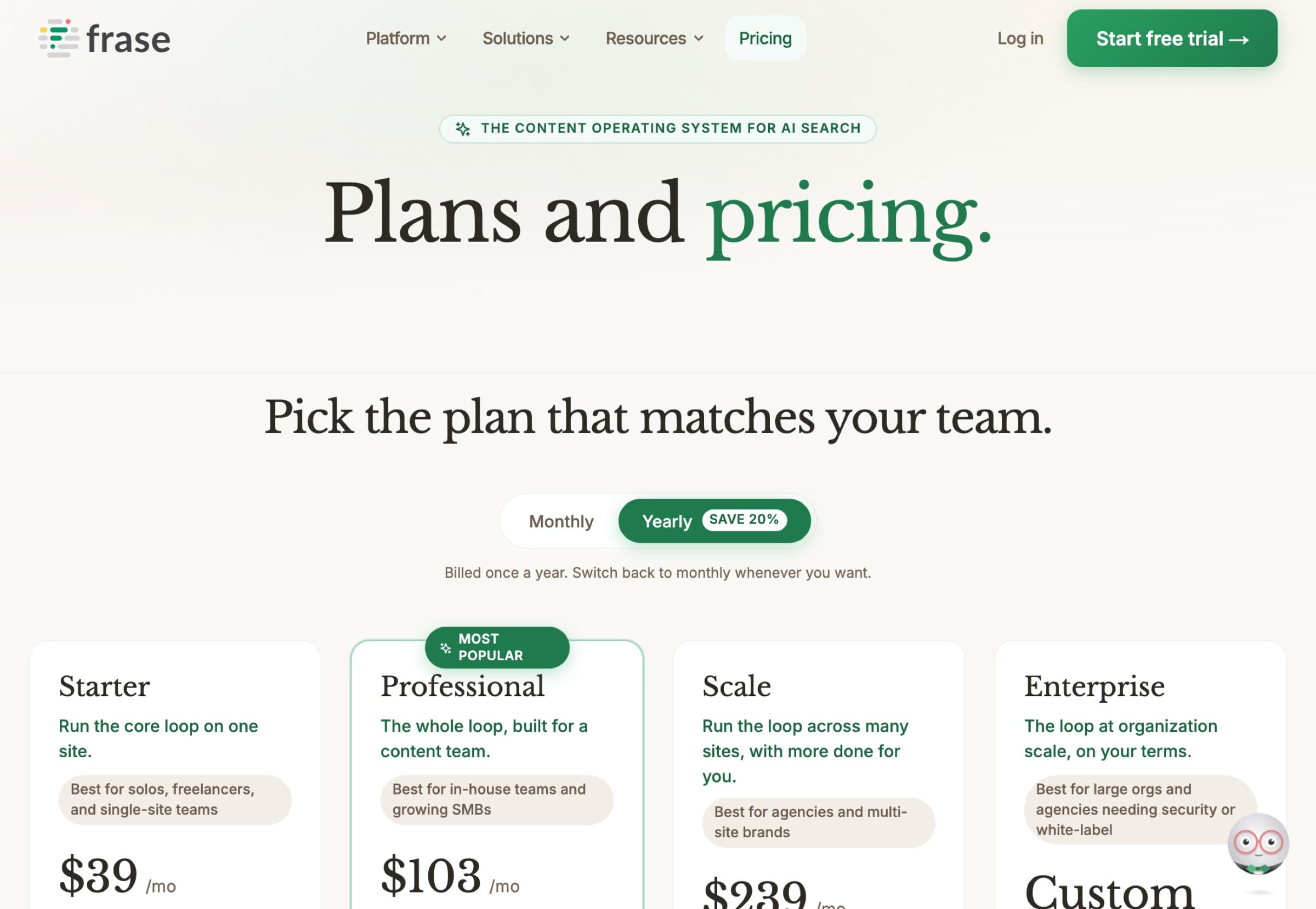
Frase reads what ranks. Then it builds the brief and the draft.
Starter gives 1 seat, 1 site, 10 articles a month.
Skip it if: you publish more than 10 articles a month on Starter.
Keyword and SERP research tools
Two big suites. Two cheap ones. I keep all four open.
Ahrefs
Best for: serious backlink and keyword work
Price: $29/mo to $1,499. Pricing
Free plan: Limited, for your own site
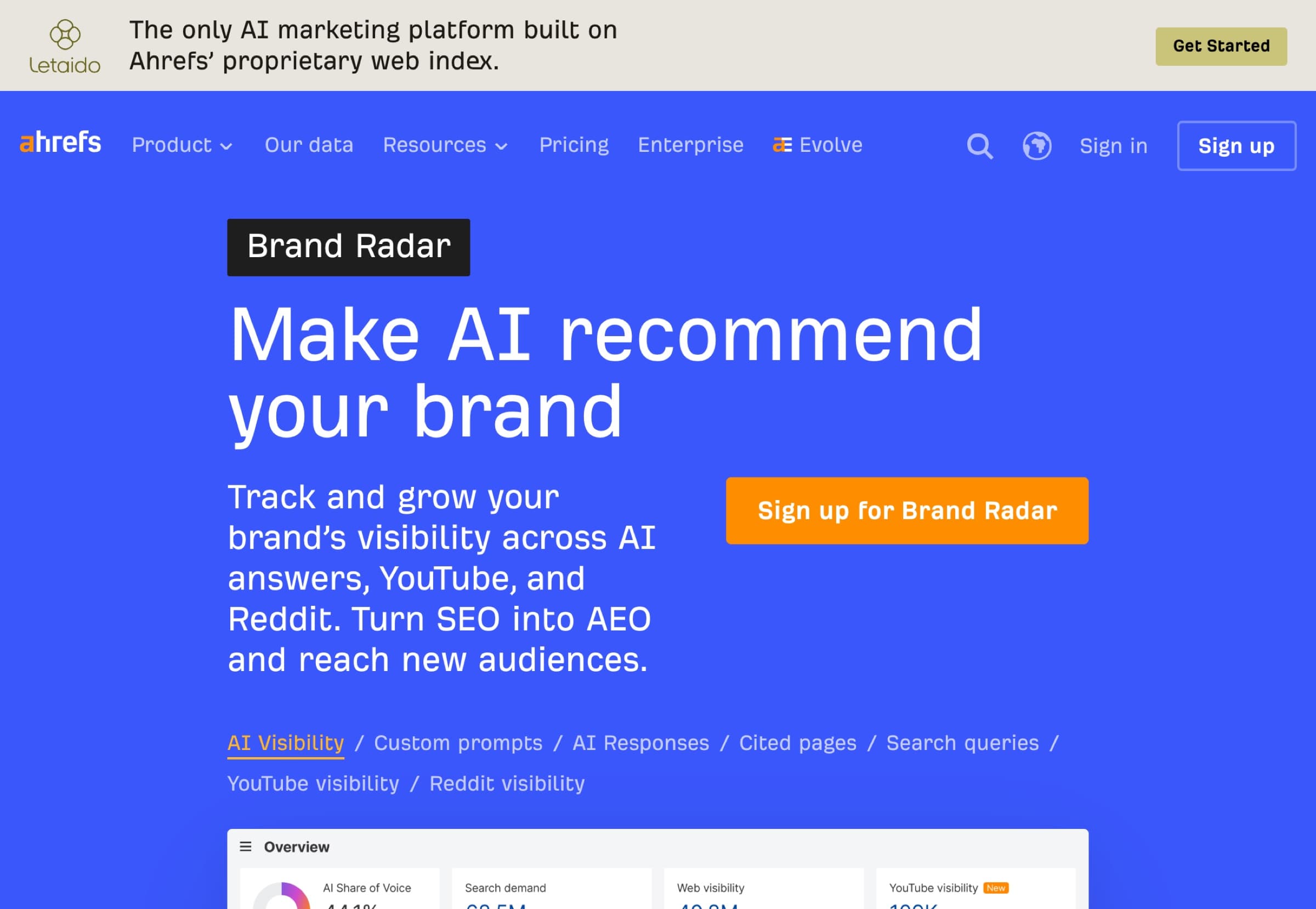
Still the best backlink data. That hasn't changed.
What's new is Brand Radar. It tracks your brand in AI answers.
The plans include 5, 10 or 20 AI prompts. Want more? Prompt packages start at $50/mo. Brand Radar AI starts at $199/mo.
Fun fact: Ahrefs says it never runs discounts. So don't wait for Black Friday.
Skip it if: you want lots of AI prompts inside the plan. Lite gives 5.
Semrush
Best for: agencies that want one bill for everything
Price: $139/mo, $199, $299, $549. Pricing
Free plan: Yes, 10 reports a day
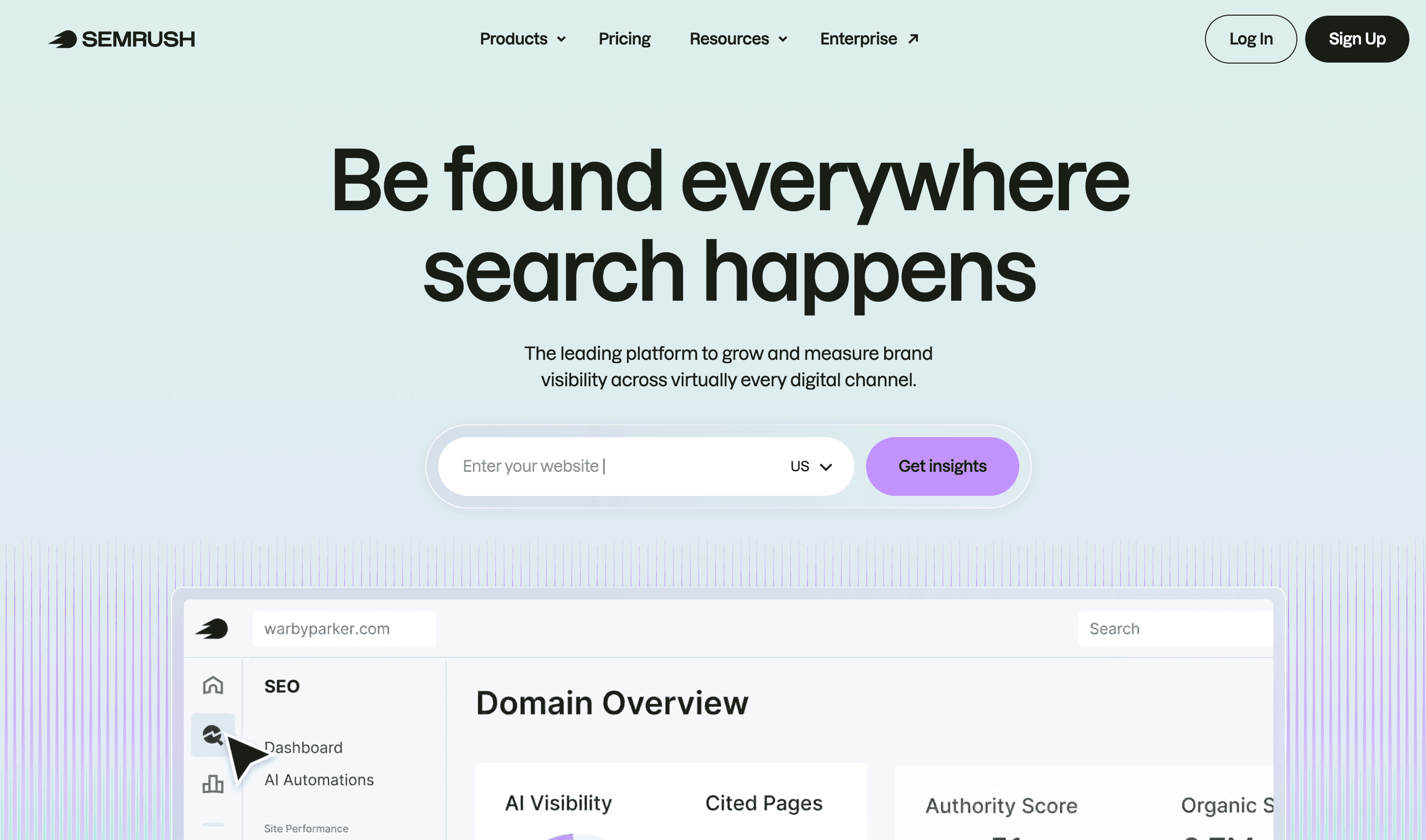
Semrush put AI tracking inside the SEO plans.
The $199 plan tracks 50 prompts daily on 1 domain. $299 gets you 100.
Skip it if: you want content optimization for $199. That starts at $299.
Mangools
Best for: solo SEOs who think Ahrefs is too expensive
Price (yearly): $37.70/mo, $52.70, $97.70. Plans
Free plan: Yes
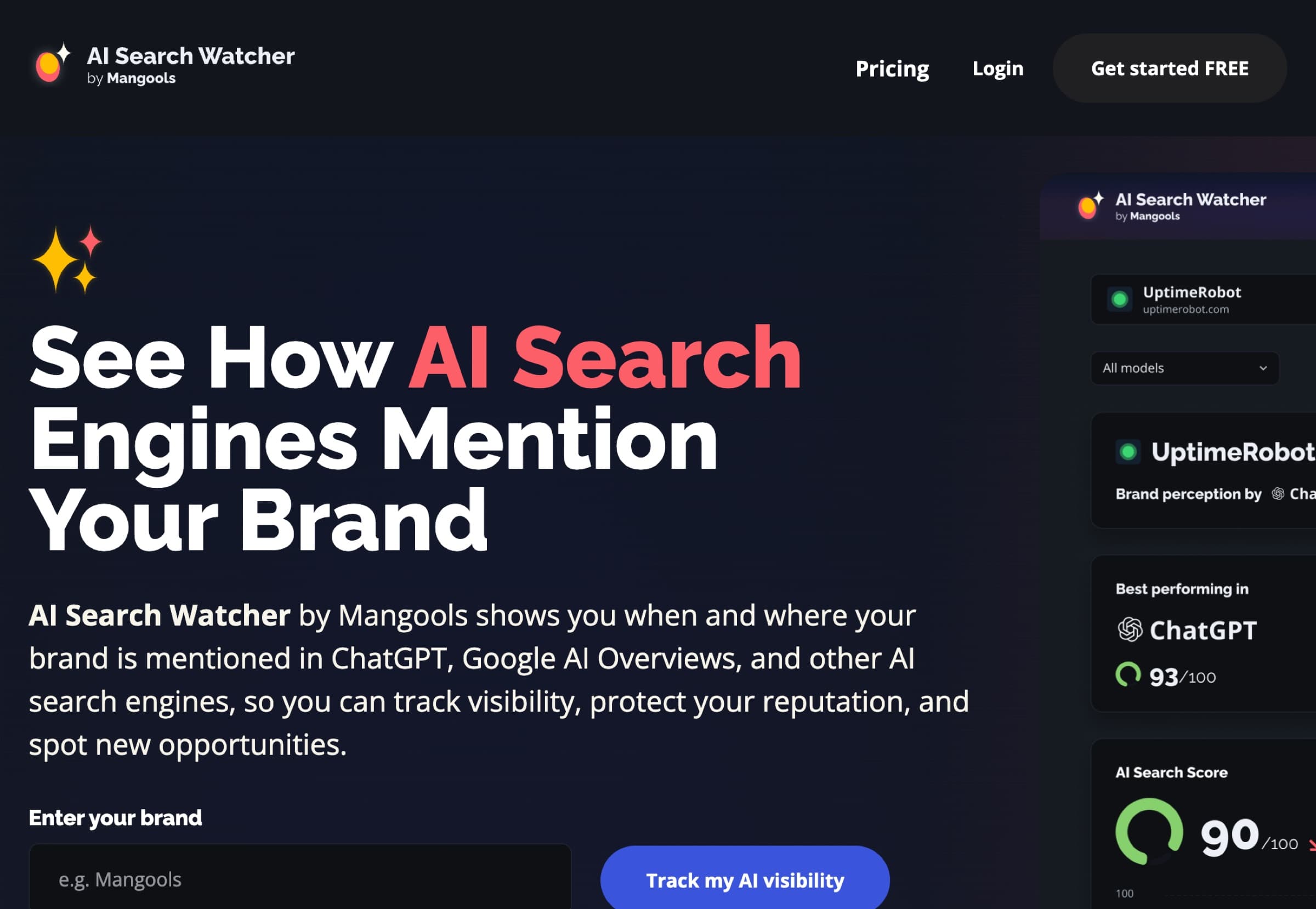
Five tools in one. Keywords, SERPs, rank tracking, backlinks, site analysis.
And every plan includes 500 AI prompts. That's the best deal on this list.
There's also a free AI Search Grader. Try that first.
Skip it if: you need daily rank updates. Only the Agency plan has them.
Keywords Everywhere
Best for: seeing keyword data right inside Google
Price: $84/yr and up. Yearly only. Plans
Free plan: No
A browser extension. I've had it installed for years.
You search on Google. It shows volume, CPC and competition next to the results. No tab switching.
For AI work it shows ChatGPT fanout queries. Those are the hidden searches ChatGPT runs to answer a prompt. Super useful.
Skip it if: you want to pay monthly. You can't.
AI SEO automation tools
Most "SEO automation" tools are AI writers with a dashboard.
This one is different.
Alli AI
Best for: agencies with many client sites
Price: $299/mo, $599/mo. Pricing
Free plan: 10-day trial
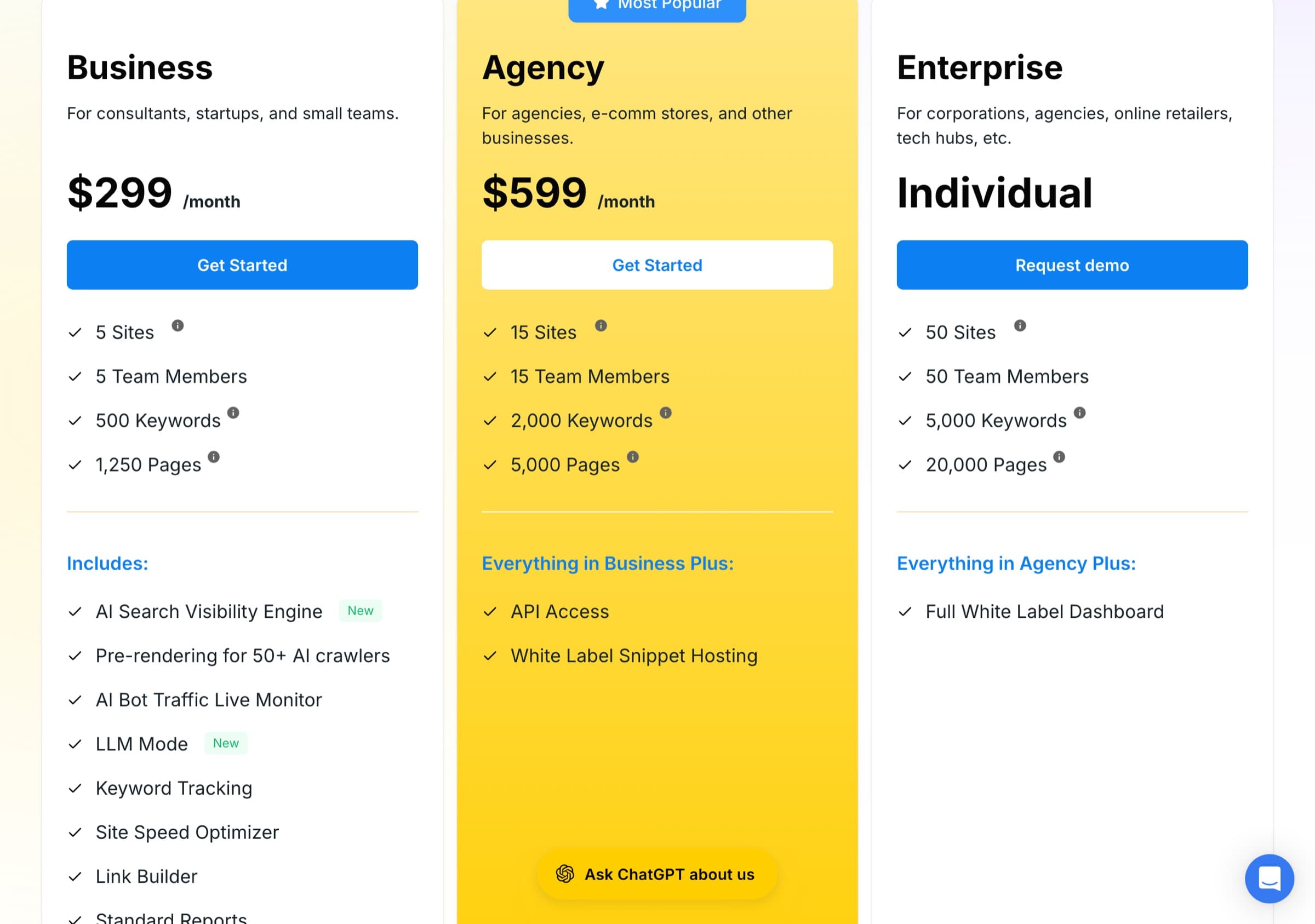
You write one rule. It applies to every matching page. On every site you connect.
Titles, meta descriptions, internal links, schema. No dev needed.
The AI part: it serves pre-rendered HTML to AI crawlers. Why care? In a December 2024 study by Vercel, the crawlers of OpenAI, Anthropic and Perplexity did not run JavaScript. So a JS-heavy page can look empty to them.
Check yours with the Page Inspector.
Skip it if: you run one site. $299/mo is a lot.
Tracking progress on an AI SEO project
Simple loop.
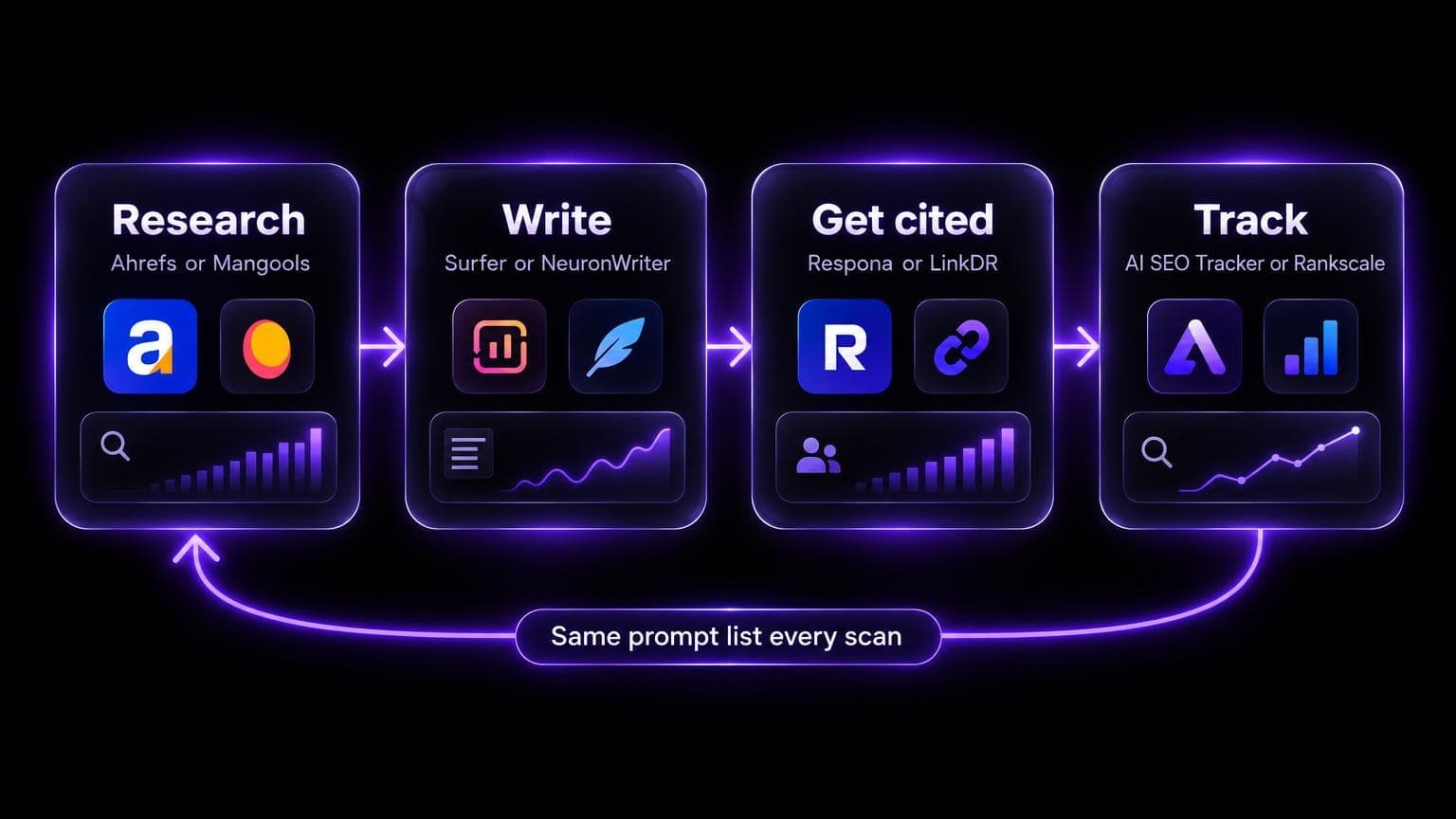
Three rules:
- Freeze your prompts. Change them every week and you can't tell what moved.
- Store every scan. One scan is a snapshot. Ten is a trend.
- Read it next to Search Console. AI answers and Google rankings are two scoreboards.
More on what to count: AEO metrics and how to measure brand visibility in AI. For AI traffic in your own data: tracking AI in Search Console.
FAQ
What is the best LLM SEO tool?
Depends on the job. For a cheap first look, AI SEO Tracker at $49. For the most engines, Rankscale or AIclicks. For a full suite, Semrush or SE Ranking.
Which tool tracks Google AI Mode?
Eight of the 14. Rankscale, AIclicks, SE Ranking, Semrush, Ahrefs, Mangools, Surfer and NeuronWriter. We don't. See the table.
Which tools track Copilot, DeepSeek, Grok, or Claude?
- Copilot: AI SEO Tracker, Rankscale, AIclicks, Ahrefs.
- DeepSeek: Rankscale, AIclicks.
- Grok: Rankscale, AIclicks, Mangools.
- Claude: those three, plus Frase on its top plan.
Is there a free LLM rank tracker?
Not a real one. The free ones are one-off previews: the Ahrefs AI Visibility Checker and the Mangools AI Search Grader. We have no free scan. More in free AI SEO audit tools.
How much does an LLM SEO tool cost per month?
For 50 prompts: $37.70 to $199 a month. Or $49 once with us. See the cost table.
Which AI SEO tools help my brand show up in ChatGPT?
None of them, directly. A tracker shows you the gap. Your pages and the listicles AI cites close it. Read how to rank in ChatGPT.
Final thoughts
You don't need 14 tools. You need 3 or 4.
My stack, if I started today:
- Track: AI SEO Tracker. $49 to see where I stand.
- Get cited: Respona or LinkDR.
- Write: Surfer if I have budget. NeuronWriter if I don't.
- Research: Ahrefs. Or Mangools when I'm cheap.
That's it.
Try one or two before you sign a yearly plan. This market changes every month.